

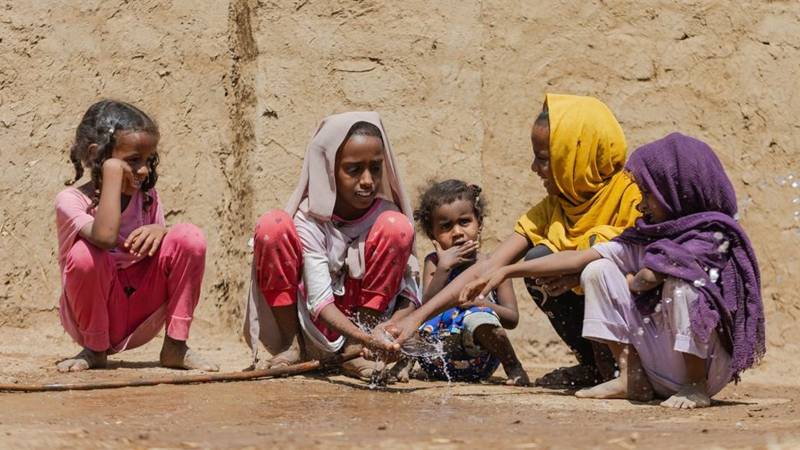
The international community knows where people are starving, displaced, and dying. National governments bear the primary responsibility for protecting their populations. However, when they fail, international solidarity should not depend on geopolitical interests, strategic alliances, or media attention. The growing disparity between humanitarian need and international action is no longer simply a failure of awareness. It is a failure of political responsibility.
The world does not always abandon people because it does not know they are suffering. Sometimes, it abandons them precisely because it knows the scale of their suffering, possesses the institutional capacity to respond, and nevertheless chooses to look elsewhere. This is the uncomfortable distinction between a forgotten humanitarian crisis and a neglected one.
Forgetting begins with diminishing attention. Neglect emerges when that declining attention becomes institutionalised in political indifference, inadequate humanitarian financing, weakened diplomatic engagement, and a sustained failure to act. Forgotten crises do not necessarily become neglected because the world no longer knows they exist. They become neglected because knowing is no longer accompanied by acting.
The Geography of Neglect
Consider the contrast between Ukraine and the humanitarian emergencies in Sudan, Mali, and Afghanistan. Russia's invasion of Ukraine generated extraordinary international mobilisation, diplomatic engagement, and public solidarity. This was justified: Ukrainians have every right to international protection and assistance. The question is why comparable urgency and determination are not consistently extended to people suffering elsewhere.
In 2022, researchers Simon Levine and Patrick Saez of the Overseas Development Institute (ODI) questioned the disparity between international attention to Ukraine and the unfolding humanitarian emergency in the Horn of Africa. Their argument was not that Ukraine deserved less assistance, but that humanitarian priorities were increasingly vulnerable to political and media influence. Four years later, that question remains unanswered.
Humanity does not get to choose whose suffering matters. Yet geopolitical calculations and the priorities of powerful governments increasingly determine which emergencies receive sustained attention and which are allowed to deteriorate.
The first responsibility for protecting a country's population rests with its national government. States must safeguard civilians, uphold fundamental rights, maintain essential services, and create conditions in which people can live with dignity. These responsibilities do not disappear during conflict or political instability. Some governments lack the capacity or resources to fulfil them; others are themselves responsible for violence, displacement, restrictions on humanitarian access, and violations of human rights.
Sudan, Afghanistan, and Mali illustrate different dimensions of this failure. Yet the inability or unwillingness of national authorities to protect their populations cannot become an excuse for international indifference.
The Limits of Sovereignty and Responsibility
The international community does not inherit the day-to-day governing responsibilities of a state when it fails. However, it has responsibilities of its own, including international cooperation, humanitarian assistance, and respect for international humanitarian law. The 2005 United Nations World Summit Outcome established the Responsibility to Protect (R2P), affirming the responsibility of states to protect populations from genocide, war crimes, ethnic cleansing, and crimes against humanity, alongside the international community's responsibility to assist and pursue appropriate peaceful measures when national authorities manifestly fail. Sovereignty cannot be used as a shield for atrocity crimes or international inaction.
Neglect does not necessarily require an explicit decision to abandon a population – it can emerge through successive political choices
The failure of one level of responsibility must never become an excuse for the failure of another.
The international humanitarian system is founded on humanity and impartiality, yet its financing remains heavily dependent on voluntary government contributions. Donors determine which emergencies receive priority, how much assistance is provided, and which programmes are supported. Consequently, political relationships and strategic interests can influence decisions that should principally reflect humanitarian need.
The 2026 Global Humanitarian Assistance Report, produced by Development Initiatives, illustrates the scale of the problem. International humanitarian funding fell by 20 per cent in 2025, reaching its lowest level in a decade. Only 35 per cent of UN-coordinated humanitarian appeal requirements were met. These shortfalls mean reduced food distributions, fewer healthcare services, diminished protection, and the closure of programmes upon which vulnerable communities depend.
The Norwegian Refugee Council's 2026 assessment of the world's most neglected displacement crises reinforces this concern. Evaluating media coverage, humanitarian funding, political engagement, and displacement, it identified Sudan, the Democratic Republic of Congo, Colombia, Yemen, and Afghanistan among the most neglected crises. The ten crises received an average of less than US $40 per person in need through humanitarian appeals, compared with more than US $52 globally.
Unfunded Crises and Punitive Politics
Sudan is perhaps the clearest illustration of the gap between international knowledge and action. By the end of 2025, 24.6 million people were experiencing acute hunger, while more than 11.8 million had been displaced. Despite extensive documentation of atrocities, diplomatic initiatives have struggled to secure sustained civilian protection, humanitarian access, and an end to hostilities. The humanitarian response remained less than 40 per cent funded.
Mali faces a similarly troubling reality. More than 737,000 people were displaced within and outside the country by August 2025, while 1.5 million faced acute food insecurity. By June 2026, its humanitarian response plan was only 18.4 per cent funded.
Afghanistan demonstrates how political disengagement can compound humanitarian suffering. Concerns about the Taliban authorities, particularly restrictions on women and girls, are legitimate. However, more than 22 million Afghans experienced food insecurity by the end of 2025. Over 400 health facilities had closed because of funding shortages. Political disagreements with national authorities should not translate into the withdrawal of essential assistance from populations who have no control over those decisions. Political conditionality must not become collective punishment by another name.
Media attention compounds the problem. CARE's 2026 Crisis Report analysed five million online articles from approximately 345,000 media outlets. The Central African Republic emerged as the most under-reported humanitarian crisis of 2025, despite more than 2.4 million people needing assistance. Visibility influences political attention, and political attention frequently influences funding.
The Architecture of Indifference
However, governments do not need television cameras to know where people are starving or hospitals are closing. The United Nations, humanitarian organisations, and human rights institutions provide extensive documentation. The international community is not suffering from a shortage of information. It is suffering from a failure to translate information into sustained political action.
Neglect does not necessarily require an explicit decision to abandon a population. It can emerge through successive political choices: not to fund an appeal, not to apply diplomatic pressure, not to sustain engagement, or not to challenge restrictions on humanitarian access. Each decision may be defended individually. Collectively, they can amount to institutionalised indifference.
Not every funding shortfall represents an intention to cause suffering. Governments face competing priorities and genuine operational constraints. But when they repeatedly prioritise strategic interests over humanitarian needs, despite knowing the foreseeable consequences, those decisions carry political and moral responsibility.
The response must go beyond another fundraising appeal. National governments must be held accountable for protecting their populations and respecting international law. Donor governments must make humanitarian financing more predictable and needs-based. Diplomatic engagement must continue even when conflicts lack geopolitical significance. Humanitarian assistance must be protected from political decisions that disproportionately punish civilians. Finally, the United Nations and regional institutions must confront selective solidarity and make governments more accountable for the gap between assessed needs and actual responses.
A Failure of International Conscience
The consequences of neglect extend beyond immediate suffering. Unresolved conflicts deepen grievances, displacement destabilises neighbouring countries, livelihoods collapse, and humanitarian emergencies become increasingly complex and expensive to address. The international community eventually pays a greater price for problems it failed to address when meaningful action was possible.
A child in Ukraine, Sudan, Mali, Afghanistan, or Yemen has the same entitlement to life, dignity, and protection. Ukraine deserves international solidarity. So do Sudan, Mali, Afghanistan, Yemen, and the Democratic Republic of Congo. The answer is not to withdraw assistance from one emergency to support another. It is to challenge a system in which international solidarity is abundant in some places and chronically insufficient in others.
The distinction between a forgotten and a neglected humanitarian crisis ultimately comes down to responsibility. National governments cannot escape their primary responsibility for protecting their populations. Nor can powerful states, international institutions, and donor governments escape the consequences of their political and financial decisions.
We know where children are starving, where civilians are being displaced, where healthcare systems are collapsing, and where humanitarian access is being obstructed. We know the consequences of inadequate funding and abandoned diplomacy. We know that every delay makes recovery more difficult and human suffering more profound.
At what point does the failure to act, despite knowing the consequences, become a political choice for which those responsible must be held accountable?
This is the question that should confront every head of government, foreign minister, development minister, and donor representative claiming to defend universal human rights.
A forgotten crisis is a failure of attention. A neglected crisis is a failure of responsibility. And when that neglect persists in full knowledge of its human consequences, it becomes a failure of international conscience.
The world does not need another appeal to remember. It needs to be held accountable for what it chooses to ignore.