

Conventional international relations theory has long maintained that a state's international agency is a direct projection of factors such as domestic stability, fiscal solvency, and material self-sufficiency. Hence, a nation burdened by escalating external debt, deteriorating law and order, and persistent security issues should logically be relegated to the peripheries of the international order. Yet, Pakistan presents a clear contradiction to such conventional lenses, as it continuously maintains an increasingly prominent role in the international order, which should be disproportionate when factoring in its prominent issues.
Additionally, whilst maintaining concurrent, functional partnerships with mutually hostile global and regional power centres, including Beijing, Washington, Riyadh, and Tehran, the nation has been occupying a pivotal intermediary role in the Iran conflict. In using a strategy of strategic hedging, Pakistan gains financial, military, and diplomatic benefits from global, oftentimes competing powers whilst preserving its sovereignty.
However, this leads directly to a major question: to what extent do such domestic vulnerabilities and international liabilities offset the significant influence and agency gained through strategic hedging in an increasingly multipolar order?
The Historical Roots of Strategic Hedging
Pakistan’s history plays a vital role in understanding its foreign policy. Upon its inception following Partition in 1947, Pakistan confronted severe existential challenges, driven by a profound, fundamental mismatch in conventional military capabilities and industrial output relative to India, which was compounded by unresolved territorial disputes in Jammu and Kashmir. To offset this regional imbalance, Pakistan had subscribed itself to the “Western” bloc in the early Cold War, formally acceding to a number of formal pacts with Washington that enabled Pakistan to secure substantial military and financial aid.
However, this alignment had a divergence in interpretation. Washington viewed these alliances strictly as anti-communist containment mechanisms against the Soviet Union and China, whereas Islamabad viewed them as guarantors of national security against Indian invasions or other violations of sovereignty. This difference in interpretation was prominent when the 1959 Executive Agreement failed to receive US congressional ratification. It was further amplified during the 1962 Sino-Indian War and the 1965 Indo-Pakistani War, when Western powers extended direct military aid to New Delhi and imposed arms embargoes on Pakistan, teaching Pakistani statespersons that total reliance on a single superpower or “bloc” was an unsustainable foundation for upholding sovereignty.
Hence, this disillusionment with prior foreign policy decisions ultimately culminated in a marked shift toward Pakistan’s hedging strategy. In the 1963 Sino-Pakistani Boundary Agreement, the two nations settled borders in Kashmir and laid the foundation for a long-lasting partnership; however, Pakistani diplomacy clearly articulated that relations between Beijing and Moscow were not mutually exclusive. This was exemplified during the late 1960s and 1970s when Pakistan leveraged its diplomatic access to both Washington and Beijing to facilitate US National Security Advisor Henry Kissinger’s covert July 1971 trip to China.
The contingent, warfare-based nature of Western alliances in the early 21st century following the 1971 war, the Soviet-Afghan War, and the War on Terror led Pakistan to expand its economic and strategic partnership with China, culminating in the 2015 launch of CPEC, a Belt and Road Initiative involving over $62 billion in planned infrastructure and energy investments centred on Gwadar.
The Erosion of the International Legal Order
This increase in international influence and agency has been catalysed by the erosion of the post-Cold War unipolar order and the erosion of international legal systems, as the enforcement capabilities of public international law have buckled. A marked breakdown of compliance with International Humanitarian Law, the 1949 Geneva Conventions, and the 1948 Genocide Convention in West Asian conflicts has been observed, and the deep-seated paralysis of international judicial institutions is evident. While the International Court of Justice has issued binding provisional measures of action, it possesses no independent enforcement mechanisms, instead relying entirely on a UN Security Council frequently deadlocked by permanent member vetoes under Article 27(3).
Similarly, political resistance to International Criminal Court arrest warrants further propels the erosion of universal legal norms. For middle powers like Pakistan, this further reinforces the fact that not only historically, but also currently, formal legal commitments offer little to no guaranteed protection for sovereignty, thus incentivising such middle powers to construct alternative security architectures.
Ultimately, until Pakistan addresses its underlying economic, security, and legal vulnerabilities, strategic hedging is unlikely to provide a stable basis for sustained international influence
Beyond the confines of conventional warfare, the international legal order is further destabilised by the increasing weaponisation of global finance, which directly challenges the principle of non-intervention under Article 2(7) of the UN Charter. Precedents such as the freezing of Venezuelan sovereign wealth and central bank assets, alongside third-party sanctions that bypass World Trade Organization rules, compel middle powers to diversify their financial networks and trade corridors.
Also, the Law of Armed Conflict has been eroded by expansive doctrines of self-defence, where states use subjective interpretations of Article 51, including preemptive self-defence and the unwilling or unable doctrine. This, coupled with maritime threats in key chokepoints like the Strait of Hormuz and Bab el-Mandeb, which challenge the transit passage regime under Part III of UNCLOS, and the collapse of nuclear de-escalation agreements like the Joint Comprehensive Plan of Action, leads middle powers to face an international landscape in which rules-based systems offer minimal protection.
Regional Diplomacy and Economic Manoeuvring
In response to these regional uncertainties, Pakistan has applied its hedging apparatus across West Asia by refusing to subscribe to any single regional bloc. However, the Makkah Pact alongside Saudi Arabia and Turkey, governed by pacta sunt servanda under Article 26 of the Vienna Convention on the Law of Treaties, binds signatories to treat an act of armed aggression against one as an act against all, echoing a NATO-esque defensive clause. Still, the treaty text omits explicit language, creating a calculated sense of ambiguity. Nevertheless, during maritime disruptions in the Strait of Hormuz, Pakistan invoked the 2006 Preferential Trade Agreement and 2021 Joint Border Trade Agreement with Iran to route commercial trade through overland transit corridors at Taftan and Mirjaveh, displaying the lack of total subscription to any bloc in the Middle East either.
Globally, Pakistan uses strategic hedging to attain economic, military, and technological benefits from both Washington and Beijing without incurring the costs of exclusive alignment. In 2026, during the Donald Trump administration, Pakistan finalised a memorandum of understanding between its Ministry of Finance, Ministry of Defence, and the US General Services Administration to redevelop the historic state-owned Roosevelt Hotel in New York, valued at over $1 billion, into an international asset-restructuring plan to generate foreign currency revenue.
Currently, the Virtual Asset Regulatory Authority has enacted an agreement with US-linked SC Financial Technologies to integrate the USD1 stablecoin into national cross-border payment networks, linking Pakistan to American fintech infrastructure. In the critical minerals sector, Pakistan dispatched its first consignment of enriched rare earth elements to US Strategic Metals under a $500 million agreement with the Frontier Works Organisation. In the defence domain, Washington authorised a $1.17 billion modernisation package for Pakistan's F-16 fleet, including radar contracts with Northrop Grumman Systems. Still, in the 21st century, Pakistan has been able to develop its own JF-17 fighter jets alongside the Chengdu Aircraft Corporation, further exemplifying the non-exclusive nature of its foreign policy. Such agreements build upon the infrastructure established under CPEC, where a decade of Chinese capital funded high-voltage energy grids, development in Gwadar, and localised assembly plants for Chinese electric vehicles.
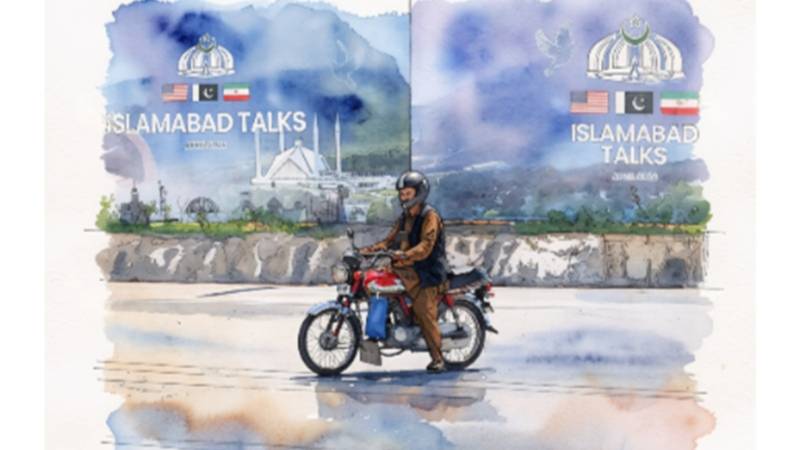
Furthermore, Pakistan's posture enables it to act as a crucial diplomatic intermediary during major crises, as demonstrated during the early 2026 escalation between Washington and Tehran, as Pakistan maintains a unique degree of credibility in both camps that are at loggerheads. During escalating military exchanges in early 2026 that threatened global energy security in the Strait of Hormuz, Islamabad initiated backchannel diplomacy to facilitate negotiation exchanges under Article 2(4) of the UN Charter. These efforts produced an immediate ceasefire on the 8th of April 2026, known as the Islamabad Accords, followed by Pakistan hosting senior American and Iranian delegations on the 11th of April 2026 for their first direct talks on Pakistani soil since 1979. This diplomatic intervention not only helped ease global tensions and economic markets but also protected important remittance inflows from nearly five million Pakistani workers in the Gulf; this shows that the benefits to be attained from such a strategy can be both locally and internationally beneficial.
The Limits of Agency: Domestic Vulnerabilities
However, the central question of Pakistani statecraft remains whether this diplomatic agency can overcome severe domestic economic vulnerabilities. Pakistan carries an external debt exceeding $138 billion, with public debt hovering near 65 per cent of GDP and debt servicing consuming over 45 per cent of federal revenues. This debt-driven impetus severely restricts state expenditure on defence modernisation alongside crucial initiatives in areas such as welfare and infrastructure.
Additionally, continuous engagement with the International Monetary Fund under Extended Fund Facility programmes imposes strict conditionality on national financial planning, as major foreign policy moves must be done whilst avoiding disrupting agreements with international lenders. To prevent foreign exchange exhaustion during recent balance-of-payments crises, the State Bank of Pakistan imposed strict controls on profit repatriation, stranding hundreds of millions of dollars in corporate revenues and driving foreign enterprises like Telenor to execute market exits. While Pakistan mitigates balance-of-payments shocks through central bank swaps and deposit rollovers from China, Saudi Arabia, and the UAE, continuous financial insolvency does impose a ceiling on its strategic influence.
Pakistan's external manoeuvrability is further marred by security issues that divert valuable, scarce state resources. Cross-border conflicts with the Tehrik-i-Taliban Pakistan have also forced Pakistan to divert substantial military and financial resources in order to secure its western border. Internally, ethno-nationalist insurgent groups like the Baloch Liberation Army actively target critical infrastructure, transit corridors, Chinese personnel associated with CPEC, and Pakistani security forces. In response, Pakistan deployed over 20,000 military and paramilitary personnel across two dedicated Special Security Divisions to protect CPEC assets, alongside conducting a number of sanitation operations in the region. On its eastern frontier, India's military doctrines, such as Cold Start and Integrated Battle Groups, alongside recurring crises including the 2019 Pulwama-Balakot standoff, the 2022 accidental BrahMos missile launch, and major aerial clashes in 2025, have severely impaired prospects for regional normalisation, diverting national resources towards defence.
International Legal Liabilities
Pakistan's diplomatic agency is also limited by international legal liabilities stemming from Investor-State Dispute Settlement (ISDS) arbitrations and transboundary water governance. Having signed 53 Bilateral Investment Treaties containing broad Fair and Equitable Treatment clauses since 1959, Pakistan accumulated massive financial exposures that stripped domestic courts of jurisdiction. Arbitral awards under ICSID and ICC tribunals include SGS, Bayindir, Progas, Karkey Karadeniz ($800 million award), and Tethyan Copper Company ($5.8 billion award over the Reko Diq mining lease). Provisional attachment orders against state-owned overseas assets, including the Roosevelt Hotel in New York and the Scribe Hotel in Paris, had also been issued. Islamabad has managed these issues by settling the Karkey dispute diplomatically, restructuring Reko Diq into a $10 billion joint venture with Barrick Gold in 2022, terminating 23 outdated treaties, passing the Foreign Investment Act of 2022, and establishing the Special Investment Facilitation Council.
Still, outside of international investor issues, Pakistan’s troubles in international law do not end. Under the 1960 Indus Waters Treaty, Pakistan has rejected Indian assertions that the treaty could be placed in abeyance, and formal arbitration before the Permanent Court of Arbitration yielded an Award on General Interpretation in August 2025, ruling under pacta sunt servanda the treaty contains no provisions for suspension, followed by a Supplemental Award in May 2026 limiting upstream Indian pondage and spillway designs. These awards were reinforced by an ICJ ruling in late 2026 affirming the treaty's binding nature, while legal gaps on the Kabul River with Afghanistan remain managed through customary principles under the 1997 UN Watercourses Convention.
Nevertheless, these underlying legal issues, however well managed, are still outshadowed by the glaring economic and security issues in the nation. Ultimately, until Pakistan addresses its underlying economic, security, and legal vulnerabilities, strategic hedging is unlikely to provide a stable basis for sustained international influence.