

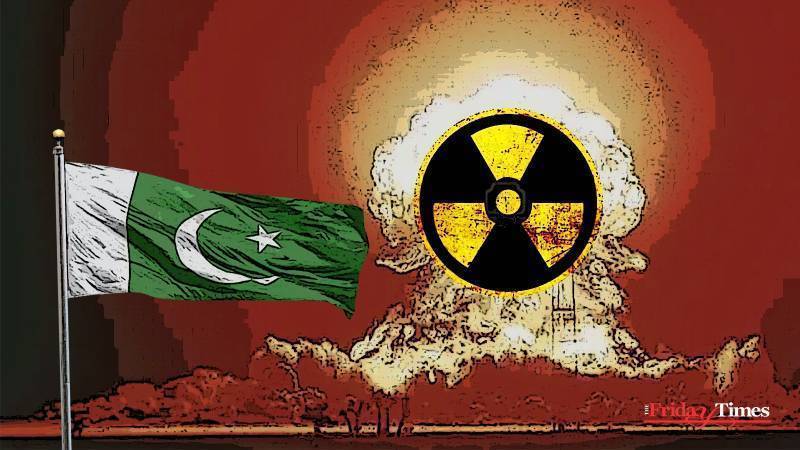
Just like in any other war, the truth was the first casualty of the Pakistan-India conflict between May 7–10—but this is only our assumption that both India and Pakistan were not telling the truth during the war. We don’t know what the truth is. Our sources of information about the war include the briefings by media wings of the Pakistani and Indian militaries. Another post-conflict source is the satellite images that Western media have been publishing since the conclusion of the war. Some of the military experts’ analyses are also a source of information—but they could be described as interpretations of the claims made during the conflict by Pakistani and Indian military media wings.
Pakistani and Indian media proved themselves to be good for nothing as far as obtaining knowledge about war is concerned. They simply acted as vulgar mouthpieces for their respective militaries. India in particular, and Pakistani media to a lesser extent, clownishly remained engaged in chest-thumping. It is true that media in Pakistan and India are heavily dependent on information provided to them by the media wings of their militaries, but there exists enough military expertise in both societies for the two media to investigate and analyse the situation to provide independent perspectives to their respective audiences. This, however, never happened. In the event, independent perspectives came from Western media and American think tanks, which relied heavily on satellite images to analyse the outcome of the war. I am writing this piece on the basis of what I heard and read about media briefings by media wings of the two military establishments, some of the analyses that were published in Pakistani and Indian media, reporting about the war in Western media, analyses of some of the independent military experts, and reports about the four-day war published by American think tanks.
Two questions about the four-day war particularly perplexed my mind. I have been pondering on these questions and I believe that answering these questions, or searching for answers to these questions, will get us closer to investigating and reaching a conclusion about whether a four-day war represents a complete breakdown of nuclear deterrence. Whether the Indian Prime Minister’s boast that India would not come under the influence of nuclear blackmail is mere hogwash? Or whether Indian military planning is still carried out under the impact of Pakistan’s nuclear weapons? Is Pakistan’s nuclear deterrence an old chapter in the strategic history of South Asia? Or whether it is still relevant in the Pakistan-India military equation? I pondered and continued pondering since the conclusion of the ceasefire but could not reach a definite final answer. I, rather, came up with multiple answers to my two questions. And there is no certainty attached to these answers. The questions are as follows:
A) Why didn’t India mobilise its land forces this time? In all the military crises since 1987, India had always mobilised its land forces close to the international border, and in the process threatened to capture Pakistani territory or to slice its territory into pieces. This time, India didn’t mobilise its land forces. Why? India developed its Cold Start Doctrine in the wake of the 2002 military crisis, under which it planned to deploy its strike formations close to Pakistani borders in order to punish Pakistan in case of a mass casualty attack on Indian soil. The Cold Start Doctrine laid down a policy to deploy elements of land and air power close to Pakistani borders. Why is the Cold Start Doctrine not implemented? In other words, why didn’t the Indians use their land forces in attacking Pakistan?
For many Pakistani military experts, what happened between May 7 and May 10 could be described as a classic case of the Indian military imposing its strategy of limited war on Pakistan—limited war below the nuclear threshold
This question has to be answered in light of the fact that what Indians did on May 7 was no less ambitious. They targeted civilian installations with their stand-off weapons across the Line of Control and across international borders. On earlier occasions like the Kargil conflict, Indians showed great restraint in not crossing the international border. The clashes remained restricted to fighting in the disputed territory of Kashmir. Then why did India this time cross the international border but didn’t use its land forces? This is my first question. Is it because India still factors Pakistan’s nuclear weapons into its military planning? Is it because the action of Indian land forces crossing international borders would have more dangerous strategic implications than hitting targets with stand-off weapons?
B) My second question is: Why did India target Pakistan’s military installations on May 9 and May 10 when on the first day of the strike, Indians announced that they were targeting only alleged terror networks? For many Pakistani military experts, what happened between May 7 and May 10 could be described as a classic case of the Indian military imposing its strategy of limited war on Pakistan—limited war below the nuclear threshold. India’s first military strikes on May 7 were limited to civilian targets. No major cities or military installations were hit on the first day. What happened on the second day when India started targeting military installations? Some hits came close to nuclear storage sites—a claim which Pakistan denied. Can we say nuclear deterrent is now irrelevant in Pak-India military relations?
Attacks against military and civilian targets across international borders have become a new normal in South Asia, despite the fact that the two sides are still in possession of nuclear weapons and their delivery systems. On the following day, May 8, India accused Pakistan of violating its airspace by sending hundreds of military drones across the international border. India said it responded by sending military drones of its own into Pakistani airspace. This was followed by missile strikes on Pakistani air bases across Pakistan. On the morning of May 10, the Pakistan military targeted Indian military bases across Northern India along the length of the international border from Kashmir to Sir Creek.
The problem is the information that we have about the four days of conflict is very sketchy and most of the time it was coming from the Public Relations Department of the two military establishments. For example, we don’t know what prompted Indians to launch military strikes on the Nur Khan Airbase on the morning of May 10. Only a day before, they were telling the world that they were avoiding strikes on Pakistani military installations. Is the Indian accusation that on the morning of May 8, Pakistan sent hundreds of military drones into Indian airspace correct? Because the Pakistanis said they neither sent drones nor hit Indian bases with ballistic missiles on the morning of May 8.
The Pakistanis launched surface-to-surface ballistic missiles on the Indian base on the morning of May 10 and according to Pakistani media, this was done after the Indians struck Pakistani bases directly. If somehow we can get accurate information about what happened on the morning of May 8 and what prompted Indians to launch a direct attack on military installations inside Pakistan, we would be in a better position to comment on whether deterrence would have continued to hold in the military relations between the two countries. What prompted India to launch missile attacks against Pakistani bases? And is it correct to say that the Pakistanis launched the attacks on Indian bases after coming under attack themselves?
Plausible answers to Question No. 1:
In Indian society, this question was hardly raised as to why India didn’t mobilise land forces. The society and the media were busy celebrating the technological prowess of their military when it lobbed stand-off weapons to accurately hit targets—as claimed by the Indian military—inside Pakistani territory. So nobody asked why they didn’t mobilise the land forces. Surprisingly, this question was not raised by Pakistani media either. I asked this question to Pakistan’s foremost expert on nuclear and strategic affairs, Dr Rabia Akhtar. “Land forces are used when there is a plan for protracted war or when there is a plan for capturing territory,” she said. “In this war, there were short and calibrated attacks from both sides in which involvement of land forces was not considered necessary.” She also said that the very nature of war has undergone a change. “Now the war is not only fought with tanks and guns, now this is a war of modern technology in which missiles, drones, and cyberattacks give more precise results.”
Hitting Nur Khan Airbase, in the heart of a Pakistani military establishment, and several other military bases in the heartland of Pakistan would mean that Indians were striving close to inflicting major damage on Pakistan’s military machine
Adviser to Pakistan’s National Command Authority (NCA), Lt General (R) Khalid Kidwai, however, interprets this fact quite differently. He said that the fact that India didn’t use land forces and didn’t implement the Cold Start Doctrine speaks volumes about the crucial role the Pakistani nuclear deterrent plays in Indian military decision-making. After listening to his speech, I got the impression that he thought that Indians dropped the Cold Start Doctrine because it was more ambitious and could have provoked Pakistanis into contemplating nuclear response. This, Indians wanted to avoid at every cost. Therefore, they didn’t mobilise their land forces. Cold Start Doctrine was designed to capture Pakistani territory in the initial phase of the war to inflict irreparable damage to Pakistan’s military machine as a punishment for their alleged role in supporting terrorism against India. Let's read this thesis in Lt General (R) Kidwai’s own words:
“Please note that the much deliberately conceived and prepared for over a decade, the much invested-in and the much-hyped Cold Start Doctrine did not figure out in the Indian military’s response option. There were no reorganised Independent Battle Groups (IBGs) striking Pakistan to make their bridgeheads within 48–96 hours of an alleged terrorist event, there were no Theatre Force Reserves (TFRs) mobilising rapidly as follow-on forces to join the early battles for a breakout. There was no rush to capture Pakistan’s sensitive spaces while remaining below Pakistan’s nuclear threshold. For all practical purposes, the Indian Army went missing in action. Resultantly, it now appears that the Cold Start Doctrine has been given a formal decent burial or perhaps a cremation. The Cold Start Doctrine figured out neither in February 2019 nor in May 2025.”
“It also appears that what the Indian armed forces, particularly the Indian Air Force, were compelled to undertake this time were selective operational missions plucked out of a newly conceived operational strategy called the Dynamic Response Strategy (DRS). The Indian DRS response strategy is in itself a major climbdown from the Cold Start Doctrine because the Indian military probably concluded that the Cold Start Doctrine was much too ambitious to be undertaken given the strategic balance prevailing in the South Asian nuclear environments. It is clear by now that Pakistan’s robust nuclear weapons capability and the linked international reactions that come into play became the reason for the Indian operational climbdown from the Cold Start Doctrine to a relatively less ambitious Dynamic Response Strategy. It also seems that the Indian military was not yet fully prepared and trained to undertake operations under the DRS. Additionally, critical deployments on the long Northern Front of nearly 3,800 km against China continue to remain a handicap as these deployments drain some of India’s offensive punch against Pakistan.”
Plausible answers to Question No. 2:
Here, our analysis would be stuck in an impossible situation in the face of lack of information about what happened in the war. Did India on its own gradually escalate the war and strike military targets on the morning of May 10? Was it provoked by the Pakistani response to expanding its target lists? Why are Pakistanis denying the May 8 drone attacks if they actually launched them? Or are Indians telling lies? We don’t have definite answers to these questions.
There are two possibilities: India attacked Pakistani military bases on the morning of May 10 in response to Pakistani attacks on its bases on May 8 and 9. But then we can ask a genuine question: why do Pakistanis deny these attacks? I mean they were in a war situation and denying attacks made no sense. Perhaps they were under pressure from their American friends not to respond to Indian provocation. Not plausible—after all, they did respond and boastfully announced their response on the morning of May 10. The second possibility is that Indians gradually climbed the escalator ladder and followed strikes on civilian targets on May 7 with strikes on military targets on May 9 and 10. Perhaps after losing five fighter jets on the first night of the war, they thought it proper to inflict corresponding damage on the Pakistani military. Hitting Nur Khan Airbase, in the heart of a Pakistani military establishment, and several other military bases in the heartland of Pakistan would mean that Indians were striving close to inflicting major damage on Pakistan’s military machine.
The second possibility would mean that Indians are ready to take risks much more grave than can be expected from a military that is afraid of Pakistan’s nuclear weapons. On the other hand, the Pakistani response was much more measured and remained restricted to hitting Indian bases along the international border. Does this mean Pakistanis were much more cautious in taking risks? The fact that India didn’t mobilise its land forces could be interpreted as India’s restraint in not attempting to capture any part of Pakistani territory, which was earlier envisaged under the Cold Start Doctrine.
Similarly, if India did on its own gradually escalate the war and unilaterally expanded its target list to include military targets, then it would mean Indians are ready to take greater and graver risks in the face of Pakistan’s nuclear posturing. After the attack on the Nur Khan base, information appeared on Pakistani television screens that the Pakistani government had convened a meeting of the National Command Authority (NCA)—the institution which controls the country's nuclear weapons and has the authority to order their use. Reports in the media suggest that the American administration also started to activate its diplomatic channels after the attack on the Nur Khan base. Perhaps they know how extremely low Pakistan’s nuclear threshold could be if Pakistan’s vital military assets come under threat. It means the fear of nuclear exchange not only is a factor in India’s military planning, but it is also a factor in Washington’s diplomatic calculations.
Now India seems to be threatening that the next time their response would be much harsher and harder than the May 7–10 conflict. Pakistan’s Chairman of the Joint Chiefs of Staff Committee, General Sahir Shamshad Mirza, has also pointed out that the next war would not remain restricted to Kashmir; it would be fought across international borders. His response to Reuters’ question implicitly indicated that next time, Pakistan’s military response would cover the whole of India. During the May 7–10 conflict, Pakistan only targeted military bases close to the international border. It means Pakistan would not show any restraint next time. There is a general belief in Pakistan’s military establishment that India is a target-rich country. I am sure Indians have their target list for Pakistan. Are we heading towards a collective suicide?