

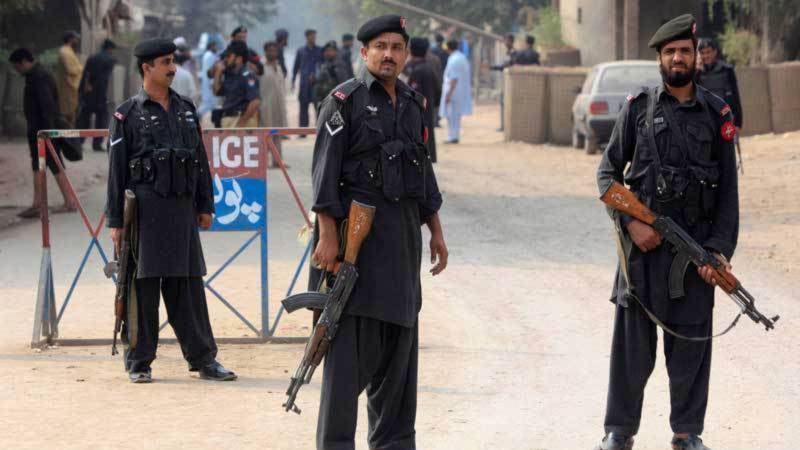
In response to the deteriorating security situation in Khyber Pakhtunkhwa, a conflict-prone province bordering Afghanistan, the PTI-led provincial government and opposition parties convened their own all-parties conferences, using the traditional term Jirga (grand assembly). These meetings were held amid a renewed surge in terrorism, a trend that has persisted since the inception of the War on Terror in 2002. The resurgence of the Pakistani Taliban following the return of the Taliban regime in Kabul, after the U.S.-led coalition's withdrawal from Afghanistan in 2021, has further intensified challenges for Pakistan’s security apparatus.
During the War on Terror, the Pakistani state increasingly recognised that militant groups were exploiting the erosion of traditional institutions—both in the Sama (settled districts governed by the provincial administration) and in the Ghar (formerly FATA, previously federally administered areas). This erosion was compounded by the rise of a nouveau riche class comprising professional middle classes, business elites, and actors enriched by the illicit drug trade and the war economy. Additionally, capital inflows from labour migrants working in urban centres like Karachi or abroad in the Gulf states, Europe, and East Asia reconfigured local socio-economic hierarchies and challenged the authority of traditional tribal elites.
Economically marginalised and socially isolated, traditional elites such as the Maliks and Khans lost their centrality in local governance. With their electoral influence waning and hegemonic status eroded, many were displaced by newer elites enriched through war, narcotics, and migration. Rather than serving as effective intermediaries for restoring the state's writ, many Maliks became liabilities—over a thousand were assassinated in former FATA, and others sought refuge in urban areas. This breakdown of traditional authority structures accelerated with the rise of insurgency and the failure of tribal elites to mediate the crisis effectively.
The situation was further complicated by the 18th and 25th Constitutional Amendments, which aimed to devolve power and integrate FATA into the national administrative framework. While well-intentioned, these reforms undermined traditional structures without providing viable institutional alternatives. Though they nominally empowered provincial and local governments, these reforms coincided with an aggressive push by the state to extract natural resources—oil, gas, copper, and timber—vital for national capital accumulation. Yet, provincial institutions could not assert full control, requiring the continued involvement of federal security forces.
Measures such as the restoration of tribal quotas in educational institutions and the formation of a committee to explore reinstating the jirga system in former FATA signal a shift toward traditional mechanisms of control
Crucially, a convergence of interests between the federal government, international capital (especially Chinese investments under CPEC), and the Pakistani military has intensified contestation over resource control. Local Pashtun elites, emerging middle classes, and provincial bureaucracies also seek a share of these resources. However, their influence remains structurally constrained by the centralised power of the federal state and its transnational partners. The incapacity of provincial law enforcement to independently counter insurgents further entrenches reliance on the military.
Former Senator Afrasiab Khattak characterises this geopolitical moment as the beginning of a ‘new Great Game’ in the region, marked by a contest between U.S.-led hegemonic power and a rising Sino-Russian axis. Strategic investments like the Belt and Road Initiative (BRI), particularly its flagship project CPEC, alongside the reinstallation of the Taliban regime and the increasing presence of transnational militant groups such as Daesh, highlight the region’s growing strategic complexity. For much of the Pashtun intelligentsia, this is not a new phase but a continuation of the historic Great Game that has shaped the region since the 1830s—an ongoing theatre for imperial ambitions.
The broader geopolitical context—including prolonged foreign military occupation in neighbouring Afghanistan has significantly limited the autonomy of provincial governments in formulating counterinsurgency or reconciliation strategies. In practice, decisions regarding engagement with militants, whether through negotiations or military operations, remain firmly under the control of the Pakistan Armed Forces. While nationalist groups often criticise the deployment of federal forces and use it for political messaging, neither these groups nor the provincial police possess the capacity to effectively counter militant threats. This entanglement of local, national, and international interests has made resolution of the conflict deeply contested and elusive.
Despite multiple constitutional amendments, from the 18th to the 25th, substantive improvements have remained absent. These reforms have neither revived the declining power of local elites nor strengthened the state's authority, raising serious questions about the ability of formal institutional change to address entrenched structural and security challenges.
In response to persistent insecurity, the Pakistani military increasingly relied on local militias and pursued a strategy of fragmenting insurgent networks by making deals and integrating select factions into mainstream politics. These so-called "Good Taliban" were used to counter more hostile groups. While this approach helped reduce violence in some areas, its growing role in local governance and social affairs has, at times, overlapped with or displaced civil society and traditional tribal institutions. The emergence of parallel authority structures has raised concerns about long-term institutional development and social cohesion.
Today, the security situation along the Durand Line from Bajaur to Waziristan remains highly volatile. In this context, the federal government has signalled its intention to reassert control, including the possible rollback of certain reforms enacted under the 18th and 25th Amendments. The transformation of the Frontier Constabulary—originally established in 1915 as a provincial paramilitary force tasked with guarding the North-West Frontier Province (NWFP) against tribal incursions—can be interpreted as a broader manifestation of the federal government's gradual centralisation of authority and expansion of its coercive apparatus within Khyber Pakhtunkhwa. Measures such as the restoration of tribal quotas in educational institutions and the formation of a committee to explore reinstating the jirga system in former FATA signal a shift toward traditional mechanisms of control. These moves, coupled with demands by JUI-F leader Maulana Fazlur Rehman for full restoration of FATA’s prior administrative status, have alarmed the provincial government and sections of the Pashtun elite. They see these developments as encroachments on provincial autonomy and disruptions to the post-merger governance framework.
The population of the province finds itself caught between two forces of violence and insecurity, which many describe as being ‘between the devil and the deep sea
The recent convening of two jirgas organised by rival political forces within a single week must be seen in this broader context. The PTI-led jirga, headed by the Chief Minister, took a bold stance against any new military operation in the province. It also called for an end to the policy of distinguishing between “good” and “bad” Taliban and emphasised defending the province’s interests at all costs. CM Amin Gandapur said in a press conference, ‘We have been repeatedly saying that there is no room for good or bad Taliban in the province. Individuals carrying weapons under the name of any institution will not be allowed to remain in the province. Aiming at the armed forces, he said that those supporting the "good Taliban" must immediately expel them from the province. They are the reason the gap between the government, the public, and state institutions is widening. This makes it increasingly difficult for the ANP-led jirga to mount a comparable challenge, especially in light of PTI’s continued public and electoral support in Khyber Pakhtunkhwa—even while its leader, Imran Khan, remains imprisoned and the party faces pressure from the federal establishment.
The interest of Pashtun commercial and business classes and bureaucracy can be judged from the very commonalities in the resolutions that announcements were made in the two jirgas. Participants in both jirgas strongly voiced support for provincial rights, expressing firm opposition to federal encroachments. They demanded the province's share in the National Finance Commission (NFC) Award and categorically rejected the Mineral and Mines Act, viewing it as an infringement on the province's constitutional and economic autonomy.
The ANP-led jirga warned of a potential march on Islamabad should the federal government fail to restore peace in the province. Simultaneously, it called for the full implementation of the 18th Amendment to ensure greater provincial autonomy, while also urging the enforcement of the National Action Plan in both letter and spirit—highlighting the need for a coherent and accountable national security policy. The response of the Pashtun nationalist intelligentsia was marked by a complex interplay of hope and despair—reflecting both cautious optimism regarding the revival of traditional political forums and deep scepticism about their capacity to yield substantive outcomes in the face of entrenched structural challenges. Under the title ‘National Dialogues and Jirgas’, Dr Muhib Wazir, Director of the Pakhtunkhwa Study Centre at Bacha Khan University, expressed cautious optimism regarding the role of jirgas and political leadership in a recent social media post.
While acknowledging their potential, he emphasised the growing demand for tangible outcomes, particularly from politically conscious youth and party workers, and called for these traditional forums to move beyond symbolic declarations toward concrete and result-oriented actions. Most Pashtun nationalist intellectuals remain critical of the jirgas, highlighting their perceived ineffectiveness in addressing the escalating tide of terrorism in the province. They argue that these traditional forums, while symbolically significant, have largely failed to offer a coherent or impactful strategy for countering militancy and restoring long-term stability. Prof Mohammad Naeem, in a Pashto post on social media, says ‘a continuous cycle of jirgas upon jirgas and conferences upon conferences seems to be unfolding—an unending sequence. From the perspective of resolving issues, these jirgas have largely proven ineffective. Although political parties may convene them with sincere intentions, the absence of meaningful follow-up and implementation renders them symbolic at best. It appears that, for political parties, convening such jirgas often serves as a temporary mechanism to relieve public pressure rather than a genuine attempt at conflict resolution.’
The population of the province finds itself caught between two forces of violence and insecurity, which many describe as being ‘between the devil and the deep sea.’ Those with financial means have increasingly relocated to urban centres, particularly Islamabad, while the rural poor, left behind, continue to bear the brunt of counterterrorism policies that have persisted over the past two decades. In many instances, jirgas are convened not as instruments of conflict resolution, but as mechanisms to suppress spontaneous protests and sit-ins—typically organised by local youth and grassroots anti-war activists operating independently of mainstream political parties. These protests emerge in response to ongoing target killings, enforced disappearances, drone strikes, improvised explosive device (IED) blasts, curfews, and mass displacements—perpetrated by both militant groups and state security forces.