

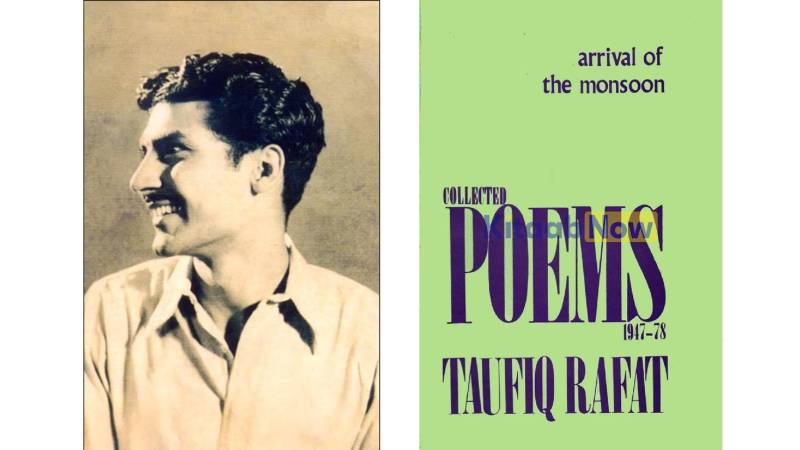
While perusing Yasmeen Hameed’s meticulously edited recent anthology of Pakistani writers in English, I came across the entry on Taufiq Rafat (1927-1998), the pioneer of the Pakistani idiom in English literature, who was born 99 years ago today in Sialkot. In the book, Rafat has been credited as "the only poet who was published in all the three esteemed anthologies (of English poetry) from Pakistan." At one time, Rafat used to be Pakistan’s most important English poet.
He was a pure Punjabi, he would very much speak Punjabi at home, with his chums but wrote poetry in English and people who understood English poetry acknowledged him as their guru. In the beginning he also wrote a few stories in Urdu, among which three, Lattu (Top), Hoonta (Three and A Half Times) and Peeli Manzil (Yellow Mansion) were published in Ashfaq Ahmed’s magazine Dastan Go and one story Moby in the journal Andaaze, which was edited by Jilani Kamran.
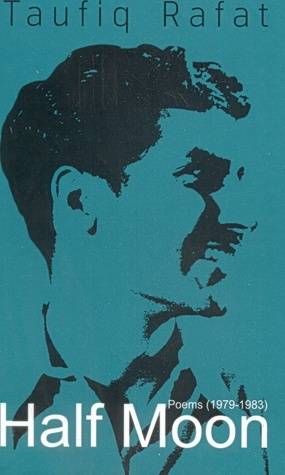
Rafat had been educated in Dehradun, Aligarh and Lahore. In Dehradun, his family used to exchange visits at Quratulain Hyder’s (also born in 1927 like Rafat) home; Hyder has mentioned Rafat and his poetry in Dehradun in one of her essays. Taufiq Rafat has written two books of poetry, Arrival of the Monsoon and Half Moon, the latter published by his wife Rehana Taufiq under the banner of the Taufiq Rafat Foundation.
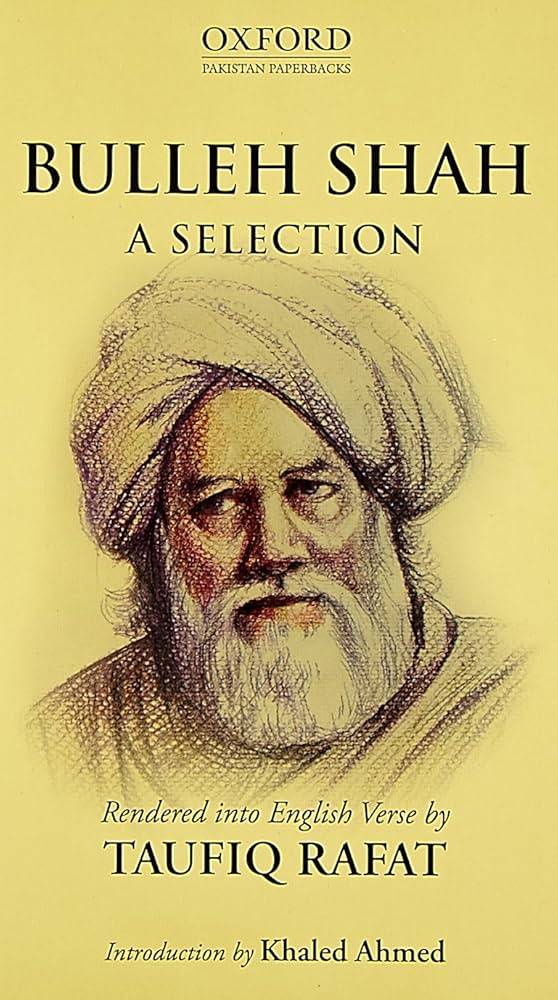
In addition, he also translated the kaafis of Bulleh Shah and Qadir Yar’s qissa of Puran Bhagat into English, both books are available from the Taufiq Rafat Foundation. This Foundation was made after his death by his children Seerat Hazir, Tabish Hazir, Jalees Hazir, Tamkanat Hazir, Zaman, Shumail and their mother Rehana Taufiq. Rafat was also translating a few Punjabi lullabies and the poetry of Baba Farid but one day somebody stole his briefcase, poems instead of banknotes were found, perhaps they were the translations of those very lullabies and poetry of Baba Farid.
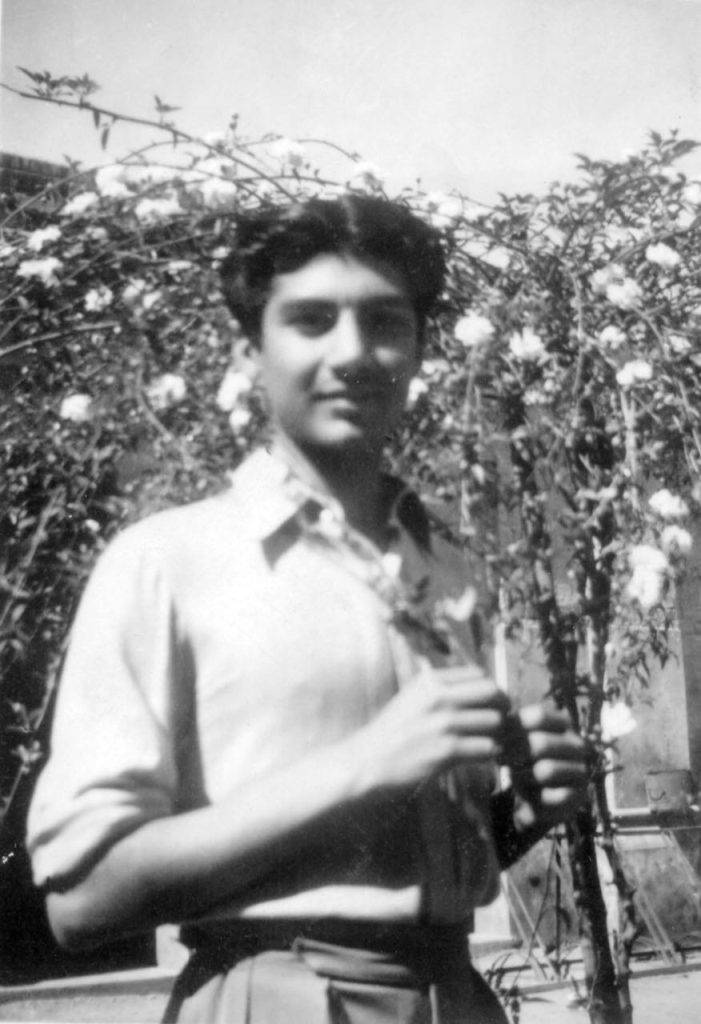
He also wrote a drama with the title of Foothold, which was staged in 1969 at the APWA Auditorium by Farrukh Nigar Aziz in which Khaled Ahmed, Ijaz Nabi and Sheherezade, the wife of the eminent artist Zahoor ul Akhlaq played central roles. Many years later in 2006 Claire Pamment presented it as a rehearsal play at the National College of Arts Rawalpindi. Those who have seen both productions vouch for the enjoyment of both.
The environment of Rafat’s poems - the rivers, mountains, trees, birds, his characters - all of them can be seen in our vicinity, absorbed in our observation and senses
In the war of 1965 Taufiq Rafat and his wife came to Lahore from Sialkot but whenever Sialkot was attacked he would go to Sialkot and narrate the eyewitness account of the devastations of the war. After the ceasefire, he went to Chawinda with some journalists; the journalists were debating the number of corpses on the basis of which they were to guess whether it was a victory for India or Pakistan. On this, Taufiq Rafat said, “The real victors indeed are the vultures and kites which are hovering upon the sky.”
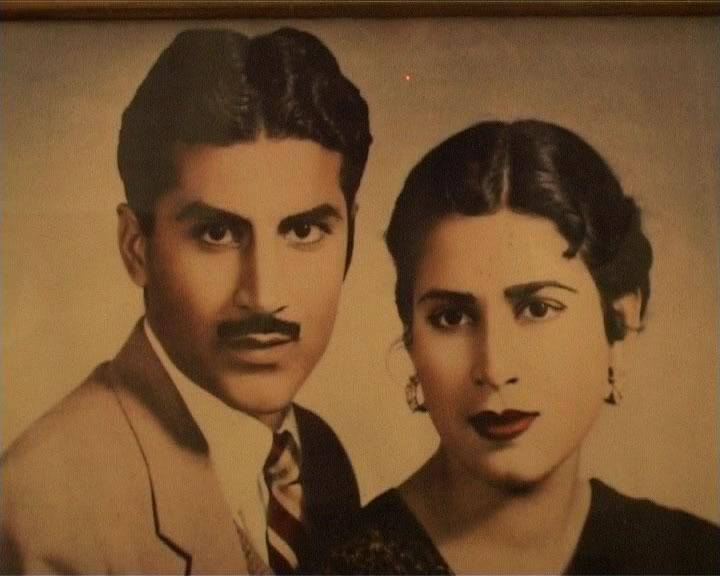
Many of his poems have been written affected by war among which, is The Medal, in which the feelings of the wife of a martyred soldier and his child have been described. It is a heart-stopping poem. In another poem he shows a scene of a destroyed village after war in this manner.
"What remains after
the jackals have taken
their share; the agonised flesh
is gone; but the bones remain;
Skeletons flung at
all angles to prove
the tragic theorem of death."
("The Village," Arrival of the Monsoon)
Most probably in 1959, he started service in Burmah-Shell and rented a house in Samanabad in Lahore. He would often visit the Fine Arts Department of Punjab University and the National College of Arts. Among his friends were Colin David, Shakir Ali, Nayyar Ali Dada, Moeen Najmi, Ijaz ul Hassan, Kamil Khan Mumtaz, Khalid Iqbal and many other artists.
After a few years he left service to return to Sialkot and then in 1975 he came back to Lahore and opened his own company. Many poets and artists visited his house; apart from artists, Rafat also had friendship with the poets and writers of Lahore. Among which Munir Niazi, Ahmad Mushtaq, Intizar Hussain, Kaleem Omar, Safdar Mir, Raheel Akbar Javed and many other people were included. None of these people is alive now except Ahmad Mushtaq.
Among Rafat’s special friends were Kaleem Omar and Khalid Iqbal. Omar was an adept English poet and Iqbal an unparallelled artist; the latter would go towards gardens, jungles and fields early in the morning. Behind his cycle would be tied his colours, canvases and accessories of painting. He mostly painted landscapes. On his return home in the evening he would arrive at Rafat’s and would chitchat for a long time. Kaleem Omar was crazy about Rafat’s poetry. He would also visit Rafat’s house regularly and discuss poetry. When Omar left for Karachi, he began writing his column in Dawn, a newspaper from there, every week in the form of a letter which used to begin with ‘Dear Taufiq’. Through this column he wrote until the death of Taufiq Rafat, he upheld his relation with the latter even while remaining far from him.
Rafat had several books on art and poetry in his library at his home. His home had paintings by Shakir Ali, Ijaz ul Hassan, Colin David and Khalid Iqbal.
Regarding poetry, Rafat was a stickler for craft. He held that a good poem cannot be written without knowing the craft of the poem. So it was important to be acquainted with craft.
"Only for those who hone technique
till the craft flows into the substance
like water into sand,
till each word is irreplaceable,
but slips into the landscape of a poem
as casually as the startled snipe
plummets to a cool anonymity."
("Reflections," Arrival of the Monsoon)
At that time, movements for decolonization were running in Africa and Asia. Before this, babu English was being written in India. It is said that after reading Sarojini Naidu’s English poetry Bernard Shaw had quipped, ‘These are the hazards of teaching English in India.’
Even after the creation of Pakistan, colonial poetry was being written for long. Like May/June is a season of harsh summers here, but since for the inhabitants of England this was the season of spring, so for our English poets too the summer season came to be regarded as very much the spring season, but Taufiq Rafat says,
"Only the whirling sun of June,
or January hail can extract from us
spontaneous speech."
("Ceremony for Autumn," Arrival of the Monsoon)
Taufiq Rafat wrote an essay in English about the Pakistani idiom in which he said that the temperament of English literature being written in Pakistan or South Asia should be born of the cultural idiom of South Asia.
The environment of Rafat’s poems, rivers, mountains, trees, birds, his characters, all of them can be seen in our vicinity, absorbed in our observation and senses. Many of his poems are written in the manner of stories, in which he uses images and metaphors sparingly but when the poem ended the whole poem became a metaphor. Like his poem Gangrene in which there is no mention of the division of Pakistan into two, but it becomes a metaphor for the fall of Dhaka.
According to Taufiq Rafat, a new poet creates new myths, he would take trifling matters to the degree of legend in his poetry,
"But we …..
Must find the myths for our age, …..
The drone of the homing jet
Pollinates all cultures between
Hong Kong and San Francisco."
("Reflections")
Half Moon is his last poetic collection in which the majority of poems were written for his brother Shahbaz Ghalib. Rafat greatly loved him. Ghalib passed away of cancer at the age of forty-eight. These poems by Rafat make one very dejected.
"I am waiting for a brother to die…….
I, out here,
In the garden alone,
looking up at the moon.
How can it be so blurred
On so clear a night?"
("Poems for a younger brother," Half Moon)
Why does he see the moon as blurred on a clear night? In this line how does he hide his eyes blurred with tears.
In another poem he expresses his love for his brother with reference to his shirt:
"His wife gives me
one of his old shirts.
I would like to think
they are being used, she says.
He was tall and heavy.
The shirt hangs loosely
on my smaller frame,
but where it touches the skin
it will not be shaken free."
("Shirt," Half Moon)
During the heyday of Marxism, Rafat did not give much importance to it. He used to say, he had absolutely no interest in romantic or any type of ideological or political poetry but when he was imprisoned in jail during the era of General Zia-ul-Haq in 1978, he wrote a few poems on his experience of jail. He had no relation with any party neither did he have any political ideology.
"I am not given to heroics.
My poems were of ordinary people
in an ordinary landscape"
("The Poet as a Martyr," Arrival of the Monsoon)
He was working in the National Book Foundation. But in those days a blind sword was being struck which did not recognize anybody. Rafat used to say that Genghis Khan and Hitler could not obliterate poetry, how a dictator could do so? Even in the poems written in jail there is no sloganeering nor any impression of being a victim or self-pity.
"Anything, anything, is
better than the monastic fingering of self-pity"
Somewhere he makes a tiny portrait of some guard or policeman, at another of some scene outside, somewhere he mentions his solitude in which he even likes the interruption of the interrogating investigation officer.
"When you are too much alone, any interruption
is welcome, and although the fear was still there,
spasmodic, I began to look forward to
the interrogations."
("Solitary," Arrival of Monsoon)
Even the faint sound of some stray cat lapping milk from a broken bowl is pleasing for him in the solitude of jail.
"A chance visit
I thought and blessed the occasion. But when I saw
A cracked bowl of milk in its corner, I knew
It would be back
The lapping was a homely, reassuring sound."
("Solitary")
Taufiq Rafat had a paralysis attack in 1984, he very much recovered from it but went into complete silence after that, even stopped writing and reading. He silently departed from this world on 2 August, 1998 at his home at the age of seventy-one.
"Because it comes so rarely to our garden,
and I do not know its name,
I call it a seldom bird.
Small, and of a plebeian brown,
it has a long tail
with horizontal white stripes.
Which it wags sideways, furiously,
instead of up and down.
It seems a placid sort, except for the tail.
You make me uncomfortable, seldom bird,
reminding me of my affliction.
I am content with a morsel or two,
but this thing inside me I cannot name
or control, pummels and wags me
sideways, when the rest of my body is still."
("A Seldom Bird," Half Moon)
The seldom bird which the poet sees sometimes is perhaps the divine inspiration of the poet or an incident of passing through the wonder of some improbable experience in the monotony of life. This is the name of some condition which agitates the poet from within. At the end of the poem, this very bird becomes a part of the poet’s senses, the bird which flaps within the chest, which becomes a metaphor for the creative anguish of the poet.
Taufiq Rafat too is such a seldom bird which appears sometimes in this garden of existence.
"Because it comes so rarely to our garden,
and I do not know its name,
I call it a seldom bird."
Note: Information about Taufiq Rafat’s life taken from a biographical essay written by Sarmad Sehbai.