

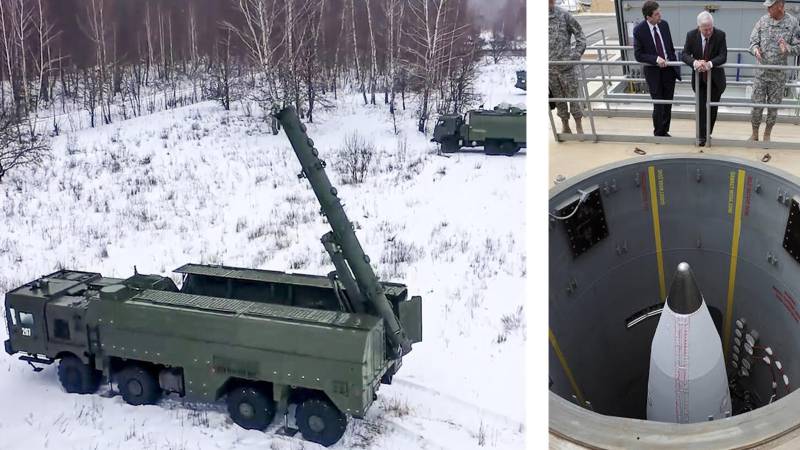
Arms control is not obsolete yet; however, it has been asked to solve a problem it was never designed for. The old architecture of arms control restrained two superpowers with comparable arsenals and shared rules of verification in order to ensure a balance of terror as a sustainable peace mechanism. The ongoing “third nuclear age” features at least three to five major nuclear competitors, rapid technological changes, weakened treaties, and a growing number of middle powers whose crises and conflicts can define international peace and security.
The central question is therefore not whether states can negotiate a grand arms control and disarmament treaty tomorrow. Rather, it is whether minimum rules of restraint can be built before a crisis turns technological ambiguity, compressed decision-making time, cognitive competition, political hostility, and nuclear signalling into irreversible escalation resulting in nuclear catastrophe.
Shifting Nuclear Ages and Eroding Restraint
With transitions in international peace and security and geopolitical dynamics, the characteristics of each nuclear age transformed accordingly. During the Cold War, the first nuclear age was largely a bipolar contest between Washington and Moscow. However, the second was defined by the USA’s unipolarity and a gradual expansion of arms-control instruments. Now, the third is marked by multipolarity, intensifying US–China–Russia competition, and the erosion of the bilateral arms control agreements that are important for strategic stability.
That erosion is not merely rhetorical. The 2019 collapse of the Intermediate-Range Nuclear Forces Treaty and Russia’s suspension of participation in New START have left the two largest nuclear arsenals with far fewer binding limits and verification mechanisms than during the Cold War. Since day one, the broader nuclear order has been increasingly divided between pacifist states that see disarmament as the foundation of security and realist states that treat deterrence as indispensable, especially when the world has not seen one single day when there was no war going on across the globe, making war a feature more permanent than peace.
Cold War arms control relied on a relatively simple bargain or formula based on limiting deployed strategic systems, verifying compliance, and preserving mutual vulnerability. That model is harder to reproduce when the competitors possess different force structures, threat perceptions, alliance commitments, and strategic and technological advantages. Now, exploring new common ground is needed.
The deeper barrier to arms control in the third nuclear age is not technical; instead, it is the collapse of a shared belief that restraint can serve mutual interests
Emerging technologies compound the difficulties and complexities. Hypersonic missiles, cyber operations, artificial intelligence, space-based systems, and quantum technologies can blur the boundary between conventional and nuclear war, weaken early warning, trigger escalation, and create incentives for pre-emption. Their effects on deterrence and escalation are real but not fully understood yet, which makes treaty-style numerical limits alone insufficient.
Resultantly, the deep-rooted security dilemma in the international system creates a strategic environment in which one state’s missile defence, conventional precision strike, cyber capability, logistical movement of certain arsenals, or space asset may be interpreted by another as preparation for nuclear escalation or coercion.
Making Arms Control Relevant to the Third Nuclear Age
Now, the question arises: how can arms control be made relevant to the third nuclear age? The complexity is not in abandoning arms control, but in redefining it. Contemporary arms control should focus less on ambitious disarmament milestones and more on crisis stability, transparency, and escalation management among rivals who do not trust one another.
A suggested realistic agenda would include:
- Crisis Communications: Reliable, politically protected military-to-military channels to prevent misreading intentions during cyber incidents, military exercises, or conventional clashes.
- Launch-Warning Safeguards: Shared understandings that missile launches, cyber intrusions, or satellite disruptions must not automatically be treated as evidence of a nuclear first strike.
- Data Exchanges: Limited notifications on major missile tests, exercises, deployments, and space activities, even where formal treaty verification is impossible.
- Technology-Specific Rules: Agreed constraints on AI-enabled nuclear command systems, cyber operations against nuclear infrastructure, and interference with early-warning satellites.
- Regional Risk-Reduction Mechanisms: Pakistan–India, Korean Peninsula, and Middle East dialogues that address escalation pathways rather than demanding immediate disarmament.
- Allied Assurance Without Arms Racing: Frameworks that reassure allies while avoiding deployments and doctrines that make adversaries fear a disarming first strike.
David Cooper, a former US defence official and professor at the US Naval War College, rightly laid out in his book Arms Control for the Third Nuclear Age: Between Disarmament and Armageddon that “rather than treating arms control as a path primarily to disarmament, states should use pragmatic, adversarial agreements to stabilise deterrence relationships in a multipolar nuclear order. That does not mean abandoning the goal of a world without nuclear weapons; it means recognising that risk reduction is a precondition for pursuing that goal safely.”
The deeper barrier to arms control in the third nuclear age is not technical; instead, it is the collapse of a shared belief that restraint can serve mutual interests. Arms control once rested on the hypothesis that nuclear states accepted limits because they believed mutual vulnerability, verification, and predictable behaviour were preferable to an unconstrained arms race.
That hypothesis is now contested. Major nuclear-armed states present deterrence as the primary source of security, while several other states view the existing nuclear order as unequal and exclusionary. The debate between the two visions of deterrence-based security and disarmament-based security will shape the politics of the third nuclear age. Here, the question arises: how, in an unequal and unjust world, can the idea of disarmament be achieved, especially after Ukraine and Iran were struck by nuclear states? The advocates of deterrence are more convinced than ever that there is no other means to ensure peace but the balance of power.
Options for States
First, governments should stop treating arms control as an all-or-nothing choice between a comprehensive treaty and strategic competition. The immediate priority is to prevent the worst outcomes, not to solve every disagreement at once. Moreover, it is pertinent to consider arms control as a method to regularise the inbuilt stability-instability paradox in the world order.
Second, the most feasible starting points are unilateral and reciprocal measures, such as no cyberattacks on nuclear command-and-control systems, commitments not to interfere with early-warning satellites, notifications of large-scale exercises, regularising the use of emerging technologies during peace and war, developing a rulebook for artificial intelligence, an inbuilt de-escalation framework, and the preservation of crisis communication. These measures do not require trust; they require a shared recognition that cognitive misperception should not facilitate nuclear escalation.
The third nuclear age will not be made safer by more warheads, faster missiles, or better algorithms alone. It will be made safer by rules that give decision-makers time, information, and incentive to step back. Arms control must return not as nostalgia for the Cold War, but as the minimum operating system for survival in a more crowded, connected, advanced, and combustible nuclear world.