

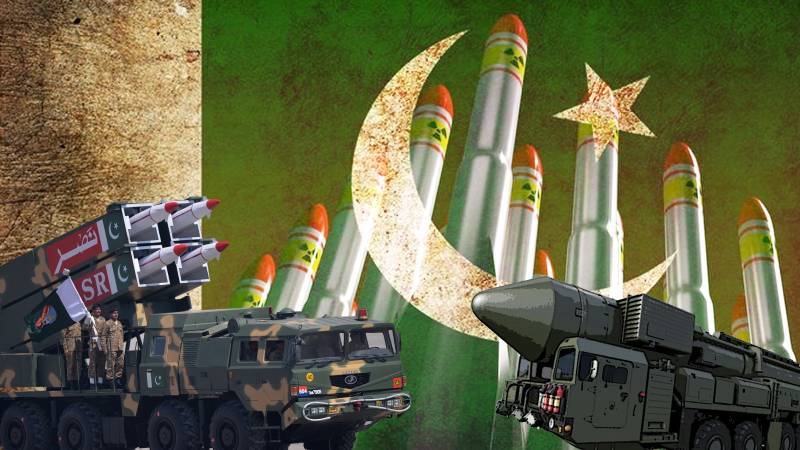
In classical deterrence theory, a strategic doctrine is validated by its success in preventing the very war it is designed to avert. In the nuclear age, Carl von Clausewitz’s insight that war is inherently uncertain acquires absolute significance: once nuclear war begins, deterrence has already failed. For a nuclear-armed state such as Pakistan, the primary purpose of its strategic arsenal is therefore non-use, sustaining a credible threat sufficient to deter existential coercion. As Bernard Brodie argued in 1946, the chief purpose of military power in the nuclear era is no longer to win wars but to prevent them, without compromising national sovereignty.
The conceptual bridge between Full Spectrum Deterrence (FSD) and strategic stability is the Stability–Instability Paradox, associated with Glenn Snyder and later developed by Robert Jervis. The paradox holds that when adversaries attain stable second-strike capability, the likelihood of major nuclear war declines; yet this very stability may lower the threshold for limited conventional or sub-conventional conflict, as each side believes the other will avoid risking nuclear escalation over any provocation. Nuclear weapons, in this understanding, are instruments of existential deterrence rather than flexible tools for coercing specific political concessions or managing local clashes.
Pakistan's Calibrated Posture
Pakistan’s Full Spectrum Deterrence (FSD) is a calibrated nuclear posture, intended to deny India the space for full-scale conventional war by maintaining credible nuclear response options at various levels. It rests on a diversified delivery mix of land, air, and sea-based systems along with variable yields and short-range systems such as Nasr. Its purpose is not to prevent every border skirmish, but to ensure that limited clashes do not expand into full-scale conventional warfare.
FSD is therefore a response to India’s conventional doctrines, including Cold Start, Integrated Battle Groups, and the movement towards theatre commands, which envision faster and more coordinated conventional operations. By making any major Indian conventional offensive potentially escalatory, FSD seeks to make full-scale war appear irrational and catastrophic to Indian policymakers. It also seeks to counter India’s declared “massive retaliation” posture through a “quid pro quo plus” logic, associated with former Strategic Plans Division chief Lt Gen (retd) Khalid Kidwai, thereby restoring a measure of symmetry.
By making any major Indian conventional offensive potentially escalatory, FSD seeks to make full-scale war appear irrational and catastrophic to Indian policymakers
FSD contributes to strategic stability through several mechanisms. First, deliberate ambiguity about nuclear doctrine complicates India’s cost–benefit calculations and raises the perceived risks of large-scale offensive operations. Second, by maintaining credible options below the strategic level, Pakistan seeks to deny India’s self-assumed escalation dominance at lower rungs of the escalation ladder. Third, as India develops faster joint operations and theatre commands, Pakistan continues to refine its posture, intelligence, surveillance, and reconnaissance, and command integration to preserve deterrence.
Testing the Limits of Deterrence
The effectiveness of FSD cannot be measured by success in a nuclear exchange; it lies in the absence of such an exchange. Its objective is to anchor the upper rungs of the escalation ladder, allowing conventional forces limited flexibility while preventing a localised crisis from becoming an existential war.
The May 2025 Pakistan-India conflict offers a relevant test of this logic. Following India’s Operation Sindoor on the 7th of May, Pakistan responded with Operation Bunyan-um-Marsoos on the 10th of May. The non-contact confrontation involved drones, cruise missiles, airbase strikes, and artillery exchanges, yet it did not expand into a full-scale conventional invasion or nuclear use. Hence, it proved FSD was effective, and a ceasefire followed on the 10th of May.
This outcome is consistent with FSD’s intended function. The nuclear overhang established an upper ceiling on escalation, while Pakistan’s conventional response remained calibrated to avoid any nuclear signalling. By relying on conventional retaliation rather than prematurely lowering the nuclear threshold, Pakistan sought to demonstrate that its strategic forces secure the upper escalation ladder while conventional forces retain room for a measured response.
Navigating Crisis Instability
However, the crisis also illustrates the limits of FSD. Strategic stability at the nuclear level did not eliminate crisis instability below it. The rapid exchange of drones, missiles, and precision strikes compressed decision time and demonstrated that lower-level conflict can still escalate quickly. FSD restrains the movement from limited war to existential war, but it cannot by itself prevent limited, non-contact hostilities.
Pakistan’s strategic posture is designed to address a specific vulnerability: conventional asymmetry with India and the risk of existential military coercion. FSD does not claim to solve every security challenge or prevent all grey-zone activity. Rather, it seeks to de-incentivise Indian conventional action, thereby deterring limited-war concepts and preserving strategic equilibrium.
Crises including Kargil (1999), the Twin Peaks crisis (2001–02), Mumbai (2008), Balakot (2019), and the May 2025 conflict show that Pakistan-India competition has repeatedly remained below the threshold of full-scale war. Yet the same record cautions that opaque thresholds, rapid military operations, and shrinking decision windows can generate crisis instability. FSD has therefore helped preserve strategic stability by capping escalation, but its long-term effectiveness depends on maintaining credible deterrence without making lower-level conflict more frequent or more dangerous. However, trusting the de-escalatory ladder as the optimum solution to de-escalate a crisis under a nuclear overhang can be catastrophic.
Note: The views discussed are the author’s own and should not be attributed to any institution