

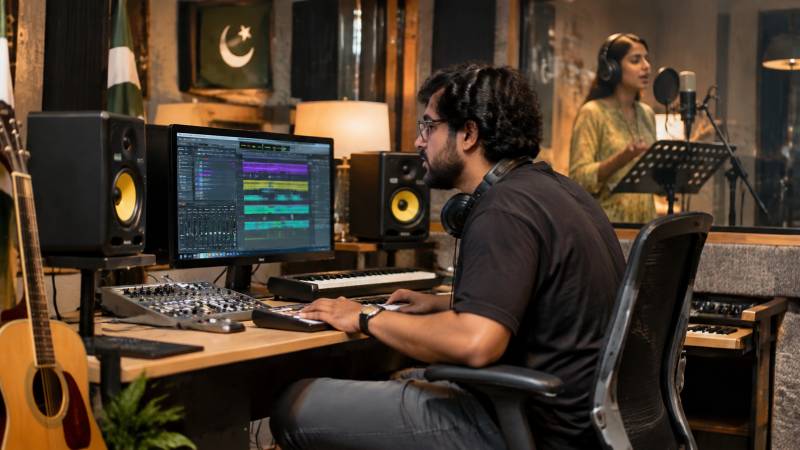
Pakistan's music has always been rich in talent and diversity. From classical and folk melodies to pop, rock, qawwali and hip-hop, musicians have continued to explore different styles and win audiences at home and abroad. While singers and performers usually receive the attention, music producers play an equally important role in shaping the final sound of a song. They work behind the scenes, bringing together different musical elements, refining compositions and helping artists turn their ideas into complete recordings.
In Pakistan, independent music producers are gradually making their presence felt, giving emerging artists more freedom to create, experiment and introduce their work to a wider audience. The rise of independent music production reflects a major change in the way music is created, recorded, distributed and consumed.
In the past, aspiring singers and musicians often had to depend on established record labels, television channels or influential industry figures to introduce their work to a wider audience. Access to professional recording studios was expensive, while producing and distributing music required considerable financial resources. This made it difficult for new artists to enter the industry and establish themselves.
The arrival of affordable recording equipment, digital audio software and online distribution platforms has changed this situation. Today, a talented producer can create professional-quality music using a home studio, a computer and the right technical knowledge. Digital platforms have also made it possible to distribute songs internationally without depending entirely on traditional record labels. As a result, independent producers are finding their place in an industry that was once dominated by a relatively small number of established players.
This transformation is particularly important for Pakistan, where musical talent exists in almost every region but opportunities and professional facilities remain unevenly distributed. Young producers from Karachi, Lahore, Islamabad, Peshawar, Quetta and smaller towns are experimenting with different sounds and developing their own identities. Many are blending traditional Pakistani instruments and regional musical influences with contemporary genres such as electronic music, hip-hop, pop and rock.
One of the biggest contributions of independent producers is that they provide emerging singers with an opportunity to record and release original music. A singer no longer necessarily needs to secure a contract with a major label before beginning a musical career. Independent producers can work directly with artists, help them develop their sound and create recordings that can be shared with audiences through streaming services and social media.
This freedom has encouraged experimentation and allowed musicians to explore subjects and musical styles that may not always fit commercial expectations. Young artists are increasingly comfortable singing in Urdu, Punjabi, Sindhi, Pashto, Balochi and other regional languages. Such diversity is important because Pakistan's musical identity cannot be represented through one language or genre alone.
Independent producers are also helping preserve traditional music by introducing folk melodies and regional instruments to younger audiences. By combining traditional sounds with modern arrangements, they can make cultural music more accessible without losing its original character. This creates a connection between generations and gives regional musicians an opportunity to reach listeners beyond their immediate communities. An important development in this direction is the establishment of the Pakistan United Music Producer Association (PUMPA), which aims at bringing independent music producers together on a common platform and strengthen their collective voice.
Independent music producers must be recognised not simply as people working behind recording equipment but as contributors to Pakistan's cultural and creative economy. With better protection, investment and professional opportunities, they can help build a more inclusive and internationally competitive music industry.
The association seeks to represent producers' interests, promote professional standards, raise awareness about copyright and royalty rights, and address the challenges faced by professionals working in the music industry. Through advocacy, collaboration and collective efforts, PUMPA aims at creating better opportunities for music producers, recognise their contribution and support the growth of a more organised and sustainable music industry in Pakistan. Highlighting the importance of providing equal opportunities to music professionals across the country, Khair Muhammad Kumbher, Vice Chairman of the Pakistan United Music Producer Association (PUMPA), believes that geographical location should not prevent talented people from entering the music business.
Discussing the opportunities created by digital platforms, he said: “A producer in Khipro or Mirpurkhas can reach a listener in London today. Our policy has to catch up with that reality.” His observation highlights both the potential of digital distribution and the need for better professional support for independent producers. Issues such as copyright ownership, royalty payments, licensing agreements and digital distribution remain major concerns. Producers may spend months working on a recording but find themselves without a clear agreement about ownership or future earnings.
Copyright protection is particularly important because a musical recording involves several contributors, including singers, composers, lyricists, arrangers, musicians and producers. Each person's contribution needs to be properly recognised, and agreements should clearly establish ownership and payment arrangements. Without this understanding, disputes can arise and talented professionals may lose the financial benefits of their work.
Digital distribution has created opportunities, but it has also introduced new challenges. Streaming platforms can make Pakistani music available to international listeners, yet earning a sustainable income from streams requires proper registration, accurate metadata, rights management and transparent royalty arrangements. Producers and artists need to understand how their music is uploaded, licensed and monetised. Greater awareness in these areas would help independent professionals turn creative work into a more reliable source of income.
Senior broadcast and entertainment journalist Omair Alavi believes that the people working behind the scenes deserve greater recognition. His perspective is important because music production is often overlooked when audiences discuss the success of a song. The singer may receive public attention, but the producer is frequently responsible for shaping the sound, arranging the composition and bringing together the different creative elements.
“Independent music composers and producers are changing the way music is created and consumed in Pakistan. They are giving emerging singers and musicians the freedom to experiment, explore new sounds and tell their own stories without depending entirely on traditional record labels. Their contribution is important because they are not only discovering new talent but also shaping the future sound of Pakistani music. If we want our music industry to grow and compete internationally, we must recognise and support the people working behind the scenes,” he added.
Another important contribution of independent producers is the creation of employment and business opportunities. Music production is not limited to recording songs. It involves sound engineering, mixing, mastering, composition, arrangement, digital marketing, distribution and artist management. As the sector expands, it can provide work for a wider network of creative professionals, including videographers, graphic designers, photographers, content creators and event organisers.
There is also considerable potential for Pakistani producers to work with international artists and music companies. The country's diverse musical traditions offer a distinctive creative identity that can appeal to audiences abroad. Collaborations involving Pakistani folk musicians, contemporary singers, rappers and international producers could introduce new sounds to global listeners, while creating opportunities for cultural exchange.
However, independent producers still face several obstacles. The cost of professional equipment, limited access to investment, a shortage of affordable studio facilities and a lack of structured training can make it difficult for newcomers to develop their skills. There is also a need for greater awareness among artists about professional contracts, music ownership and the business side of the industry.
Educational institutions, music organisations and established industry professionals can play an important role in addressing these gaps. Workshops, training programmes, mentorship opportunities and affordable studio facilities would help young producers develop their technical and creative abilities. Banks, investors and private companies could also support promising independent projects through sponsorships and funding.
Television channels, radio stations and digital media platforms should also provide greater exposure to independent musicians and producers. While established names will always have an important place in entertainment, the industry must create space for new voices. Music competitions, live performances and collaborative projects can help emerging talent connect with audiences and build professional networks.
Ultimately, the growth of independent music producers is about much more than technological change. It represents an opportunity to make Pakistan's music industry more inclusive, diverse and professionally organised. These producers are helping artists find their voices, preserving regional musical traditions, creating employment and introducing Pakistani sounds to international audiences.
Pakistan has the talent and cultural richness to develop a stronger presence in the global music industry. What it needs now is a supportive environment in which creativity can grow alongside professional standards, investment and fair business practices. Independent music producers must be recognised not simply as people working behind recording equipment but as contributors to the country's cultural and creative economy. Their rise offers an encouraging sign for the future. With better protection, recognition and opportunities, independent producers can help create a music industry in which success is not limited to those with established connections or financial backing, but is also within the reach of talented people willing to learn, experiment and create.