

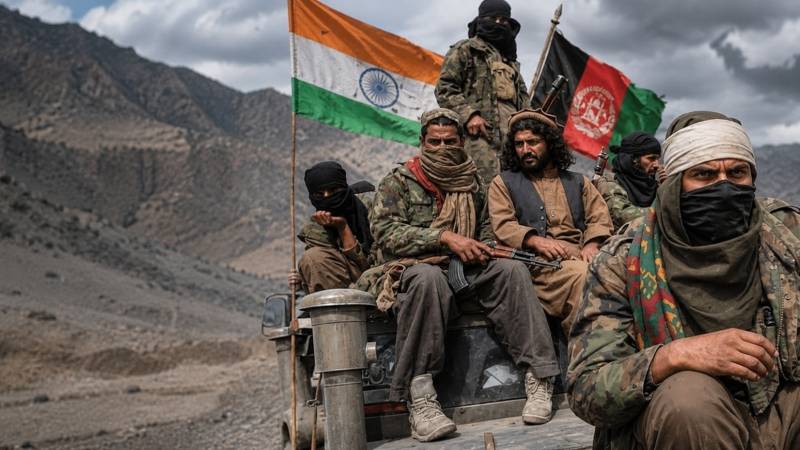
The second part of this story is more calculated. After the four-day military crisis of May 2025, which began with the Indian false-flag Pahalgam attack and was followed by India’s Operation Sindoor missile and drone strikes and Pakistan’s strong response under Operation Bunyan-un-Marsoos, New Delhi seems to have changed its approach. Direct confrontation with a nuclear-armed rival that has shown both resolve and capability brings too much risk and political cost. Proxy warfare, on the other hand, is cheaper, easier to deny, and ongoing. The Tehrik-i-Taliban Pakistan, operating from Afghan territory with help from some in the Taliban administration, has become a main tool in this campaign. The Balochistan Liberation Army acts as a partner, spreading the same chaos on another front.
Pakistani intelligence reports, shared over the years with the United Nations and regional partners, describe a steady pattern of outside support. Funding, training, operational coordination, and the linking of TTP networks with Baloch militant groups have all passed through Afghan territory. There have been reports of meetings in Kandahar involving Afghan intelligence, TTP commanders, and Baloch leaders, along with claims of financial transfers, mentioned in official briefings. Recent ISPR statements have called the militants killed in operations Indian-sponsored Fitna al-Khawarij, showing the state’s view of outside involvement. The main goal is classic asymmetric attrition: keep Pakistan unstable on several fronts, increase the cost of stability, make foreign policy harder, and take advantage of gaps in the merged districts and Balochistan.
India’s engagement with the Afghan Taliban since 2021 is described in New Delhi as practical diplomacy, including humanitarian aid, technical missions upgraded to embassies, and development projects in the southeast. Islamabad, however, sees this presence differently. It provides access, contractors, local networks, and plausible deniability in provinces known for TTP logistics and cross-border movement. Pakistan claims that RAW has contributed several million dollars to coordinated TTP-BLA operations. While New Delhi denies this, it fits into a larger pattern of multi-front pressure that has grown since the May 2025 crisis.
The way these groups are financed shows how complex the system is. Local extortion, kidnapping, and smuggling are still key sources, but UN monitoring has often mentioned financial help to TTP leaders connected to Taliban networks. Hawala systems, money from Gulf-based diaspora, and cryptocurrency wallets have added new ways to get funds. Shared training camps in southern Afghanistan, noted in UN reports, have brought TTP and BLA members together, with Al-Qaeda sometimes providing weapons training and ideological support. This has created a threat that is both local and foreign, mixed on purpose for maximum disruption.
The triangle of complicity — Taliban sanctuary, TTP-BLA strength, and Indian support must be broken at its weakest point before the next generation has to fight the same war again. Real stability in South Asia depends on this.
Drone tactics show this same mix. Commercial quad-copters bought in Afghan markets are turned into surveillance tools or attack drones that can drop mortar rounds or act as first-person-view weapons. Pakistani forces recorded over four hundred of these attacks in 2025, with continued activity in 2026, mainly in Khyber Pakhtunkhwa and more in Balochistan. The BLA has created its own aerial unit, similar to TTP’s changes. Technical skills, parts, and operators seem to move easily across groups and borders, suggesting outside help that local innovation alone cannot explain.
This does not mean that every TTP or BLA fighter is paid by foreign sources. Both groups still have real ideological or nationalist reasons based on local issues. Regular extortion, cross-border smuggling, and support from sympathetic networks give them a financial base. Outside backing, especially the Afghan sanctuary, turns that base into lasting, professional strength. Under Mufti Noor Wali Mehsud, the TTP has modernised with more centralised command through the Rahbari Shura, more shadow administrative units and wilayats including new ones in Balochistan and strict propaganda. The BLA has also modernised, with leadership changes and special drone units, creating more pressure on CPEC routes and security forces in the southwest.
The May 2025 crisis made the strategic choices clear. Pakistan’s conventional response showed that direct military escalation brings costs India does not want to face often. Using proxies, however, keeps up pressure with much less risk of reaching the nuclear level. The idea of a “thousand cuts” is not from Pakistan; it is the strategy of those who prefer ongoing low-level conflict instead of a big fight. The Afghan Taliban’s refusal to close the sanctuary completes the triangle: shared ideology, operational space, and outside support. UN reports have found about 6,000 TTP fighters and details about people linked to Taliban networks helping with transfers and financial aid. Advanced weapons and shared drone skills also show supply chains that local resources alone cannot explain.
Pakistan’s counter-terrorism record since 2014 is often misunderstood in outside commentary. Zarb-e-Azb and later campaigns did not create the TTP; they weakened a group already responsible for many deaths. The resurgence after 2021 happened because the sanctuary reopened. Fast development in the merged districts, good education, healthcare, and jobs are still needed. But these efforts cannot work while the rear base stays open and outside actors keep using the TTP and BLA as tools of pressure. There is no moral equivalence here. Pakistan has carried out many military campaigns at great human and economic cost, suffered generational trauma, and tried many times for a diplomatic solution with Kabul. Afghan authorities have chosen to protect militants instead of meeting basic neighborly duties. India has used deniable proxies while talking about counter-terrorism elsewhere. The international community’s silence on the sanctuary issue, even with clear UN findings, only extends the violence.
Pakistan will keep working to clear its territory through intelligence-led operations, push for the verified closure of the Afghan rear base, and reveal the proxy system that keeps the threat alive. This is not aggression. It is the basic right of self-defence. The other option is to accept that Pakistani soldiers, police, and civilians are bargaining chips in someone else’s strategy. That is not possible or acceptable. The triangle of complicity Taliban sanctuary, TTP-BLA strength, and Indian support must be broken at its weakest point before the next generation has to fight the same war again. Real stability in South Asia depends on this.