

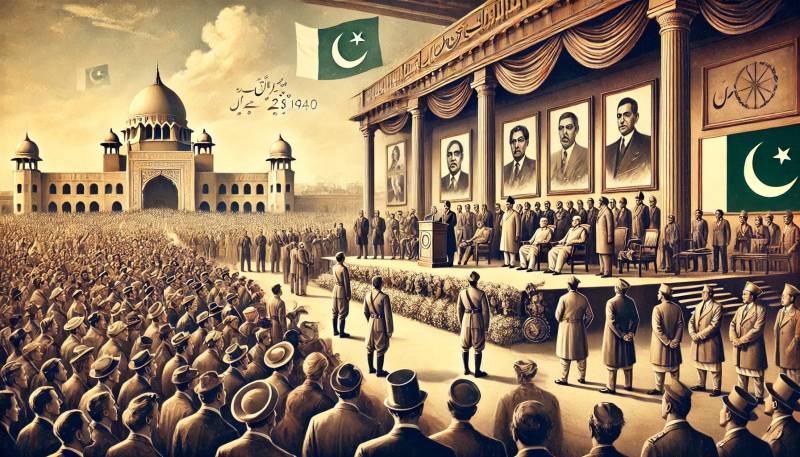
Scholars, politicians, and activists have long drawn comparisons between the partitions of India-Pakistan and Israel-Palestine, seismic upheavals which took place just months apart: plans for India’s partition were formalised in June 1947 and took effect that August, while the United Nations voted to approve the partition of Palestine in November of the same year. My new book, East of Empire, reveals that these events were more than similarly timed: the two partitions were in fact deeply interconnected and shared origins in the dissolution of the Ottoman Empire after World War I. Moreover, in the late 1930s, the crisis in British Mandate Palestine became a political and intellectual catalyst for South Asian ‘partition thinking’—crystallised in Muhammad Ali Jinnah’s March 1940 demand that Indian Muslims be granted a state of their own.
At the end of the First World War, as European diplomats convened in Paris, they carved up the territories of the former Ottoman Empire among themselves. The heartlands of Islam in the Middle East were annexed by the British and French, under the guise of League of Nations ‘Mandates’. In India, Muslim veterans of the war launched a protest campaign which would grow into one of the largest the subcontinent had ever seen. The 1919-24 Khilafat movement, which briefly united the Muslim League and Congress parties in a joint popular uprising against the British Empire, illustrated the potential of external affairs in the broader Muslim world to serve as a lightning rod for mass political mobilisation domestically.
Crucially, as the late historian Mushirul Hassan observed, the aspect of the Khilafat Crisis that seemed to resonate most deeply with ordinary Indian Muslims—and brought in the most donation rupees—was the need to defend Islam’s holy places. For this reason, the Middle East itself took on new significance in Indian nationalist discourse, forming a useful land bridge connecting Muslim and anticolonial agendas. However, by 1924 the collapse of the Congress-League alliance, the dissolution of the Ottoman Caliphate, and protracted infighting between Egyptian and Saudi pretenders to a new Caliphal throne in Mecca left the Muslim League’s rebels in search of a new cause. Within a few short years, they were to find it in British Mandate Palestine.
In stark contrast to the new rulers of Republican Turkey and Saudi Arabia, the Palestinian nationalist leader Hajj Amin al-Husseini, Mufti of Jerusalem, welcomed and encouraged the interventions of the Muslim League in his country’s affairs. This was because the Mufti was then working to internationalise the Palestinian cause to counter the growing and innately transnational character of the Zionist movement. The Mufti was alarmed by Jewish appeals to a broad international public—both overseas Jewish communities and gentile Zionists—in support of their claims and concluded that Palestinians, too, would need to mobilise a network of support beyond their borders.
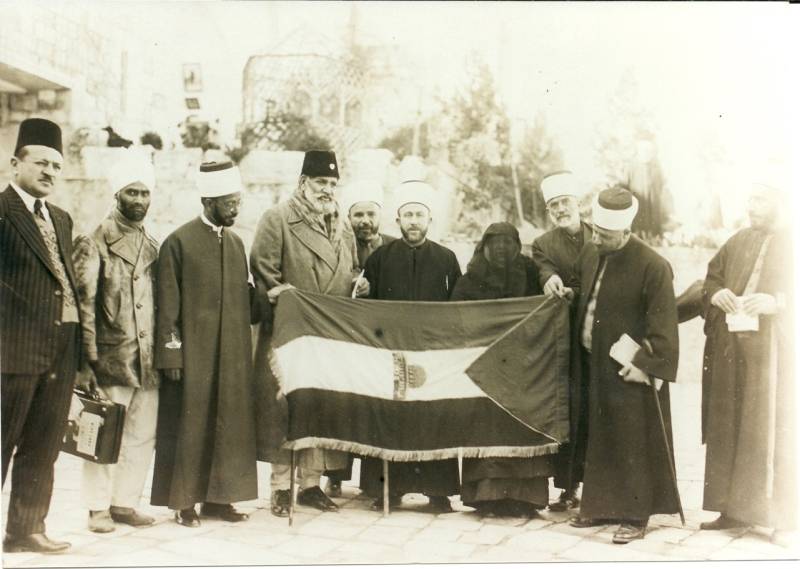
As violence broke out between Jews and Muslims over the Temple Mount in 1929, the Mufti turned to his network of Muslim contacts abroad, calling on them to help ‘defend’ the Haram al-Sharif from a Zionist takeover. This rallying cry resonated with Indian Khilafatists’ earlier efforts to defend Muslim holy places from Western encroachment. The famed Khilafat leaders Mohamad Ali Jauhar and his brother Shawkat proclaimed Palestine to be “the best centre for our work” and embraced the cause as their own. To this end, they hosted a Palestine Conference in Bombay in April 1930. One of the conference’s resolutions was co-sponsored by the Ali brothers and Muhammad Ali Jinnah. Despite Jinnah’s outright rejection of the Khilafat movement a decade earlier, Palestine created new grounds for unity between him and many of his previous adversaries.
Muslim League petitions to the British government warned that Palestine could become a ‘Second Khilafat’—raising the spectre of a movement which, of course, many of the petitioners had themselves been intimately involved with
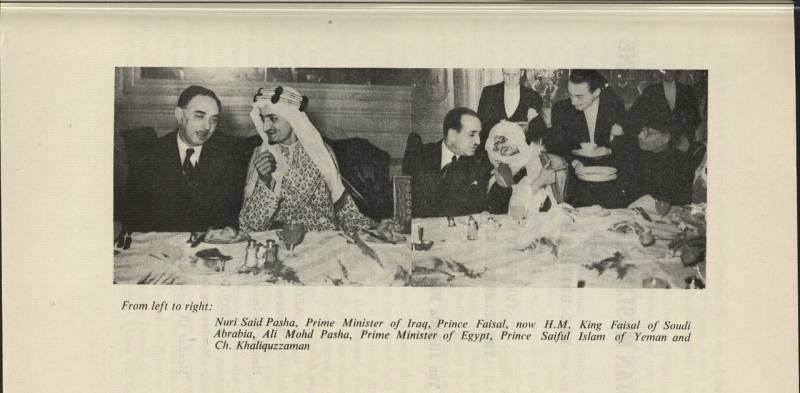
By the mid-1930s, the conflict between Arab peasants and Jewish settlers in British Mandate Palestine had erupted into a prolonged revolt. When, in 1937, the British proposed to partition the country into Arab and Jewish halves, the ensuing diplomatic scramble drew in heads of state and top negotiators from throughout the Arab world, but also, as my research reveals, senior leaders of the All-India Muslim League. In 1938 Choudhry Khaliquzzaman and Abdurrahman Siddiqi were sent by Jinnah to the Middle East and Europe to represent Indian Muslim views on the Palestine crisis and support the Arabs in their negotiations with the British government.
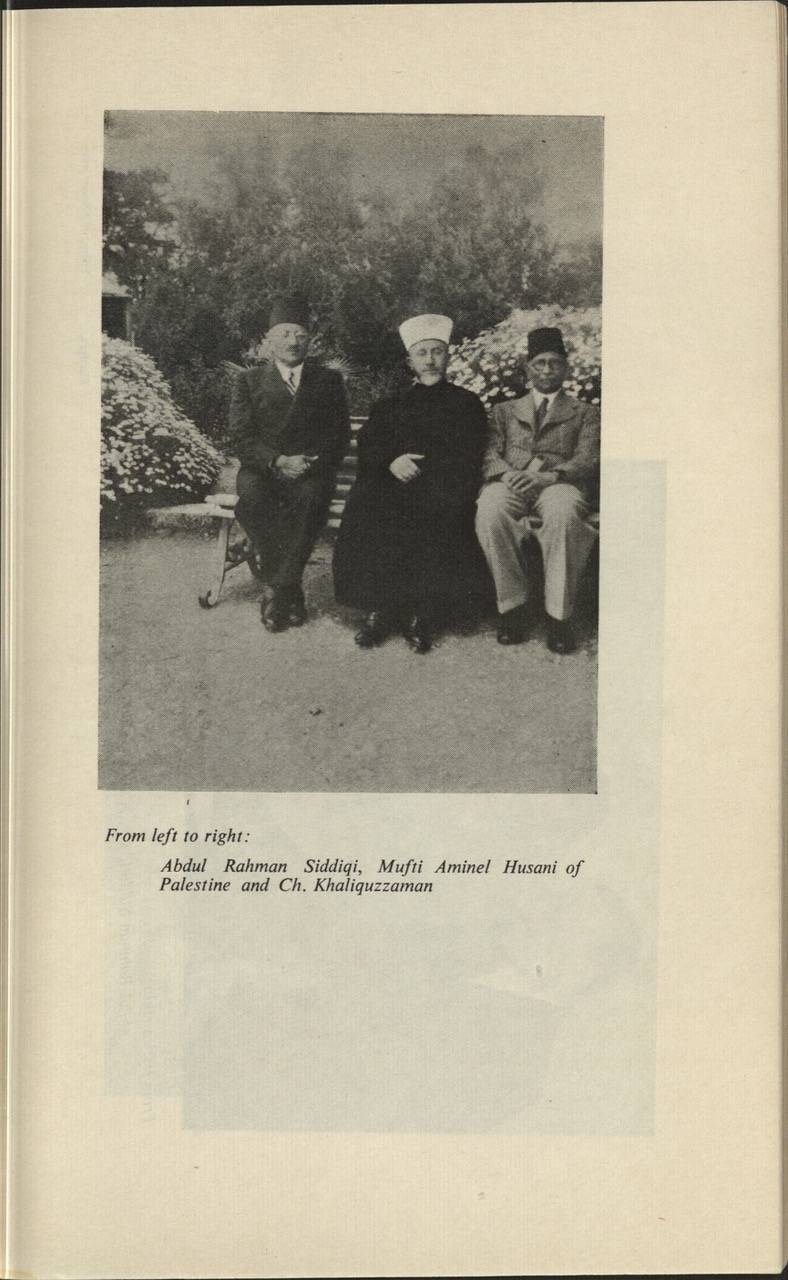
Khaliquzzaman and Siddiqi proved willing to go to great lengths in support of their mission. Crucially, however, there was a novel domestic angle to their diplomacy: for Jinnah was anxious to prevent the politics of Palestine from creating too powerful a bridge between Indian Muslim voters and Congress—which was also critical of British policy in Palestine on anticolonial grounds.
In fact, Muslim League petitions to the British government warned that Palestine could become a ‘Second Khilafat’—raising the spectre of a movement which, of course, many of the petitioners had themselves been intimately involved with. The League argued that if their leaders were seen as ineffective advocates for the preservation of Palestine’s territorial and spiritual integrity, India’s Muslims might look instead to Congress for leadership on the issue. The consolidation of Indian Muslims and Hindus into a single political bloc opposed to British rule was not only a threat to the Raj; it was a deeply worrisome prospect for Jinnah and the Muslim League itself, which stood to lose its electoral foothold if its base aligned with Congress. Thus in the petitions sent to provincial governors, the Viceroy, and the British government; and in the interviews held by Khaliquzzaman and Siddiqi with ministers in London, the Muslim League stressed that its efforts to defend Palestine were intended to avert the disaster of Muslim solidarity with Congress.
As Siddiqi and Khaliquzzaman discovered to their dismay, however, the ‘Muslim card’ did not carry much clout in London; it was downright unattractive to the Colonial Office, which was determined to avoid acknowledging that the conflict in Palestine even had a religious dimension. For this reason, they barred Indian Muslims from participating in the St James’s Conference on Palestine then being held in London: “One can draw a logical line at the rulers of the adjacent Arab countries,” wrote Colonial Secretary Malcolm MacDonald to his colleague Lord Zetland, “but if you were once to go beyond such a line, it would be difficult to know where to stop.”
Khaliquzzaman and Siddiqi were perplexed. In a letter, they pointed out that the same standard was not being applied to the Zionist delegation to the conference, which sought to bolster its claim to represent ‘all Jews’ by including delegates from the United States, Britain, South Africa, and various European countries alongside those residing in Palestine. To Siddiqi and Khaliquzzaman, this stood in boldfaced contradiction to the stated rationale behind their exclusion: that the conflict in Palestine was local and political, not global and religious, in nature.
While waiting on the sidelines of the London conference, the two Muslim Leaguers were introduced to a “tall, graceful, well-cut figure” named Choudhry Rahmat Ali, a Cambridge graduate already well-known in India for his pamphleteering on ‘Pakistan’. This was an acrostic poem of a political program, comprising the Muslim-majority provinces of Punjab, Afghani, Kashmir, and Baluchistan and translated to ‘land of the spiritually pure’ in Urdu. Khaliquzzaman was profoundly impressed: “When we started talking about the scheme of Pakistan I found that not only had he thought deeply over the question but was earnest about its realisation…After some discussion, I informed him that I was already a convert to the idea.”
By the end of their eight-month tour, all of Siddiqi and Khaliquzzaman’s efforts to lobby on behalf of the Palestinians had proved abortive. Yet the extent of their tour, their political and tactical flexibility, and the obvious sincerity of their commitment to “the protection of Palestine from partition” illuminates the broader significance of the many pro-Palestinian telegrams, letters, personal petitions, and resolutions produced by Muslim Leaguers throughout the late 1930s.
Arguments about what a prospective Pakistan would (or would not) be able to do for the Palestinian people appeared in multiple treatises arguing for and against the creation of a Muslim state
Moreover, their painful failure to impact policy—or to even be considered deserving of a seat at the table in London—may well have driven home that, in the emerging configuration of global politics, even the impassioned pleas of a large and wealthy religious minority were no match for the claims of nationalism. After all, Jews were a religious community yet more dispersed than India’s Muslims; but Zionism was something entirely more compelling—or so it seemed to have appeared to the British government in London.
Upon their return to India, and having already pitched the idea to the Indian Secretary (who seemed far from averse), these envoys made their case to Jinnah in the summer of 1939: Indian Muslims could not go on using the same old playbook, citing communal rights and religious sentiment. They, too, would have to become a nation, and carve out a land of their own.
Nine months later, on 23 March 1940, Jinnah advanced the Muslim League's formal demand for a separate state. The Lahore Resolution thus formalised a shift in vocabulary away from the language of a spiritually bound ‘community’ or ‘religious minority’, which the Muslim League’s advocates and Jinnah himself were still avidly pressing into service on behalf of the Palestinians in early 1939. By the same time the following year, they were insisting that the rights they claimed were on behalf of Muslims as a nation. For, as he acknowledged in a meaningful aside to his speech, “The word ‘nationalist’ has now become the play of conjurers in politics.”
In the same speech, he also spoke of Palestine and his party's unwavering commitment to the cause of its Arab inhabitants.
The Lahore Resolution was seconded by Choudhry Khaliquzzaman. In the high-key public discussions and debates that followed its pronouncement, Palestine was still on quite a few minds. Arguments about what a prospective Pakistan would (or would not) be able to do for the Palestinian people appeared in multiple treatises arguing for and against the creation of a Muslim state.
These profoundly transnational threads were thus woven into the DNA of the Lahore Resolution, a reality which seems if anything even more poignant today. Eighty-five years on, we appear no closer to the peace, prosperity, and just rule of law the architects of the Resolution had envisioned, whether for themselves in post-imperial South Asia, or for their brethren in Palestine.