

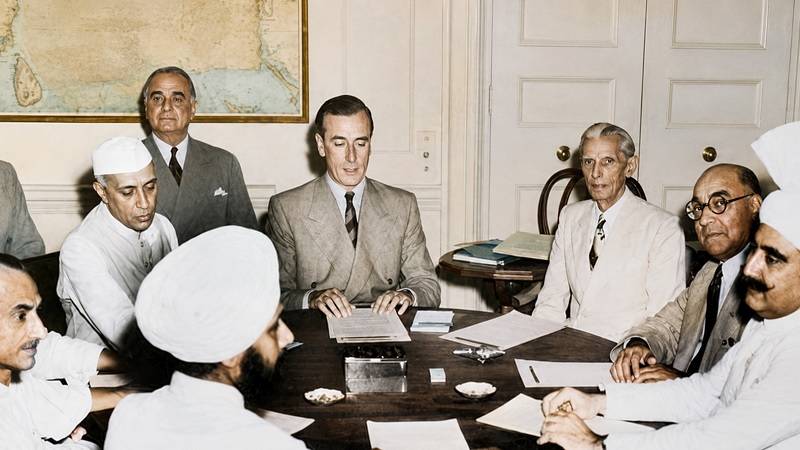
Dan Qayyum has argued in his article dated 14 August 2026, Jinnah’s Last Offer, published in the Digital Debate, Own Your Perspective, that on 6 June 1946 Jinnah met the Council of the All-India Muslim League and accepted a constitutional settlement that contained no Pakistan. The postulate advanced is that Nehru rejected this offer when on 10 July he said in a press conference in Bombay that the ‘his party had agreed to enter the Constituent Assembly and nothing else, and that it would go in unfettered by agreements’. It is worth noting that in a public address a day earlier on 5 June Jinnah told the Council Muslim League:
‘Let me tell you that Muslim India will not rest content until we have established full, complete, sovereign Pakistan… I repeat from this platform that delay is not good either for the British or the Hindus. If they love freedom, if they love the independence of India, if they want to be free, then the sooner they realise the better that the quickest way is to agree to Pakistan. Either you agree or we shall have it in spite of you’.
Next day, on 6 June Jinnah addressed the Muslim League Council in camera, and this is what he said: ‘I advised you to reject the Cripps proposals, I advised you to reject the last Simla Conference formula. But I cannot advise you to reject the Cabinet Mission’s proposals. I advise you to accept it. The Lahore Resolution did not mean that when Muslims put forward their demand, it must be accepted at once. Acceptance of the Mission’s proposals was not the end of their struggle for Pakistan. They should continue their struggle till Pakistan is achieved’. He continued in that vein and said that if anything was done against their wishes, they will create a deadlock in the Constituent Assembly. They will also fight for the rights of the groups or units to rejoin the group from which they have seceded’. There is nothing to suggest in these arguments that Jinnah had abandoned his mission to create Pakistan.
The author notes that the Cabinet Mission Plan stood for a single Indian union. The centre was to deal with defence, foreign affairs and communications. Everything else was vested in the provinces organised into three groups, A, B and C of which two groups, B and C would comprise Muslim-majority provinces with authority over their own affairs. What he does not mention is that after every 10 years the three groups had the right to secede from the Indian Union. They could secede as a group, or individual provinces could opt out of the Indian Union.
Furthermore, one can add that the 570 plus princely states were also to be part of the Indian union. They surrendered only defence and external affairs. They retained internal autonomy which they enjoyed under British paramountcy. Also, significant is that the Sikhs of Punjab opposed vociferously their inclusion in the Muslim-majority group B. Similarly, the 93% Muslim-majority NWFP (now K-P) under the Congress – Khudai Khidmatgar government also rejected inclusion in group B.
The truth is that the Congress Party went out of the way to accommodate many of the concerns of the Muslim League. It agreed that no law was to be adopted unless three-fourth of an affected community agreed to it.
Keeping these factors in mind it should not surprise anyone that the Indian National Congress found the Cabinet Mission Plan of the groups opting out of the union precarious and brittle. Moreover, an emasculated centre of a state of the magnitude of India meant deadlocks, inconsistencies and incoherencies in policies. No federation includes provisions for leaving the union; only confederations do. This point was proven in the classic case of the American civil war which resulted in more than half a million deaths because the southern states wanted to opt out of the federation and that the government of Abraham Lincoln was not willing to concede that as a right. There was of course the fiction of the right to secede included in the Constitution of the Soviet Union for its republics but anybody familiar with Stalinism knows that it was just a façade.
The truth is that the Congress Party went out of the way to accommodate many of the concerns of the Muslim League. It agreed that no law was to be adopted unless three-fourth of an affected community agreed to it. It also agreed to Jinnah’s insistence that representation in the interim government was to be on a 50 -50 basis when the Muslim percentage of the total Indian population was according to the 1941 census was only 25.9%.
Jinnah was adamant that only the Muslim League could nominate a Muslim to the interim cabinet. That too was agreed although that deprecated the secular credentials of the Congress. Jinnah nominated a Hindu Dalit as the law minister whereas the Muslim League was a party only for Muslims. That too was not protested by the Congress Party. Surely, these accommodations cannot reasonably be described as a case of majoritarianism.
If they love freedom, if they love the independence of India, if they want to be free, then the sooner they realise the better that the quickest way is to agree to Pakistan. Either you agree or we shall have it in spite of you.
More crucially, Jinnah refused to join the Constituent Assembly so long as the three groups did not frame their constitutions which explicitly included the right for them to secede from the Indian Union. What Nehru said on 10 July 1946 about going to the Constituent Assembly unfettered by other agreements needs to be seen in the context of the clauses which permitted groups and provinces to secede from the Indian union.
More importantly, an interim government did come into being which the Muslim League joined in October 1946. So, Nehru’s 10 July 1946 statement had not prevented the Muslim League from joining the interim government. However, this happened only after Jinnah’s call for direct action had resulted in the first large-scale communal clashes in Calcutta during 16 – 20 August 1946. It left several thousand dead and that virus then spread to many parts of India.
The interim government was a divided cabinet which worked at cross purposes. Finance Minister Liaqat Ali Khan introduced a budget in February 1947 which imposed 20 – 25% duty on business and industry but said not a word about land reform - the mainstay of Muslim League support after 1940 was the landlord class of northwestern India. Nehru wanted to accept the budget, but it was Sardar Patel who put his foot down saying no more. The examples are too many to be mentioned. The façade of an interim government continued till July 1947.
Blaming Nehru for the partition inadvertently and ironically deprives Jinnah of his greatest achievement: to have won the case for Pakistan with all the skills of a lawyer and a politician against a formidable Congress opposition. The available source material abundantly shows that Jinnah pursued his goal of achieving Pakistan with relentless consistency and determination. Regarding the Motilal Nehru Report versus Jinnah’s 14 points which Dan Qayyum has taken up, I shall address them in my next article.