

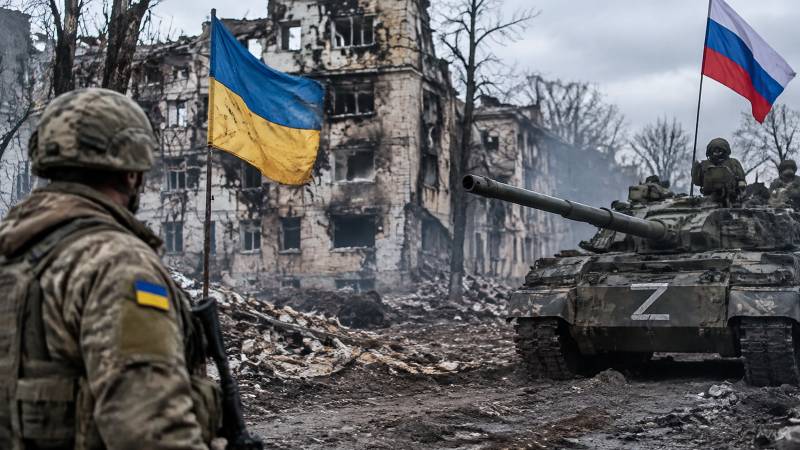
Russia is the largest country on earth, though 77 per cent of it lies in Asia. Ukraine, Europe’s second-largest country by area, spent nearly seven decades inside the Soviet Union, which rarely makes for easy neighbours. Their war matters because it sits at the heart of European security, and Europe has paid for it in energy bills ever since the invasion, the Nord Stream sabotage making a bad bill worse. President Trump boasted he could end it in a day. Since then, an Oval Office row, an Alaska summit, talks in Abu Dhabi and Geneva and, this week, a meeting with Xi and Putin. The nearest thing to a ceasefire has been a few brief truces, the latest confined to one ruined town. Why does peace remain so elusive?
On the surface, President Putin has managed to look like the party more open to a ceasefire, which leaves President Zelensky appearing to be the one who won’t accept just any ceasefire. His point is that he wants security guarantees so that this can’t happen again. Russia is a far larger country with a far bigger military, and this isn’t the first time it has done this, having taken Crimea in 2014 and backed the war in the Donbas, so his caution does to an extent make sense. A ceasefire on the current lines would also mean giving up land, since Russia now holds about a fifth of Ukraine, and that sits uneasily with Kyiv’s own account of the war, in which Russia loses seven to ten men for every Ukrainian killed. So, is Zelensky protecting Ukraine’s future, or gambling with its present? Putin, of course, is in no hurry to correct the impression
President Putin, who has been in power since the last day of 1999, has been on the throne for nearly twenty-seven years, has learnt the art of patience, and has outlasted five American administrations and is now dealing with a sixth. Russia’s public negotiating position has been one of openness to talks, which gives the impression that Moscow is the side that wants dialogue, and only last week Steve Witkoff and Jared Kushner were at the Kremlin again to meet him. There is also the argument that Russia, as the larger country and the greater power, has shown restraint, which is why the war has gone on so long, and that argument gives Moscow the moral high ground in certain quarters. So far Moscow has done a better job than Kyiv of looking like the party interested in a ceasefire, and Mr Trump has said as much on a few occasions, including in October, when he said Putin wants a deal more than Zelensky does. Add the recent meeting in China, whose optics drew comparisons with Yalta, where Stalin, Roosevelt and Churchill decided the shape of postwar Europe, and Kyiv seems to be losing the kind of backing it once enjoyed from Washington, which is an awkward moment for questions to be raised about what is going on at home.
The longer the war continues, the greater the pressure on Zelensky becomes, not only on the battlefield but also at home, where corruption scandals, political uncertainty and questions about delayed elections are increasingly difficult to ignore.
There is certainly more pressure on President Zelensky than on President Putin where domestic politics is concerned. Corruption scandals have reached his inner circle, most notably Operation Midas, an alleged kickback scheme at the state nuclear company, worth well over $100 million, that cost him his chief of staff, Andriy Yermak, who denies wrongdoing. Zelensky himself has not been named as a suspect, and there is no evidence the war is being prolonged to hide any of it, but critics say wartime arrangements suit those in power. He is right that martial law bars elections and that the constitution lets him stay on until a successor is sworn in, but critics point out that Britain also postponed its general election during the war, although parliamentary politics carried on. There is a political cost to delay too, if a ceasefire on similar terms is signed later, he will be asked why not sooner. The longer these drag on, the less settled things look at home, and it is not the politicians who feel it first.
One thing that is indisputable is that the longer this war goes on, the greater the human cost will be in both countries. The UN has verified close to 18,000 civilians killed in Ukraine since February 2022 and says the true figure is higher, while Russia reports civilian deaths of its own. There will be an economic cost too, in gas bills across Europe and in oil prices, which are already high because of the Iran war, with gas touching somewhere around €100 a megawatt hour in October. And there will be a burden on Europe from refugees, with some 5.3 million Ukrainians already sheltering there. The cost of waiting for a better deal is not borne by the people negotiating it.
There can be no ultimate winner if a ceasefire is reached, because it would mean compromising on land, justice or war damages. But the argument that the war has already gone on too long is a valid one, and every day it drags on, people die, which is the biggest cost of all. Zelensky’s arguments make sense to an extent, but he must weigh the cost of the war continuing. A ceasefire is not a permanent solution, only a halt to the fighting, but that is what is needed to stop the bloodshed. So, which matters more, a favourable peace, or the country it is meant to protect?