

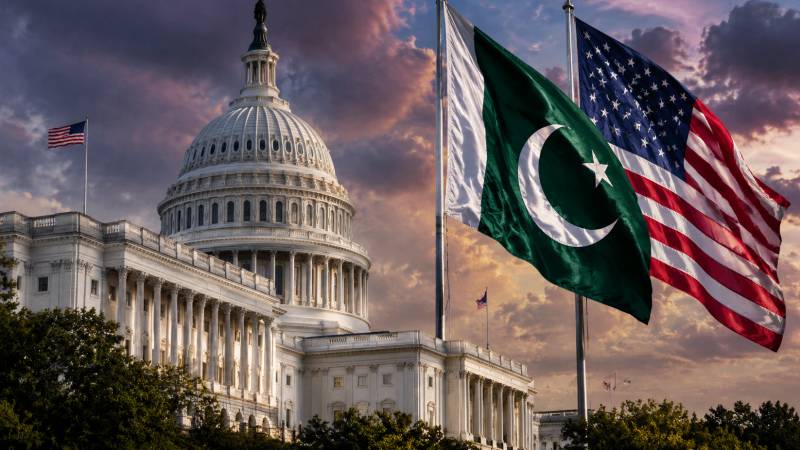
The United States has a distinctive constitutional system in which foreign policy authority is divided between the executive and legislative branches. However, the important point is that the President and Congress do not need to act together on every foreign policy decision. Each institution has certain independent constitutional powers that allow it to shape and implement American foreign policy without obtaining the consent of the other in every instance.
Since the Second World War, major economies around the world have engaged with various US federal departments, agencies, members of Congress and congressional committees through diplomatic channels, lobbying institutions and diaspora networks in an effort to accelerate their transition from underdeveloped to developed nations. China's experience is particularly noteworthy. Through sustained diplomatic engagement with the US, China secured Most-Favoured-Nation (MFN) trade status and worked with the US for approximately 15 years following its initial application for GATT membership in 1986. This process culminated in China's accession to the World Trade Organization (WTO) in 2001, marking a significant step in its emergence as the world's largest economy.
Pakistan's engagement with the US over the past 75 years has historically focused more on regional security and defence cooperation than on economic opportunities. We have lacked a sufficient understanding of the US political system and a sustained strategy for leveraging American decision-makers and markets through effective diplomacy, lobbying and institutional engagement. This is evident from the fact that, despite the 2003 US-Pakistan Trade Agreement and nine rounds of meetings held by 2024, tangible results have remained very limited.
Meanwhile, countries that gained independence around the same time as Pakistan, such as Malaysia, Singapore, Indonesia and Vietnam, have expanded their exports to the United States, particularly in sectors such as agriculture and textiles. The difference lies not only in trade agreements but also in the effectiveness of economic diplomacy, established networks and a deeper understanding of the American system.
A comparison of bilateral trade figures illustrates Pakistan's untapped economic potential. In 2025, US-Pakistan bilateral trade stood at approximately $11.5 billion, compared with $94.7 billion with Malaysia, $215 billion with Vietnam and $40.9 billion with the Philippines. These figures underscore Pakistan's missed economic opportunities and highlight the need for a more strategic and proactive approach to strengthening its economic relationship with the United States.
An emerging challenge for Pakistan is that President Donald Trump, with whose administration Pakistan has enjoyed one of its closest relationships in decades, has suffered a major defeat in the midterm elections. The results appear to reflect growing public resentment over his foreign policy decisions and priorities, as well as his overall approach to governing the country. His administration's actions and approach to international relations are also coming under increasing scrutiny in Congress, particularly from Democrats, who are expected to subject his past decisions, foreign policy initiatives and overall handling of international affairs to much closer examination.
Donald Trump's attempts to bypass congressional authority and exercise presidential powers in economic matters are likely to face intense scrutiny from Congress. Congressman Robert Garcia, the incoming chairman of the House Oversight Committee, has already sent a warning to the Trump family and administration with the words, "Lawyer Up."
Relying on speculative economic expectations rather than a clearly defined strategic economic and diplomatic framework is neither sustainable nor conducive to long-term economic stability.
Pakistan could also come under the spotlight this time, not because of its role in mediating the US-Iran conflict and helping broker a deal, but because of its memorandum of understanding (MoU) with World Liberty Financial, a business linked to the Trump and Steve Witkoff families. As the only country reportedly to have signed such an agreement, Pakistan may feature prominently in congressional investigations into potential conflicts of interest involving Trump's presidency and his family's business interests. Indian and Israeli lobbying groups may also seize this opportunity to undermine Pakistan's credibility and political standing in Washington.
If we look back at the past two years and assess what Pakistan has achieved economically through its close relations with Trump and his administration, the results appear rather limited. The US Export-Import Bank approved $1.25 billion in financing to support the mining of critical minerals at Reko Diq, but the funds have yet to be released. Pakistan also requested a $10 billion currency-swap facility from the US Treasury's Exchange Stabilization Fund, but the Trump administration has taken no significant steps on this front either.
Interestingly, according to US trade figures, bilateral trade increased by only $1.4 billion in 2025 compared with 2024. Despite these high-level engagements and diplomatic arrangements, Pakistan has yet to translate its close political ties into substantial economic gains, greater access to US markets or a formal trade agreement with the United States.
On the security front, we achieved a positive outcome when the US government approved a multimillion-dollar sale of systems and technology to upgrade Pakistan's fleet of Lockheed Martin F-16 Fighting Falcon combat aircraft. In its notification to the US Congress, the government explained that the sale would support US foreign policy and national security objectives by enabling Pakistan to maintain interoperability with US and partner forces in ongoing counterterrorism efforts and preparations for future contingency operations.
The level of attention Pakistan has received from Trump and his administration over the past two years has not translated into particularly impressive results. However, this is not simply a question of whether the United States was willing to engage with Pakistan on bilateral economic relations. It is also about how Pakistan has managed and strategised its foreign policy, leveraged its economic advantages and positioned itself within the American political and economic landscape.
If Pakistan believes that the potential of its mineral resources and the speculative promise of mining investments alone can strengthen its economic position, it is pursuing an economically unsound approach. Relying on speculative economic expectations rather than a clearly defined strategic economic and diplomatic framework is neither sustainable nor conducive to long-term economic stability.
The remaining two years of Trump's presidency are likely to revolve largely around accountability for his past actions and government failures rather than the introduction of any major new initiatives. The Trump administration appears deeply divided over the Iran issue, which could lead to further delays and uncertainty. The US has now shifted its focus towards imposing economic sanctions on Iran, marking an entirely different approach. Consequently, the situation in the Strait of Hormuz may remain in a prolonged state of uncertainty, with little prospect of any productive outcome in the near future.
With Democrats controlling the House, Pakistan may face increased activity from the Indian lobby in Washington, given its close ties with Democratic lawmakers. At the same time, the Pakistani diaspora, which has become increasingly active over the past three to four years, appears to be moving in a direction that is increasingly at odds with the Pakistani government's perspectives and priorities. This could become another front that Islamabad will need to address in its engagement with the United States.
On trade agreements, Pakistan does not appear to have a comprehensive strategy capable of delivering meaningful growth in bilateral economic relations with the US. Beyond mineral extraction and the potential investments and benefits that may materialise over the coming years, there is little evidence of a broader economic framework that could generate tangible results in the near term.