

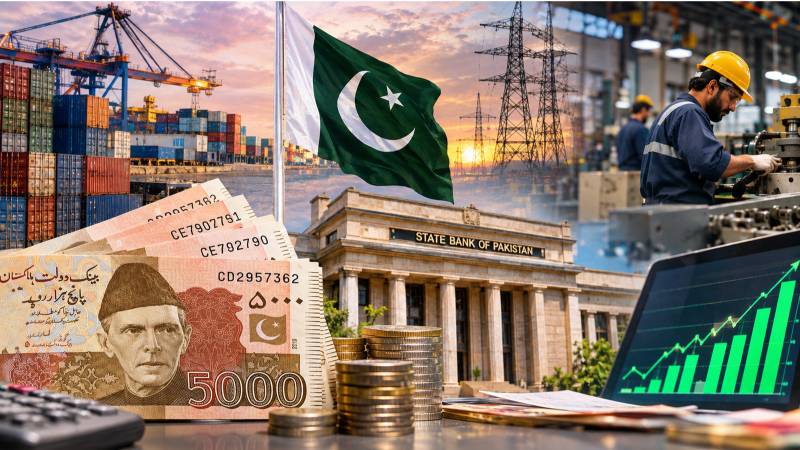
Pakistan has clawed its way back from the edge. Foreign exchange reserves held by the State Bank have recovered to roughly $21.5 billion, total liquid reserves are close to $27 billion, the economy grew 3.65 percent in FY26 to about $450 billion, and workers’ remittances continue to deliver with remarkable consistency. In October alone, remittances reached $3.9 billion and nearly $15 billion in the first four months of the current fiscal year. These are not trivial numbers. They mark the difference between sovereign default and breathing room. For a country that faced a crisis in 2022–23, when reserves fell below $3 billion and the rupee plunged, this is a real achievement.
Yet achievement is not the same as transformation. Right now, Pakistan is experiencing a pause in its economic troubles, not a final victory. The gains are real and measurable, earned through tough adjustments, IMF discipline, and the steady support of overseas Pakistanis. But these gains are fragile, incomplete, and still depend on factors outside Pakistan’s control. Believing they prove a permanent turnaround would be a costly mistake.
The recovery of reserves is the clearest success. The State Bank has managed to build up dollars through market purchases, official inflows, and careful current-account management, which has restored some external credibility. Import cover is better. Forward liabilities are lower. The rupee, though not strong, has avoided the sharp drops that used to drive inflation and capital flight. This buffer is important. It gives policymakers time and reduces the risk of sudden crises.
But reserves show past confidence, not future strength. They can disappear quickly if oil prices rise because of regional conflict, if remittances drop, or if debt payments increase without enough new inflows. Pakistan still needs regular IMF reviews and sometimes help from other countries, which shows that the country has fixed its balance sheet more than it has changed its economic model. Keeping the current-account deficit low is progress, but real transformation would mean steady trade and investment surpluses.
Growth also shows only partial success. Growing at 3.65 percent after a period of contraction and stagnation is better than the alternative. Agriculture was resilient, industry bounced back from earlier weakness, and services did much of the work. Inflation, after reaching very high levels, eased for a while. Fiscal accounts improved enough to show rare surpluses at times, helped by lower interest payments and tighter spending. The stock market has reacted positively, and credit ratings have improved.
Still, 3.65 percent growth is not enough for a country with Pakistan’s population and needs. It does not create enough formal jobs for the millions joining the workforce each year. The economy is still too dependent on consumption funded by remittances instead of investment and exports. Large-scale manufacturing has not yet achieved the steady, productivity-driven growth needed. High energy costs, unpredictable regulations, and weak contract enforcement keep both local and foreign private capital away, which limits growth. Stabilization has brought the economy back to a low-level balance. Moving beyond that is the next challenge.
The real test is not whether Pakistan can manage another crisis, but whether its institutions will use this hard-won period of stability to make the difficult structural reforms needed to prevent the next one.
Remittances are still the steady support for the external account. The diaspora’s regular transfers have often filled the gaps left by exports and foreign direct investment. The possible rise to $45 billion a year shows the strength of overseas Pakistanis, but also highlights the domestic economy’s weakness in earning foreign exchange on its own. Remittances help keep things stable, but they do not modernize the economy by themselves. If an economy depends so much on its citizens working abroad, it has not yet fixed its main competitiveness problem. The best way forward starts with being honest about what the current numbers really mean. Policymakers and institutions should see today’s stability as a short window of opportunity, not a lasting situation.
First, the State Bank and Ministry of Finance need to protect the reserve gains by staying disciplined, not by celebrating too soon. They should avoid relaxing import controls or fiscal targets too early, keep a credible monetary policy even if growth slows, and keep building safeguards against energy and geopolitical shocks. Being clear about the limits of the current reserve level would also help manage expectations.
Second, the growth strategy should move from just managing recovery to focusing on productivity and exports. The Board of Investment, provincial investment boards, and relevant ministries need to do more than make announcements. They should focus on a few key reforms: providing reliable and competitively priced energy for exporters, making tax refunds faster and more predictable, simplifying customs and regulatory procedures for firms that earn foreign exchange, and improving logistics corridors that actually move goods. These steps may not be glamorous, but they are measurable and directly affect the current account.
Third, the tax system needs real and lasting broadening. The Federal Board of Revenue and provincial revenue authorities should focus less on squeezing current taxpayers and more on bringing in undertaxed sectors and high-income individuals, using credible enforcement and simpler compliance. Relying mainly on withholding and indirect taxes will not create enough fiscal space for public investment in human capital and infrastructure.
Fourth, remittance policy should move from just making transfers easier to channeling them into productive uses. Banks, the State Bank, and other authorities can offer more options for overseas Pakistanis to invest in formal, productive assets like housing finance, infrastructure funds, and listed equities, instead of just spending or using informal channels. The Roshan Digital Account framework is a good start, but it needs to be expanded.
Finally, political and institutional leaders need to understand that macroeconomic stability is a public good that needs constant protection. Repeated cycles of crisis, adjustment, partial recovery, and policy mistakes have caused real harm in lost jobs, reduced savings, and lower expectations. To break this cycle, governments must be consistent and willing to accept short-term political costs for long-term economic stability.
Pakistan has achieved some stability through hard work. The numbers on reserves, growth, and remittances show that good crisis management is possible. But they do not yet show that the country has changed its long-term direction. The real test is whether institutions use this breathing space to make structural repairs or relax. The first option is hard and politically uncomfortable. The second is easier, but in the end, more costly.