

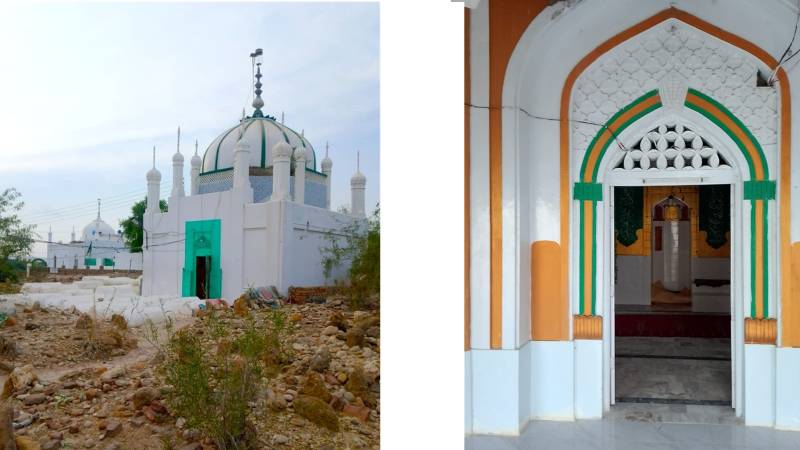
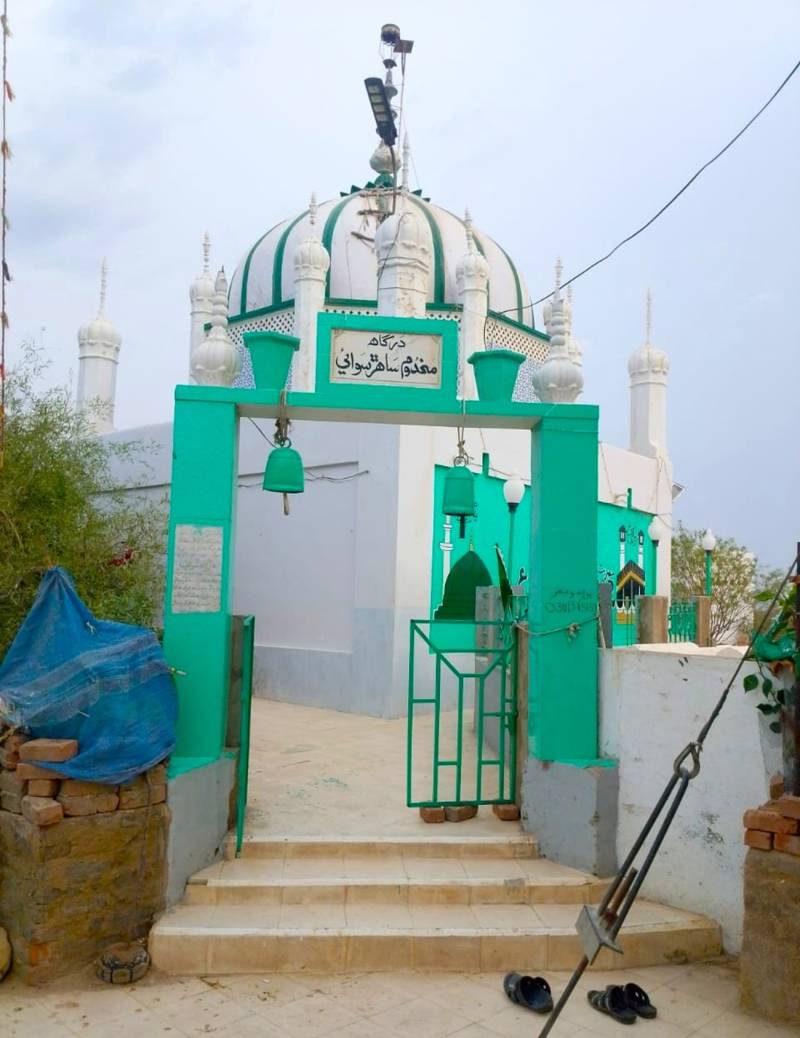
Makhdoom Sahar Lanjar, locally known as Makhdoom Sahar Sawai, is one of the eminent mystics of 16th-century Sindh. His shrine is located at Makhdoom Saharabad village in Jamshoro’s Manjhand taluka. It can be accessed via Aliabad on the Indus Highway or N-55. It is 5 km east of Aliabad. It can also be approached from Jamshoro Toll Plaza.
Makhdoom Sahar Lanjar was an eminent deputy of Makhdoom Bilal/Bilawal, the founder of the Blawali movement, which challenged the foreign rule of the Arghuns in Sindh. Makhdoom Bilawal belonged to the ruling Samo family, and he preferred mysticism to the kingdom. His grandfather, Makhdoom Idrees Samo, was the eminent mystic of his time at Thatta. He left Thatta and settled in Baghban, where many people became his disciples. Later, his grandson, Makhdoom Bilawal Samo, became an eminent mystic, scholar, teacher, and spiritual master in the Baghban region. Makdoom Bilawal Samo was born in 1451 in the village of Talti in the Baghban region, in the present-day Dadu district, and was hence called Mahkdoom Bilal/Bilawal Baghbani.
He was an erudite scholar of Tafsir (Quranic exegesis) and Hadith (Prophetic traditions). Many of his disciples spread his mystic thoughts in every nook and cranny of Sindh in the 15th, 16th, and 17th centuries. From Mustaq Mutalvi (also known as Maulvi Hidayatullah Mustaq Mutalvi), one learns that Makhdoom Bilawal was a Kubrawi Sufi saint. He was a disciple of Shaikh Dost Ali Sistani, who was a disciple of Syed Shamsuddin Ali Hamdani [d 786 H/1385], whose spiritual lineage can be traced back to Shaikh Najumuddin Kubra [1145–1221].
Some of the prominent deputies (khalifas) of Makhdoom Bilawal included: Makhdoom Sahar Lanjar [d 1572], Syed Hyder Shah Sannai [d 1530], Makhdoom Sa’ad alias Saand [d 1601], Makhdoom Hingoro, Makhdoom Hasan alias Pir Bilawali, Makhdoom Ruknuddin alias Makhdoom Mitho [d 1542], and Qazi Dito Sewistani.
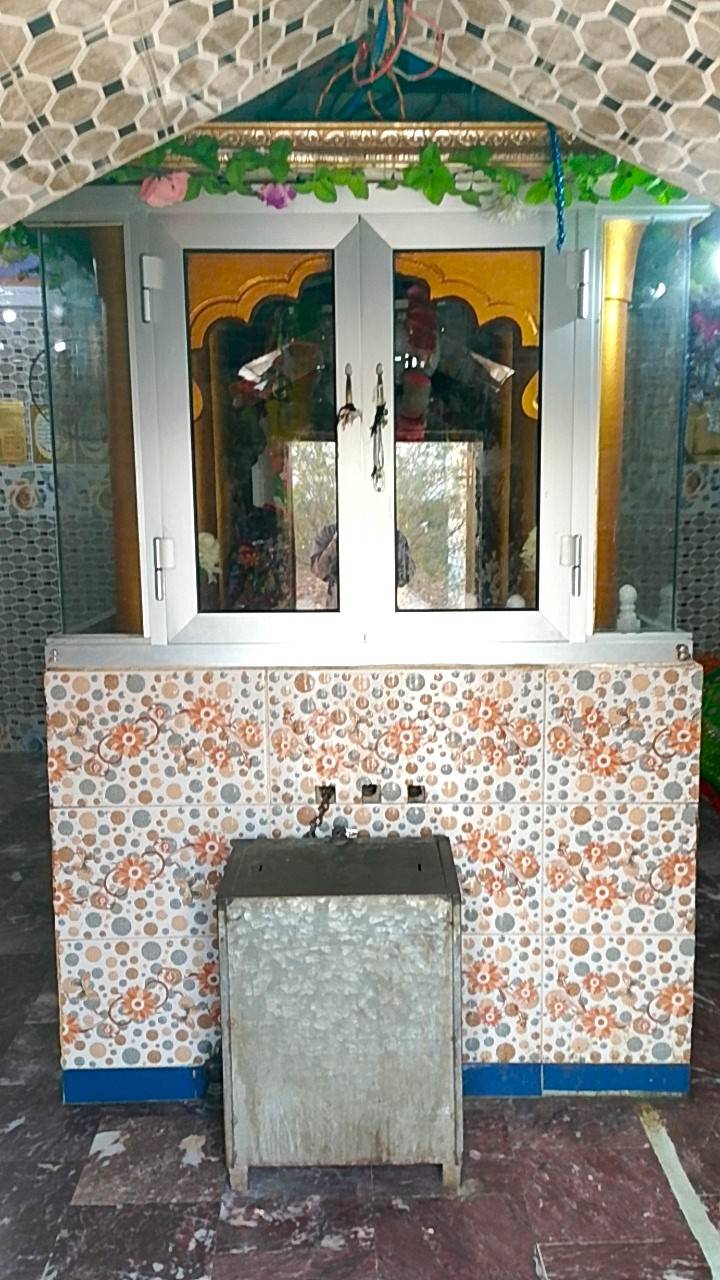
Makhdoom Sahar Lanjar spread the message of his mentor Makhdoom Bilawal and converted many people to his faith. One of his chief disciples, Sakhi Syed Ruknuddin Shah of Matiari, became the eminent Bilawali Pir and also initiated many scholars and saints into Makhdoom Bilawal's Bilawali Tariqa.
Makhdoom Sahar Lanjar was an eminent deputy of Makhdoom Bilal/Bilawal, the founder of the Blawali movement, which challenged the rule of the Arghuns in Sindh
It is said that after the martyrdom of Makhdoom Bilawal in 931 AH/1524 AD, the spread of the Bilawali Tariqa slowed down. Makhdoom Sahar Lanjhar later became associated with Makhdoom Nuh Sarwar, the founder of the Sarwari Tariqa of the Suhrawardi-Awaisi Sufi tradition.
The earliest reference to Makhdoom Sahar Lanjhar is found in Hadiqat ul-Aulia by Syed Abdul Qadir Thattvi. Interestingly, the author makes no mention of his Sufi affiliation or his association with either Makhdoom Bilawal or Makhdoom Nuh Sarwar, as later scholars claim. Instead, Syed Abdul Qadir Thattvi records two traditions concerning Makhdoom Sahar Lanjhar.
According to one local tradition, during Makhdoom Sahar Lanjhar's time, a land dispute arose between the Lanjhars and Balochs, who lived in neighbouring areas. The matter was brought before the concerned authorities, who appointed Syed Bada of Matiari to settle the dispute.
According to a tradition recorded in Hadiqat ul-Aulia, the Balochs allegedly gave him a camel as a bribe to influence his judgement. The decision was subsequently made in favour of the Balochs. The Lanjhars were unhappy with the decision, believing that it had been influenced by bribery.
When Makhdoom Sahar Lanjar learned about the dispute, he travelled to Matiari, where he saw the camel the Balochs had given to the Syed as a bribe, ploughing his land. Astonished that the animal was being used to cultivate the Syed’s fields, he remarked on it. According to the tradition, the camel immediately collapsed and died on the spot. The story reflects local beliefs about the spiritual authority of Makhdoom Sahar Lanjhar and its connection with justice. The camel's death is presented as a miraculous event linked to the alleged bribery and the disputed land settlement.
Maulana Din Muhammad Wafai (1991), the author of Tazkira Mashahir-e-Sindh Vol 1, provides additional information on Makhdoom Sahar Lanjhar, relying on two sources: Masoodat Mustaq Mutalvi and Daleel ul-Zakreen. He states that Makhdoom Sahar Lanjar also spent some time with Makhdoom Nuh Sarwar. According to Masoodat Mushtaq Mutalvi, Makhdoom Sahar Lanjar belonged to the Kubrawi-Hamdani tariqa of Mir Ali Syed Hamdani. Moreover, Maulana Din Muhammad Wafai (2005) notes in Tazkira Mashahir-e-Sindh Vols I & II that Sakhi Syed Ruknuddin Shah was a prominent deputy and disciple of Makhdoom Sahar Lanjar.
The tomb of Sakhi Syed Ruknuddin Shah dominates the landscape of Matiari town. It is believed that Sakhi Syed Ruknuddin Shah had a large following. He preached the silsila of his spiritual mentor Sahar Lanjar. Sakhi Syed Rukunddin Shah was also a Kubrawi-Bilawali Sufi saint who made Matiari the centre of his teachings. He built a mosque where he spent most of his time teaching and praying. Sakhi Syed Rukunuddin Shah died in 1567 AD. Many of Sakhi Ruknuddin Shah's disciples spread his message of love, tolerance, and simplicity in every nook and cranny of Sindh. Notable disciples of Sakhi Syed Ruknuddin Shah included Miyon Wahyun Chanhyo, Syed Chhutan Shah, and Sakaruddin Dars.
Miyon Wahyun Chanhyo was a chief deputy of Sakhi Ruknuddin Shah. Abdul Qadir Thattvi, the author of Hadiqat ul-Aulia, has written about his piety and called him one of the eminent saints of his time. Although he was not a Syed, he was very influential among the Syeds of Nasarpur and other towns of Sindh. Many miracles of Miyon Wahyun Chanhyo have been recorded by Abdul Qadir Thattvi in his book. The shrine of Miyon Wahyun Chanhyo is located in the Torki graveyard in Tando Allahyar district. It is located about 12 km east of Nasarpur town. This graveyard is now named after Miyon Wahyun, formerly known as Torki/Turki. It contains the tombs of saints and scholars, as well as cenotaphs of the Beglar nobles who played an important role in Sindh's sociopolitical history during the eras of the Arghuns, Tarkans, and Mughals.
The deputies and disciples of Makhdoom Sahar Lanjar played an important role in spreading his teachings among the populace. Makhdoom Sahar died in 980 AH/1572 AD and was buried in the village of Makhdoom Saharabad. An impressive tomb is built over his mortal remains. Near the tomb is a mosque, also built by Makhdoom Sahar. The mosque has undergone several renovations. The graveyard of Makhdoom Sahar Sawai is one of the largest necropolises in Jamshoro district. Many people frequent Makhdoom Sahar's shrine. It is one of the most popular shrines in Manjhad taluka. Makhdoom Sahar Lanjhar promoted the teachings of love, simplicity, and inclusivity among his followers. His prominent deputies carried forward his spiritual legacy.