

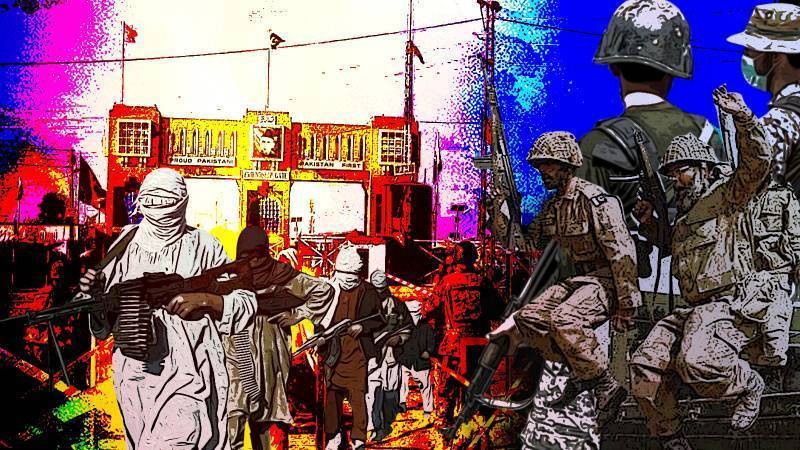
Militancy in Pakistan’s former Federally Administered Tribal Areas (Ex-FATA) continues to thrive largely due to the deep-rooted local support extended to extremist factions, including the proscribed Tehreek-e-Taliban Pakistan (TTP) and Daesh, senior officials and analysts have said.
While military operations over the past two decades have disrupted militant networks, experts believe that the insurgents’ ability to regroup and reassert influence in parts of the tribal belt is tied not just to porous borders and rugged terrain, but also to the sympathy and shelter they receive from within the population.
A senior police official who served in the tribal districts for several years confirmed that militant factions enjoy “vast and sustained” community support in many parts of Ex-FATA. Speaking on condition of anonymity, the officer said, “The militants’ survival depends on local networks for shelter, intelligence, logistics, and recruitment. Unfortunately, in several areas, the community does not see them as enemies. Instead, they are viewed as relatives, neighbours, or protectors against rival tribes or perceived injustices.”
According to the official, this societal acceptance explains why military operations, despite heavy investment in manpower and resources, face resistance not only from armed fighters but also from civilian populations. “Whenever the state moves in with operations, large sections of the public oppose them—not just out of fear of displacement, but because they believe the militants have a legitimate cause,” he said.
The Missing Militants in Settled Districts
Observers note that the phenomenon of entrenched militancy is not uniform across Khyber Pakhtunkhwa. Professor Shehryar Khan, who teaches International Relations at Iqra University Islamabad, points out a stark contrast between the tribal belt and other districts of the province.
“In settled districts like Mardan, Swabi, and Charsadda, you don’t see militant hideouts or organised TTP networks,” Khan told this correspondent. “The reason is simple: the population here does not support them. Militancy needs community oxygen to survive. Where the public is unsympathetic, militants simply can’t operate for long.”
Khan further highlighted the case of Parachinar, the administrative headquarters of Kurram District, which is part of the ex-tribal areas. “Parachinar is overwhelmingly Shia, and the local community has consistently resisted extremist Sunni groups. As a result, you don’t see the same kind of TTP or Daesh presence there,” he said. “It proves that where the people draw a hard line against militants, their operations collapse.”
The tribal districts may remain a sanctuary for groups like the TTP and Daesh, sustained not only by the terrain but also by the tacit or active support of those who live there
Opposition to Military Operations
Military campaigns in Ex-FATA, from Operation Zarb-e-Azb to Radd-ul-Fasaad, have often been met with protests from residents. Demonstrations against planned offensives are routinely framed in humanitarian terms—highlighting fears of displacement, loss of livelihoods, and collateral damage.
However, security sources suggest that in several cases, such opposition is at least partly motivated by the community’s desire to shield local militant elements. “We have intelligence that resistance to operations is sometimes orchestrated with the militants’ encouragement,” the police official said. “It creates a political and public relations challenge for the state, making decisive action harder to sustain.”
The Question of ‘Good Taliban’
An unnamed senior government official, familiar with counter-insurgency policy, warned that eliminating militancy requires not just military strength, but also public trust. “If the military wants to eradicate militancy for good, it must ensure that it is not perceived as supporting certain factions—whether labelled as ‘good Taliban’ or ‘surrendered Taliban’,” the official said.
The official stressed that the perception of selective action has been one of the most damaging factors in the fight against militancy. “People in the tribal belt often believe that the state differentiates between groups it wants to eliminate and those it quietly tolerates. This fuels conspiracy theories and erodes the legitimacy of operations.”
These concerns were recently echoed publicly by Khyber Pakhtunkhwa Chief Minister Ali Amin Gandapur, who reiterated long-standing accusations that some militant groups are covertly favoured for strategic reasons. While the military has consistently denied such claims, the perception persists among sections of the population, undermining counter-terrorism efforts.
The Persistence of Local Support
Analysts argue that the ideological alignment between segments of the local population and militant factions is deeply embedded, shaped by decades of cross-border jihad, tribal loyalties, and shared grievances against the state. Many residents, they say, see militants not as destabilising agents, but as defenders of religious or tribal identity.
Professor Khan believes that breaking this cycle requires more than military might. “You cannot bomb an ideology out of existence,” he said. “Unless the population is convinced that the militants are harming them more than helping them, the insurgency will adapt and survive. This is why there’s a glaring difference between districts where militants find support and those where they don’t.”
The Way Forward
Officials and experts agree that a purely military approach will not be enough to dismantle militant networks in Ex-FATA. Instead, they advocate a multi-pronged strategy that addresses governance deficits, provides economic alternatives, and builds public trust in state institutions.
“People need to see the government as the legitimate protector of their rights and security,” the senior government official said. “If the state is absent, corrupt, or seen as siding with certain armed groups, then the militants will always have a foothold.”
Professor Khan adds that counter-narratives must be rooted in local culture and religious discourse. “It’s about winning the argument on the ground,” he said. “You have to convince communities that their future lies in peace and integration, not in shielding armed actors who keep them trapped in perpetual conflict.”
Until then, the tribal districts may remain a sanctuary for groups like the TTP and Daesh, sustained not only by the terrain but also by the tacit or active support of those who live there.