

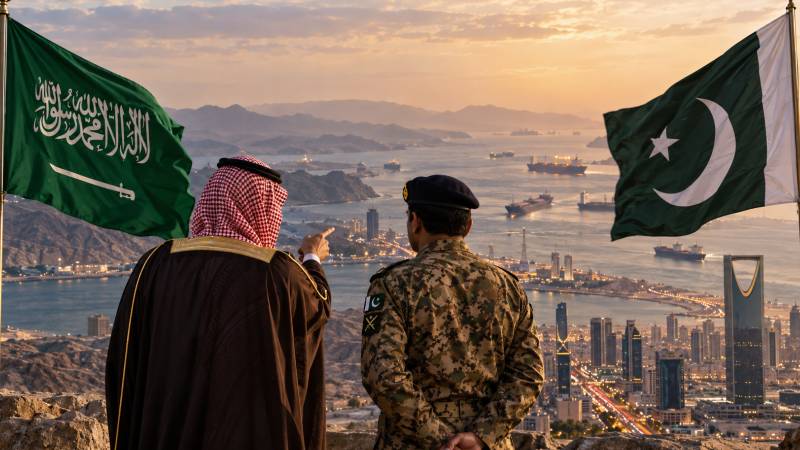
The recent crisis for the Kingdom of Saudi Arabia is a test for the policy makers in Riyadh due to increased threats of Houthis, blockade of energy routes in Strait of Homuz and Bab al Mandeb, and spill over of Iran War. The widening scope of the war in the region presents new challenges to the Kingdom and the choices left are few to deal with the threats. Pakistan holds the key for the regional conflicts as it continued to maintain delicate balance and yet remains the best choice for the Riyadh to deal with the Houthis. The best answer is hidden in Pakistans ability to deal with the threats, and its diplomacy which played a significant role in reducing the tensions in the Iran War during the first phase of the engagement. Islamabads good relations with all the west Asian players particularly with the Iran and Saudi Arabia, and has always advocated for the peace and stability in the region. The policy makers in Islamabad has always considered the responsibility of Pakistan being a Muslim state to defend the holy sites of Makkah and Madinah and the continued drone strikes on the holy sites will push Pakistan towards the conflict.
Historically the ties between Pakistan and Kingdom Saudi Arabia remained cordial as the Kingdom provided financial and political support since the 1947, and provided financial support for educational purposes for the development of educational institutes including Madrasahs. From time to time supports Pakistan with financial support including paying the UAE $ 3 billion during the Iran War and deposited its money in State Bank of Pakistan to beef up the Pakistani forex reserves. Riyadhs continued support to Pakistan in tense times was no surprise as it was only of few states who was informed of Pakistans nuclear tests in advance and viewed the ability of Pakistan as its own and promised to provide 50,000 barrels of oil per day after the western sanctions in response to nuclear tests in 1998. Meanwhile, Islamabad remained a firm defender of the Kingdom and continued to maintain its strategic support through providing military support in Gulf war I in 1990-91 through deployment of 20,000 Pakistani troops to defend holy places in Saudi Arabia.
Pakistan’s professional military, its strategic partnership with China, and its extensive experience in confronting state and non-state threats make it a viable security partner for Riyadh as the regional order undergoes a profound transformation.
In the changing global order and the increased violence across the region has set the direction for new alignments and the Iran war has exposed the weakness of the Saudi Arabia and its over reliance on US led security architecture in the region. Despite the assurance and strategic agreements with the US the help did not arrived for the Riyadh in times of crisis. Trump administration policies seemed to have distanced from Riyadh owing to his policies of isolating Arab states for not siding with US in its Iran War and put pressure to accept the Abraham Accord.
Meanwhile, US seemed to sign a peace deal with Tehran despite challenges as both sides stand firm on their stance on the issues of Hormuz and nuclear programme, and the proxies in the region. President Trumps address to the UNGA once again stressed that Iran will not acquire nuclear weapons at any time and they need to come to terms to diffuse the situation. Meanwhile, Iranian leadership has asked to end the blockade of Hormuz and economic sanctions on Iran, as well as on ending the wars on all fronts the only option in making a peace in the region. The situation is further complicated after the Fly Dubai flight hijacking issue by Omani pilot on 30th September 2026 bound to Tel Aviv carrying 170 passengers mostly Israeli citizens. The Israel and US called it an attempt of Iran and called it a 9/11 for Israel. Meanwhile Tehran refused and called it a false flag operation of Netantanyahu and Mossad to increase his dwindling support in upcoming elections. Netanyahu has also used the UNGA podium for his political campaign where he displayed pager reminding the world of Pager attack on Hezbollah fighters in 2024. It is in this backdrop the region is on the brink of renewed and intense hostilities where the Washington will forge alliances with the Gulf States and launch a new preemptive strike on Iran.
In this backdrop, the dilemma for the Riyadh is its own protection from the Houthis strikes on its energy infrastructure which has crippled its economy and the image of a regional leader. US role in the region remained disappointed for the Gulf States as Washington was committed towards defending Tel Aviv and directed its forces and defense systems to protect the Israel from all kind of aggression, and ignored the Houthis in the region.
Pakistan seemed to be the viable option for the Kingdom to protect from the external threats including the Houthis in the Red Sea. Pakistan's professional military has the experience of fighting the wars of aggression from external and internal threats including both state and non-state actors. Pakistan's public opinion is heavily tilted in favor of Riyadh, due to the presence of Pakistan diaspora of 2.5 million in Saudi Arabia sends US$ 9.78 billion out of US$ 41.6 billion in remittances during 2025-26.
Pakistan condemned the Houthis strikes on the Kingdom including Prime Minister Shahbaz Sharif condemned the Houthis strikes on holy places and its commitment to defend Saudi Arabias holy cities of Makkah and Medina, and called them as Pakistans red line which will responded accordingly. Pakistans strategic ties with China can be used to make a peace deal possible. Beijings influence on Tehran and Houthis can play a significant role in reducing the tensions between Riyadh and regional actors affiliated with Tehran as its policy to ease tensions in the region has worked well in 2023 between Tehran and Riyadh.
Pakistan remained the major player in the regional conflicts due to its power and presence of professional forces who has vast experience in dealing with the threats from both state and non-state actors and shares good ties with all three major powers in a multipolar world and off course its role in Iran war. The firm stand of Islamabad to protect Kingdom further increases the profile of Pakistan as the viable option left for the Riyadh.