

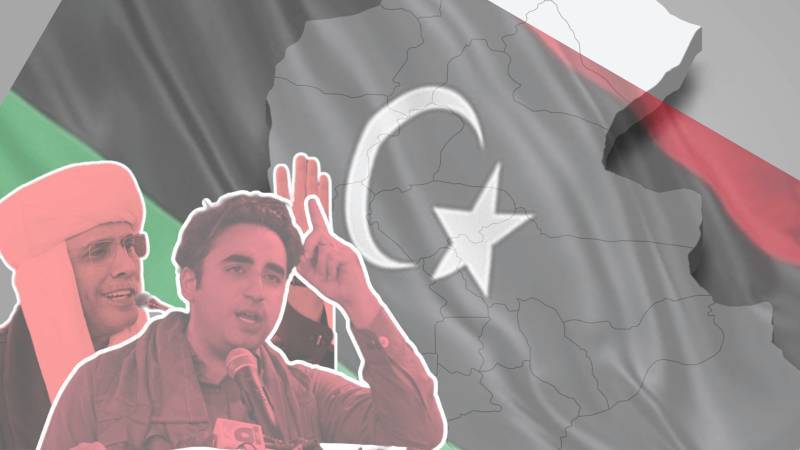
On April 4th this year, the Pakistan Peoples Party (PPP) will commemorate the 46th death anniversary of its founder, Zulfikar Ali Bhutto, in a markedly distinct manner. Just eleven days earlier, on Yaum-e-Pakistan (March 23), Bhutto was posthumously awarded the Nishan-i-Pakistan, the nation’s highest civilian honor. However, amidst this symbolic recognition, the party finds itself grappling with one of the most formidable political challenges since assuming power in Sindh in 2008. While it has historically navigated various political crises, the current challenges are unprecedented, testing the resilience and strategic acumen of its leadership in ways never before encountered.
This article examines the factors that have enabled the PPP to sustain its political dominance in Sindh, particularly in comparison to other parties that have held power in different provinces. It explores how the party has successfully prolonged its tenure and maintained electoral dominance since 2008, despite persistent opposition from multiple segments of society and the powerful military establishment—an entity that has alternated between posturing as an opponent and engaging in strategic cooperation. Finally, the discussion will turn to the newly emerging challenges confronting the party, which are far more complex and severe than those it has previously encountered, posing a significant test to its continued political hegemony.
Pakistan khappay: Successful in dealing with Establishment
The assassination of Benazir Bhutto on December 27, 2007, following her address at an election rally in Liaquat Bagh, Rawalpindi, led to widespread turmoil across Pakistan. The ensuing riots, arson, and unrest particularly resonated in Sindh, where significant outrage emerged. In this volatile context, the potential for separatist elements to exploit the situation posed a serious threat to national stability. However, Asif Ali Zardari, through strategic political acumen, managed to channel the public's response towards national unity. His slogan 'Pakistan Khappay' (We want Pakistan) effectively countered calls for retribution, promoting peace and cohesion. Furthermore, he reaffirmed Benazir Bhutto’s vision with the assertion that 'Democracy is the best revenge.' This approach not only stabilised the fractured political landscape but also garnered the trust of the Establishment, enabling Zardari to pursue substantial constitutional reforms.
One of Zardari’s key political achievements was the passage of the 18th Amendment to the Constitution in 2010, which significantly enhanced provincial autonomy. This legislative milestone redefined federalism in Pakistan by granting greater political and economic authority to the provinces, including Sindh. The increased autonomy, in turn, marginalised nationalist forces within the province and weakened opposition in rural Sindh while concurrently empowering the Sindhi middle class in urban centers. By engaging diverse political stakeholders and securing the trust of state institutions, Zardari facilitated a constitutional transformation that had long-term implications for governance in Pakistan.
Zardari’s leadership redefined Sindh’s political landscape, reinforcing the historical dominance of rural political actors while mitigating urban political challenges
During the February 2008 general elections, a seasoned party worker (Jiyala) remarked, 'We have been out of power for too long; the party workers now seek to reclaim it by any means necessary.' At this critical juncture, Zardari emerged as the uncontested leader of the Pakistan Peoples Party (PPP), consolidating his authority over the party. Having endured nearly eleven years of imprisonment on corruption and embezzlement charges—later proven to be politically motivated—Zardari leveraged his political experience to reinforce his leadership within the PPP and beyond.
To understand the broader political implications of Zardari’s leadership, it is essential to contextualise Sindh’s historical urban-rural divide. Since the colonial era, this divide has been a defining feature of the province’s political landscape. Prior to Partition, the urban elite was predominantly non-Muslim, comprising Hindu trading and money-lending classes, along with minority Muslim sects. In contrast, the rural elite consisted of the Muslim landed gentry, as well as a segment of the Muslim trading class competing with non-Muslim commercial interests. This divide shaped political allegiances, with the Muslim landed elite aligning with the Muslim League, thereby ensuring the party’s dominance in Sindh—the only Muslim-majority province where such support was evident.
The urban-rural binary in Sindh underwent a significant transformation in the aftermath of Partition, as the mass departure of the Hindu population to India and the simultaneous influx of Indian Muslim migrants (Muhajirs) and Pashtuns reshaped the province’s socio-political fabric. This large-scale demographic shift not only altered the ethnic composition of Sindh’s urban centers but also reinforced the political dominance of the rural landed elite, who retained control over agrarian resources and provincial governance structures.
Under Asif Ali Zardari’s leadership, these historical complexities were navigated through strategic political maneuvering. One of his most consequential political strategies was to confine military operations targeting the urban lower-middle classes in Sindh to urban areas, thereby insulating rural regions from direct state intervention. This move effectively neutralised the most significant potential challenge to the entrenched power of the rural landed elite, ensuring the preservation of their political hegemony. By leveraging political negotiations to shield rural Sindh from military incursions, Zardari not only safeguarded his support base but also reinforced the historical divide between Sindh’s urban and rural political landscapes. This approach underscores the complex interplay between migration-induced demographic shifts, evolving class structures, and the enduring dominance of feudal political interests in Sindh’s post-Partition history.
Additionally, the state, through targeted operations and political maneuvering, systematically curtailed the influence of the Muttahida Qaumi Movement (MQM), the primary political force representing the lower-middle classes in urban Sindh. This strategy effectively consolidated the political dominance of the rural elite and the emerging Sindhi middle class, which, in alliance, sustained the PPP as the ruling party from 2008 to the present—an outcome neither Zulfikar Ali Bhutto nor Benazir Bhutto fully achieved during their tenures. Consequently, Zardari’s leadership redefined Sindh’s political landscape, reinforcing the historical dominance of rural political actors while mitigating urban political challenges.
The rest was orchestrated by the 'Iron Lady' of Sindh, Faryal Talpur, known as Addi Faryal in party circles. She took control of the party’s reins, initially ensuring that the big landed elite were incorporated into its ranks. Traditionally, the province’s major landlords had remained outside the PPP’s inner circle, aligning instead with pro-establishment forces that sought to curtail the influence of the once anti-establishment PPP from 1977 until 2007. However, as emerging nouveau riche and professional and middle classes asserted their political power—most notably in Punjab and Khyber Pakhtunkhwa—leading to the political decline of the old landed and mercantile elite, Faryal Talpur recognised this shift and enacted significant reforms within both the party and the government. She sidelined the traditional landed aristocracy, promoting members of the rising middle class to key positions.
Contrary to the dominant perception, the party is not controlled by the traditional landed aristocracy but by an emergent class that has accumulated wealth in modern sectors of the economy
While this new class of political elites—many of whom amassed wealth and wielded considerable influence during the party’s tenure—faced criticism in the press for corruption, their consolidation of power allowed the PPP to limit opposition, particularly in the expanding urban and peri-urban areas. Faryal Talpur successfully accommodated various groups by strategically placing them in different positions—some were appointed to town and district-level offices within local bodies, others were awarded tickets for provincial and national assembly elections, while some secured positions in the administration and bureaucracy. So far, this arrangement had proven effective until new challenges emerged, as discussed below. The migration of Sindh’s growing middle class to urban areas, coupled with their access to professional education and subsequent employment, along with the increased empowerment of the provincial chief minister—who, leveraging the party’s legislative majority and the provisions of the 18th Amendment, has brought more institutions under his control—has led some academics to argue that the PPP is evolving into a Sindhi nationalist party.
New Emerging Challenges
The patronage extended to the emerging middle classes, however, has created a starkly unequal reality for the rural poor, who continue to grapple with declining agricultural incomes, escalating costs of farm inputs, inflation, and an increasingly regressive taxation system. These economic pressures have deepened rural poverty, making subsistence increasingly precarious. While welfare initiatives such as the Benazir Income Support Program (BISP) and other limited state interventions seek to alleviate the crisis, they fail to address the underlying structural inequalities exacerbated by neoliberal economic policies dictated by international financial institutions (IFIs) such as the International Monetary Fund (IMF).
Moreover, the inefficient allocation and mismanagement of state resources—often attributed to the entrenched power of the so-called rural landed elites—further hinder substantive policy reforms. This prevailing narrative, frequently amplified by the urban intelligentsia and mainstream media, frames the crisis as a governance failure while failing to account for broader economic transformations and class realignments reshaping Sindh’s socio-political landscape. Despite their deep-seated hostility toward the landed elite—often shaped by urban, liberal, and middle-class biases—the argument that the Pakistan Peoples Party (PPP) remains solely under feudal control is increasingly untenable.
Contrary to the dominant perception, the party is not controlled by the traditional landed aristocracy but by an emergent class that has accumulated wealth in modern sectors of the economy. The economic influence of the landed elite has waned significantly, as agriculture now contributes 22% to Pakistan’s GDP. However, within this sector, the share of crop production—a historically central pillar of feudal power—is merely 7%, underscoring the declining economic clout of the traditional agrarian elite. This marginal contribution weakens the argument that landowning classes continue to wield unchecked dominance in the political sphere. While some large landowners have strategically diversified their investments into industrial and commercial ventures, the true backbone of the Pakistan Peoples Party (PPP) today lies not in the feudal aristocracy but in a nouveau riche elite and an expanding Sindhi middle class that has solidified its control over the party’s structures.
Thus far, the emerging nouveau riche and middle-class leadership in Sindh has largely managed to contain opposition from the rural poor and segments of the middle class—often backed by civil society—through strategic alignments with professional groups and nationalist forces. This dynamic was evident in instances such as the protests against Bahria Town Karachi, where land dispossession and forced evictions mobilised resistance from affected communities. Similarly, recurrent episodes of state excesses, including police brutality and the abduction of young girls—particularly from Sindh’s marginalised Hindu community—have triggered public outrage. Yet, rather than addressing these systemic injustices through substantive policy measures, the ruling elite has relied on political maneuvering to diffuse tensions and sustain its dominance.
This perceived threat to Sindh’s agricultural sustainability and water security has galvanised a province-wide anti-canal movement, reflecting deep-seated anxieties over resource allocation and inter-provincial inequalities
Since 2008, the PPP government has facilitated the exploitation of human and natural resources by corporate interests under the guise of development, often justifying such policies with promises of trickle-down benefits that have largely failed to materialise for both rural and urban populations. However, by co-opting professional and nationalist circles, the Sindhi middle-class leadership has been able to maintain its political supremacy despite deepening socio-economic disparities and governance failures. This pattern underscores a broader structural reality in contemporary Sindh, where economic liberalisation, elite patronage networks, and shifting class alignments shape the evolving landscape of political contestation. Despite the party’s historically adept political management and maneuvering, the recent wave of opposition led by a younger generation of Sindhi lawyers—originating in Hyderabad and rapidly spreading across Sindh—has emerged as an unprecedented challenge to the hegemony of the nouveau riche elite within the party. Unlike previous dissent, which was often contained through patronage networks or institutional control, this movement has proven resistant to conventional tactics of co-optation and suppression.
The growing unrest within the legal community, particularly among young lawyers, signifies a fundamental shift in Sindh’s political landscape. The Ministry of Law and the police department, despite backing from the ruling party, have struggled to suppress the mounting resentment, which has now taken direct aim at President Asif Ali Zardari. While senior lawyers and the entrenched leadership of bar associations—historically aligned with the party-backed administration—initially sought to contain the movement, they too found their authority challenged and increasingly marginalised as protests spiraled beyond their control.
Crucially, this movement has disrupted the traditional dominance of the Sindh Bar Council and other legal institutions, which had long functioned as extensions of elite political influence. For the first time since the lawyers' movement of 2007–2009, a significant rupture has emerged within the hegemonic order, signaling a potential realignment of political forces in the province. The resistance of Sindh’s young lawyers represents more than just an internal professional struggle; it reflects deeper discontent with the patronage-based political economy and the erosion of institutional autonomy under elite rule.
As the ruling party and the Sindh government struggled under mounting pressure from the younger generation of lawyers, the political landscape took a new turn with the emergence of growing opposition to the construction of six new irrigation canals under the Green Pakistan Initiative (GPI). This initiative, designed to establish a "food basket" region catering to Gulf countries by promoting corporate farming, was framed as a solution to ease Pakistan’s financial burdens. However, the project has been met with strong resistance in Sindh, where political forces argue that it threatens the already fragile ecological balance of the lower Indus region.
Like the Green Revolution initiated under the military regime in the mid-1960s, the "New Green Revolution" is being hailed as a game changer. The initiative seeks to modernise the agricultural sector by integrating advanced technologies such as drones, precision land management systems, and mechanised farming equipment like tractors. Additionally, it aims to enhance productivity by providing farmers with high-quality seeds and fertilisers. Beyond technological advancements, the project emphasises technical support, including soil analysis and other agricultural services, to optimise farming practices. For the junta, a key objective is to attract both domestic and international investment to transform agriculture into a high-yield, commercially viable sector. Backed by the powerful military establishment and the federal government—dominated by Punjab, the country’s largest province—the GPI enjoys significant state patronage. The project’s inauguration in Cholistan, Punjab, was attended by key state actors, including the Chief of Army Staff, the Prime Minister, and the Punjab Chief Minister, underscoring its strategic importance at the national level. However, Sindhi political, civil society and environmental activists contend that the initiative will exacerbate the acute water scarcity in the province, particularly in its southern regions, where the depletion of the Indus River has already led to seawater intrusion, rendering vast tracts of arable land barren.
This perceived threat to Sindh’s agricultural sustainability and water security has galvanised a province-wide anti-canal movement, reflecting deep-seated anxieties over resource allocation and inter-provincial inequalities. The movement represents not only an environmental and economic struggle but also a political contestation over federalism, provincial autonomy, and the long-standing grievances of Sindh against central policies that prioritise Punjab’s development at the cost of the lower Indus region. If left unaddressed, this growing resistance has the potential to reshape Sindh’s political discourse and further strain the federation’s already fragile center-province relations.
The situation is further exacerbated by two interrelated factors. First, the Pakistan Meteorological Department (PMD) issued a drought alert at the beginning of January this year, warning of worsening conditions across three provinces due to significantly below-average rainfall, with precipitation recorded at 42% less than the seasonal norm. Second, rising temperatures have intensified the crisis by accelerating soil moisture depletion and exacerbating water scarcity. These climatic challenges, compounded by existing structural vulnerabilities, pose a severe threat to agricultural productivity and rural livelihoods, deepening socio-economic distress in affected regions.
The scarcity of water and drought is a real danger and there is less water available in the southern part of the country. This ultimately created a very dangerous situation for the party and government in Sindh
Against this backdrop, the Anti-Canal Movement has emerged as an unprecedented and highly successful uprising of rural communities across Sindh. The movement, taking most party officials by surprise, has been largely led by lower-tier professionals and grassroots activists, with mobilisation occurring in nearly every village—both large and small. People from the lower strata of society have taken the initiative, organising protests and demonstrations while vocally opposing the canal project and the government’s policies. The movement’s rapid expansion, coupled with the growing dissent from the young lawyers' movement, has presented a formidable challenge to the nouveau riche political elite, unlike any they have previously encountered.
Initially, the political leadership responded with caution, maintaining a deliberate distance from the anti-canal agitation and addressing it only in media discussions. However, as the anti-government protests gained momentum and attracted mass participation, a significant political development occurred: the federal government leaked official documents to the media, revealing that the very meeting approving the construction of the six canals under the Green Pakistan Initiative (GPI) had been chaired by President Asif Ali Zardari in July 2024. This disclosure not only confirmed his administration's involvement in the project but also exposed its tacit approval, further fueling public outrage and intensifying opposition to the political establishment.
The unfolding situation has reached a critical juncture, marked by significant political maneuvering within the ruling party. In an unusual development, the party chairperson, Bilawal Bhutto Zardari, personally attended a Sindh Council meeting—an occurrence described as unprecedented by one of the participants. The meeting, held at the Chief Minister’s House in Sindh, signaled a strategic shift in the party’s approach toward the escalating anti-canal movement.
During the session, Bilawal Bhutto Zardari announced that the commemoration of Zulfikar Ali Bhutto’s death anniversary on April 4 would be observed with full political mobilisation, aligning it with the ongoing anti-canal protests. Following this decision, the Sindh Chief Minister and senior party officials launched a coordinated media campaign, holding press conferences to reject the proposed canal construction. In a striking turn, they also directed their criticism toward the federal government—despite being political allies—framing the initiative as detrimental to the interests of Sindh’s people.
On March 25, the party leadership directed every district to organise mass opposition rallies featuring strong anti-canal slogans and protests against federal policies perceived as detrimental to the province. This strategic move was designed to allow the party to reclaim control over the growing anti-canal movement, positioning itself as its vanguard while simultaneously managing and containing public discontent. By doing so, the leadership sought not only to neutralise grassroots opposition but also to consolidate its political base, ensuring its continued dominance within Sindh’s political landscape. Yet, the protest on March 25 made no difference, failing even to attract media attention.
However, the political situation took another significant turn when, during an anti-canal demonstration, Zulfiqar Ali Bhutto Junior—the grandson of Zulfikar Ali Bhutto and son of Murtaza Bhutto—publicly hinted at entering politics. He announced his intention to mobilise PPP Shaheed Bhutto, the faction established by his father to challenge the PPP led by Benazir Bhutto before his assassination in a police encounter in Karachi in September 1996. This development introduced a new dimension to the political landscape, raising the prospect of an alternative Bhutto-led movement that could further complicate the ruling party’s efforts to control the anti-canal protests and maintain its political hegemony in Sindh.
The Chief Minister Sindh and his cabinet members and party leaders try to make their arguments by exposing the federal government and criticising opponents and trying to ensure and realise the people of Sindh that the party and government will never compromise the larger interest of the people of Sindh, they hope that once they dominate the movement, they will be able to defuse it as they did previously with many times. However, the youths and young especially from town and urban centers are like the youth of KP and Punjab are not following their elders and leading personalities in places like bars and the locality, out of control. Many things now seem combing in the situation. Despite the very fact that the PPP government was able to make changes in the actual plan and able to postpone the construction of the six canal, The scarcity of water and drought is a real danger and there is less water available in the southern part of the country. This ultimately created a very dangerous situation for the party and government in Sindh.
Many hope that Zulfiqar Junior will be able to challenge and built a viable opposition by attracting political mass in the province. "Will Zulfiqar Junior make a difference?" I asked a friend. "Whatever the situation," he said, "Bhutto will be alive in his grave."