

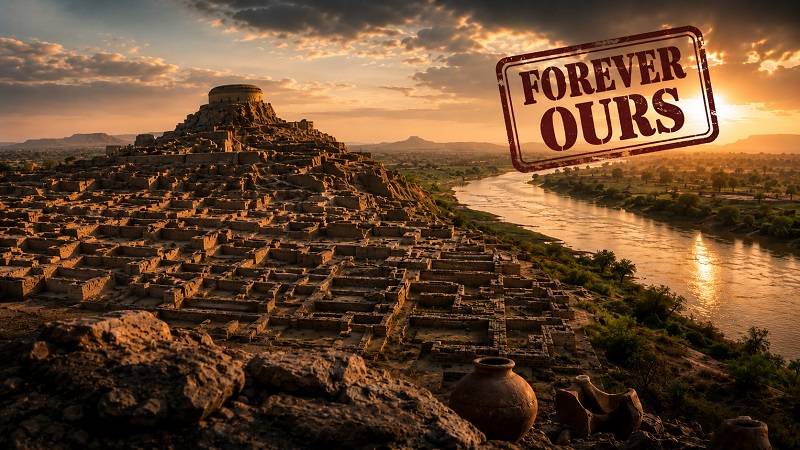
Few artefacts from the ancient world have generated as much controversy in recent years as the so-called "Pashupati Seal" discovered at Mohenjo-daro. Buried beneath the ruins of the ancient city for thousands of years, this seal was unearthed during excavations in 1928 or 1929 and, according to carbon dating, is approximately 4,300 years old.
Indians insist that the figure engraved on the seal is none other than Lord Shiva. From this, they conclude that the people of the Indus Valley Civilisation—those who inhabited ancient Sindh and Punjab—were Hindus. Since Pakistan was created on the basis of the Two-Nation Theory, they argue, Pakistan therefore has no connection with this ancient civilisation.
At first glance, the name "Pashupati" itself certainly sounds Hindu. One could reasonably assume that the seal must depict a Hindu deity. But that assumption is misleading. The seal is called the "Pashupati Seal" because Sir John Marshall himself gave it that name after associating the image with Pashupati, a manifestation of Shiva. Later scholarship, however, has challenged this identification and argued that the seal may have nothing to do with Shiva at all.
Some scholars suggest that the figure bears greater resemblance to a Central Asian deity. Others argue that it may not represent a deity at all. It could simply be the seal of a ruler who once governed Mohenjo-daro or a contemporary city. It might depict a priest, a shaman, or even be nothing more than an artistic creation. The truth is that nobody can say anything with certainty because the language of the Indus Valley Civilisation remains undeciphered to this day.
This isn't Shiva. It's more likely adapted from proto-Elamite iconography, showing an Eurasian deity "lord of animals."
— Audrey Truschke (@AudreyTruschke) May 27, 2026
Indian history is amazing, wonderful, and fantastic -- It's well worth getting it right. https://t.co/UJeLh1WjzM
Another common argument is that the Saraswati river mentioned in the Vedas corresponds to the Indus River system. Therefore, it is claimed, the Vedic tradition had already reached this region, making the Indus Valley Civilisation part of India's civilisational inheritance rather than that of present-day Pakistan.
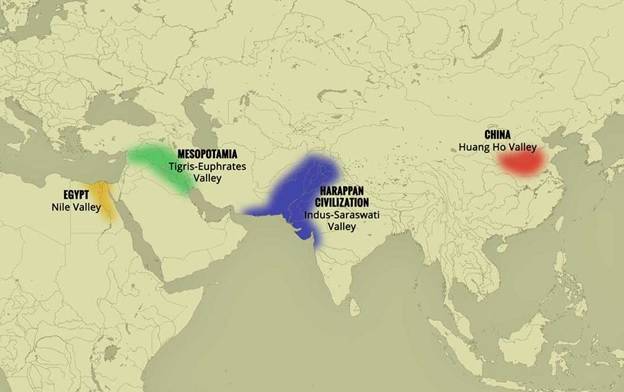
It is worth examining this claim more closely.
The reality is that historians and archaeologists have never reached a consensus on whether a river called Saraswati ever existed as a physical river in the form described in the Vedas. According to Vedic descriptions, “Saraswati was a mighty river”, “the greatest of rivers”. Yet there is still no agreement regarding its geography. The Vedas place it somewhere between the Sutlej and Yamuna rivers. That immediately raises a question: the Indus itself, let alone one of its tributaries, does not flow there. Even if a branch of the Sutlej once fed such a river, it would still be difficult to reconcile that with the “enormous”, “majestic” river described in Vedic literature.
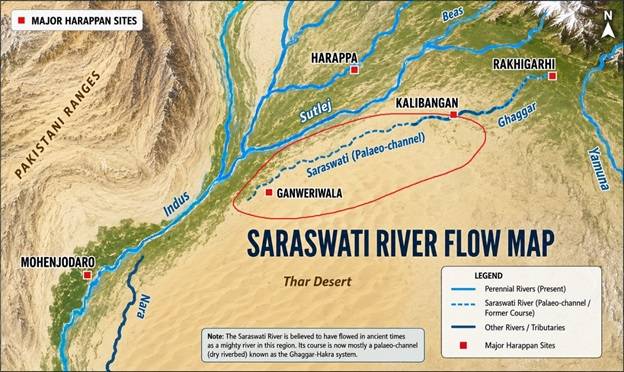
To insist, under these circumstances, that the civilisation should be renamed the "Indus-Saraswati Civilisation" appears strange. When there is still disagreement over where this river was, or even whether it existed at all, how can an ancient civilisation that itself remained buried underground for millennia be named after it? Particularly when the mighty Indus River—described by some as the “father of rivers” (اباسین) and by others as the “lion river” (شیر دریا)—is very much present and visible.
If there were even the slightest substance to these claims, many of us would readily acknowledge that others also have a stake in this civilisation. But what is being asserted here often appears less like scholarship and more like an attempt at imposing a narrative, and such impositions are difficult to accept.
The counter-argument is straightforward. Anyone looking at a map can see where the Indus River flows and into which sea it empties. Harappa lies near the modern city of Sahiwal in Punjab and is watered by the Ravi, which remains a tributary of the Indus today. Mohenjo-daro still lies only two miles from the Indus River and, in antiquity, was even closer to it. The geographical relationship is plain to see.
Now, over four and a half thousand years, the Indus has altered its course by only a couple of miles. Yet the Saraswati remains elusive. It is also important to remember that, according to Hindu mythology, Saraswati is not merely a river but also a goddess. One cannot entirely rule out the possibility that the goddess preceded the river in mythology.
The entire debate gained particular prominence after the 1980s, roughly the same period during which the BJP began to emerge as a significant political force in India. Prior to that, Congress exercised such overwhelming dominance that the BJP barely registered politically. As majoritarian and extremist currents gained ground in Indian society, what many describe as a cultural war against Pakistan also intensified. It is perhaps no coincidence that during this period the term "Indus-Saraswati Civilisation" suddenly gained popularity. Even today, it is often self-styled historians who claim to find history in the Vedas, civilisation in wilderness, and a mighty river in barren landscapes whose beginning and end remain uncertain. That's worse than falling prey to Naseem Hijazi's historical fiction, which one can rightly accuse many Pakistanis of being guilty of.
Then there is the argument that because Pakistan was founded on the basis of the Two-Nation Theory, it can have no connection with the Indus Valley Civilisation. By that logic, modern Egypt, being a Muslim-majority country, would have no connection with the civilisation of the Pharaohs. Italy, being overwhelmingly Christian, should renounce the pagan Roman Empire.
The people of this region embraced Islam; their DNA did not change. Just as genetic studies of Palestinians reveal continuity with the ancient inhabitants of their land, modern Punjabis and Sindhis are also indigenous to the regions they inhabit today. They adopted a new religion. That alone does not sever their connection to the past.
Moreover, the Vedas themselves were composed after the decline of Harappa and Mohenjo-daro. Estimates place at least several centuries between them. Four hundred years is a substantial span even in an age of printing presses, widespread communication, and sophisticated methods of preserving texts. How much more difficult would it have been to preserve languages and traditions in a period before paper had even been invented?
One may, however, argue that the territory that constitutes modern Pakistan has not always shared a seamless historical and cultural identity with what is now India. In The Indus Saga, Aitzaz Ahsan argues in considerable detail that the region known during British rule as India was, over the last five thousand years, united under a single ruler for only about five hundred years. For most of history, this region maintained a distinct identity.
The distinction between Hind and Sindh has long existed. Zulfikar Ali Bhutto Jr. recently argued at ThinkFest that the territory now called Pakistan has, in one form or another, existed historically as a recognisable political entity. “It was once called Sapta Sindhava--Land of the Seven Seas. It has been Gandhara, the Sikh Empire, and has been ruled by dynasties such as the Kalhoras and Talpurs. Going further back, it was the homeland of the Indus Valley Civilisation itself. And if there is one geographical feature that distinguishes this region from Hind, it is Sindh and the Indus River.”
Pakistan has always existed in one form or the other, it has only been renamed as " Pakistan " on 14th August 1947????????
— Shumail ???????? (@Pakforever9) June 8, 2026
Indus # Pakistan
Pakistan , the indus land is the child of the Indus in the same way as Egyp is the gift of the Nile.
The Indus has provided unity… pic.twitter.com/ClQGSApXj0
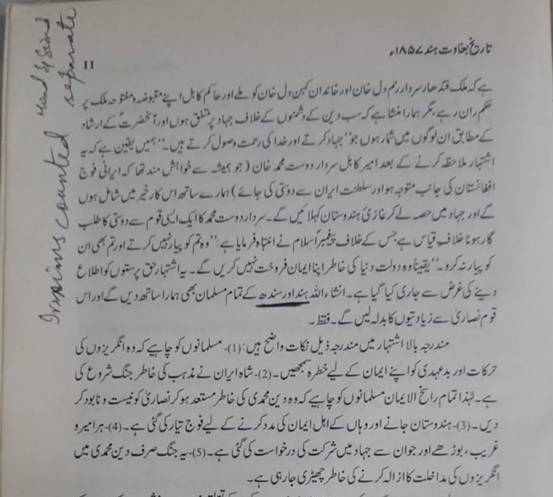
This distinction is also reflected in historical documents such as a letter by the Shah of Iran before the 1857 War of Independence, reproduced by Pandit Kanhaiya Lal in his iconic “Tareekh-e-Baghawat-e-Hind 1857”, in which he referred separately to the Muslims of Hind and Sindh while encouraging resistance against the British.
Aitzaz Ahsan further argues that the British conquered Sindh using an army drawn from Hind, but later consolidated their hold over Hind using troops from Sindh and Punjab. He cites British observations suggesting that Punjabis regarded themselves as distinct from the sepoys of Oudh and other regions.
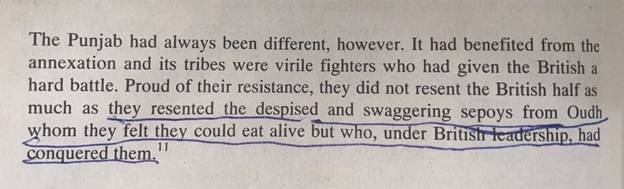
The broader philosophical argument of The Indus Saga is that the histories of Hind and Sindh have often flowed in separate directions. Critics sometimes mock Pakistanis for identifying as Arabs or Turks and then suddenly invoking an Indus identity. Yet such criticism misunderstands the matter. When assumptions are made about how people will respond politically or culturally, those assumptions do not always hold true.
Pakistan, from its earliest days, has regarded itself as a custodian of the Indus Valley Civilisation. Choudhry Rahmat Ali himself wrote in 1934 (Pakistan: The Fatherland of Pak Nation) that Pakistan was the birthplace of human civilisation, the site of humanity's earliest settlements, and the first strong citadel of Islam in the region.
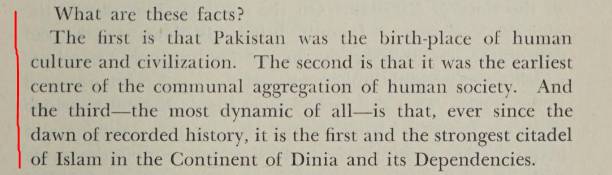
It is true that during General Zia-ul-Haq's era, Muhammad bin Qasim was elevated as the "first Pakistani". Yet before that, Zulfikar Ali Bhutto hosted the Shah of Iran at Mohenjo-daro and reminded a ruler who laid claim to an ancient civilisation that Pakistan possessed an even older one.
As for the argument that Pakistan, because it emerged from the Two-Nation Theory, must regard all pre-Islamic peoples as unbelievers, Pakistan today is home to millions of non-Muslims who are every bit as Pakistani as their Muslim compatriots. In Islamic theology, disbelief has a specific definition: knowingly rejecting the truth after recognising it. Since we cannot say with certainty whether the people of the Indus Valley Civilisation were monotheists, atheists, or polytheists, nor whether any message of monotheism ever reached them, such judgements become speculative.
Even if they weren’t monotheists, nobody cares. Why?
Because Pakistan was created to safeguard the political rights of Muslims and to prevent “tyranny of majority” from overwhelming them. The people who once inhabited the Indus Valley and who still inhabit this valley today are either Muslims or are long gone. There is no question of domination by ancient peoples. Our ancestors changed their religion; they did not change their geography. Harappa and Mohenjo-daro belonged to them, and their descendants continue to live in the Indus Valley today.