

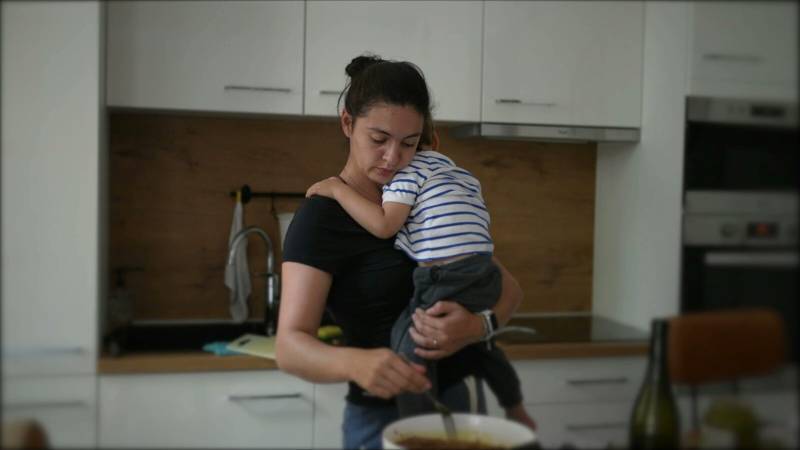
Pakistan’s economic imagination is tidy: exports logged, remittances celebrated, deficits reluctantly acknowledged. But behind this arithmetic lies another ledger written not in rupees but in hours, and its entries are made daily by women. Cooking, cleaning, caring for children, and the elderly are so routine that they vanish into the background. Yet they form a vast, unpaid economy. On average, Pakistani women spend nearly one-fifth of their day on domestic and care work. Men, by contrast, spend less than two per cent. That’s five hours versus barely half an hour. The imbalance distorts the very shape of social life.
Numbers, however stark, still fall short. For every hour a man contributes to unpaid care, a woman contributes eleven, the highest ratio in the world. It translates into relentless cycles of labour, 12 to 16 hours a day, without wages, pensions, or recognition. If work is the engine of growth, why is this excluded from the blueprint?
The roots of exclusion run deep. Since colonial times, the definition of “productive” labour has privileged market transactions over household contributions. GDP, the metric that dominates policy, counts the meal served in a restaurant, but not the one cooked at home. Yet studies suggest that if unpaid domestic labour were valued, it could equal nearly a quarter of Pakistan’s GDP. That is not a footnote; it is a parallel economy sustaining the one we measure.
This erasure has consequences. Women’s labour force participation remains stuck in the low twenties—among the lowest in South Asia. One reason is obvious: if a woman spends most of her waking hours in unpaid care, she has little time left for paid work. Those who do enter are channelled into insecure, part-time, or home-based jobs, constrained by the demands awaiting them at home.
Nor is the impact equal. Middle-class households often outsource chores to poorer women, paying them meagre wages. The burden is not reduced; it is displaced down the class hierarchy. One woman’s liberation becomes another’s servitude. Without recognition and redistribution, unpaid work remains a trap—one that ensnares the poor most tightly.
Governments, too, rely on women’s invisible labour to cover absent public services. When the water supply fails, women trek kilometres to fetch it. When childcare centres are scarce, mothers withdraw from employment. When elder-care facilities are absent, daughters abandon studies to mind the frail. Every service the state fails to provide is converted into women’s unpaid work, a subsidy extracted in silence.
Unpaid care work, overwhelmingly performed by women, functions as a hidden subsidy. It props up the formal economy while absent from its ledgers
How to recalibrate this asymmetry? Counting the uncounted is not just recognition but reform. Start with data: Pakistan has not conducted a comprehensive Time Use Survey since 2007. Policy cannot act on what it refuses to measure. Pakistan must embed regular surveys into its statistical machinery, creating satellite accounts that quantify the value of unpaid care. Numbers can shift discourse. If the Economic Survey of Pakistan showed annually that women’s unpaid labour equals 22 per cent of GDP, silence would be harder to maintain. Measurement is not the end, but it is the beginning of accountability.
Beyond counting lies redistribution. Investing in care infrastructure is not a luxury; it is a growth strategy. Affordable childcare in rural and peri-urban areas, subsidised nurseries, and elder-care vouchers: these create jobs and free up women’s time. The care economy offers a double dividend. Pakistan, constantly searching for employment schemes, should recognise the obvious. This sector is labour-intensive, locally rooted, and socially stabilising.
Fiscal tools can also lighten the load. Why not allow tax credits for childcare or elder-care expenses? Why not reduce tariffs on time-saving appliances for low-income households? A washing machine may seem banal, but in a village, it can reclaim hours each week. Small fiscal shifts can convert drudgery into opportunity.
Labour law reform must follow. Current frameworks offer scant paternity leave, reinforcing the assumption that childcare is women’s domain. Enforceable rights to flexible work, anti-discrimination protections for mothers returning to jobs, and genuine parental leave would signal that caregiving is a shared duty. Men must be nudged legally and culturally towards assuming their share.
Social protection schemes, such as the Benazir Income Support Programme, could also be recalibrated. Instead of cash transfers alone, why not link benefits to “time dividends”? Conditional top-ups for families that enrol children in childcare or elder-care programmes would convert public funds into hours released for women’s education or employment. Redistribution is not only about money but about time—the scarcest currency of all.
Cultural norms are not easily undone by policy. The expectation that women will shoulder domestic responsibilities, whether the daughter-in-law in the kitchen, the mother shelving her ambitions, or the sister postponing her studies, runs deep. These roles are not legislated, but enforced daily through habit and silence. Changing them requires more than reform; it demands a shift in collective imagination. The idea that girls should go to school was once controversial. Today, it is widely embraced. A similar transformation is possible for domestic labour if society and leadership act in concert.
This brings us to a troubling impasse. Pakistan’s economic conversation remains narrowly focused: deficits, remittances, and IMF negotiations. What rarely enters the frame is the labour that sustains everything else. Unpaid care work, overwhelmingly performed by women, functions as a hidden subsidy. It props up the formal economy while absent from its ledgers. A country grappling with fiscal instability overlooks a contribution that could account for nearly a quarter of GDP. Recognising this labour will not solve everything. However, ignoring it guarantees that the burden remains unseen and therefore unchallenged.
The question is stark: do women reclaim their time? If the answer is no, then empowerment is just a slogan. Valuing unpaid care means rethinking the architecture of the economy. Cooking, cleaning, and caregiving are not innate female traits but societal responsibilities that must be shared across households, institutions, and governments. Until that happens, the numbers will lie, and the story of progress will rest on the backs of those whose labour remains uncounted.