

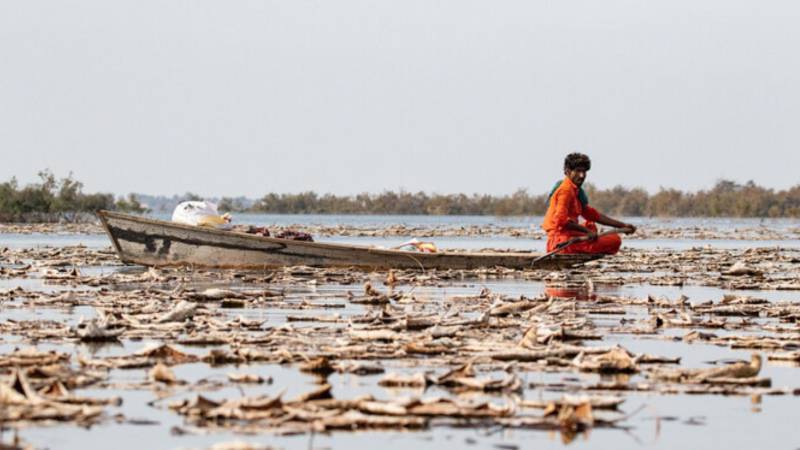
At the farm gate, a government demand notice never arrives as an economic theory. It arrives as another bill.
That is why Punjab’s revised abiana is already beginning to provoke the anger one would expect. The government can argue, correctly, that canal irrigation cannot be maintained on symbolic charges forever. Farmers can reply, equally correctly, that this is a brutal year in which to ask them for more. The real debate lies between these two truths.
Under the Punjab Irrigation, Drainage and Rivers Act 2023, the flat assessment now stands at Rs 1,650 per acre for kharif and Rs 850 per acre for rabi, with further annual charges on sanctioned garden supplies and state-owned lift irrigation. The new schedule supersedes the crop-based one before it. The quarrel that has followed is over whether water should cost more. On that, the serious answer has always been yes. The real questions are how this increase has been structured, when it has been imposed, and whether the money will return to the system from which it is collected.
Take the principle first, because it is sound and deserves defending. Punjab runs one of the largest contiguous irrigation systems in the world. It is not a minor departmental service but one of Pakistan’s most valuable public assets. It supports wheat, rice, cotton, sugarcane, maize, fodder, vegetables, fruit, livestock, agro-industry and exports. It also recharges groundwater across vast areas. Much of what is called Punjab’s agricultural economy rests on this network of barrages, headworks, link canals, main canals, distributaries and minors.
Canal water is not free merely because the river is natural. The system that diverts, regulates, carries and delivers it is built infrastructure. It has masonry, steel, earthworks, gates, regulators, gauges, outlets, embankments and thousands of kilometres of public works. It silts up, cracks, corrodes and weakens. A barrage does not become safer because the budget is politically convenient. A distributary does not desilt itself because farmers are poor. A canal gate does not repair itself because governments are afraid of rural backlash. If the system is not maintained, the cost does not disappear. It returns as unreliable water delivery, breaches, emergency repairs, groundwater pumping and farmer distrust.
So the principle of higher abiana should not be rejected out of hand. Even at the revised rate, canal water remains far cheaper than the diesel or electric pumping a farmer turns to when the canal fails him. That is the truest measure of its worth. Anyone insisting the rate should never have risen is arguing with arithmetic.
Wheat growers have lived through two seasons of confusion, from the procurement crisis of 2024 to the troubled private procurement experiment of 2026
That is where the defence of this particular notification ends, and the difficulty begins.
The first problem is the year. This lands on a farm economy enduring one of its hardest stretches in recent memory. Wheat growers have lived through two seasons of confusion, from the procurement crisis of 2024 to the troubled private procurement experiment of 2026. Many took production decisions under one set of expectations and sold into another. Potatoes were sold in a market hit by surplus production and disrupted export routes. Citrus growers have struggled with uncertainty and rising costs on the Afghan corridor to Russia and Central Asia. Mango orchards in South Punjab have faced weak flowering, weather stress, smaller fruit and market pressure. Last year’s floods added their own damage to crops, infrastructure and rural balance sheets.
A farmer does not experience these shocks separately. He experiences them as one squeeze on cash flow. Electricity, diesel, fertiliser, labour, machinery, transport and credit have left him with little room to absorb another demand. The grower is caught in a pair of scissors, output prices falling on one blade and input costs rising on the other. The water charge has now been pressed onto the rising blade at the moment it cuts deepest.
The second problem is design. Punjab has moved to a flat seasonal rate. Administratively, this has merit. A flat rate is easier to assess, easier to bill and less vulnerable to some kinds of manipulation than a complicated crop-wise system. Under the older system, a higher-rated crop could become a lower-rated crop in the records. Revenue leaked, statistics became unreliable, and the honest farmer was often left with both poor service and official discretion.
But administrative simplicity is not the same as water reform. A flat rate, indifferent to the crop in the ground, charges the grower of wheat or fodder exactly what it charges the grower of sugarcane or paddy. The schedule it replaced, for all its faults, at least asked the thirstier crops to pay more. This one does not. As an instrument, it raises revenue while discarding the one feature that pointed, however weakly, towards conservation.
The government should therefore be honest about what it has done. This is not complete water-pricing reform. It is revenue simplification. It may improve billing and reduce discretion. It may be defensible as an interim step. But if conservation is also the objective, the flat rate is incomplete and should be reviewed after one full year.
The third problem is arithmetic, and it should trouble the government most.
A farmer should not have to rely on rumour to know whether his payment repaired a distributary, strengthened a bank, desilted a minor, fixed a gate, or disappeared into the machinery of government
Punjab’s budget estimates irrigation receipts at Rs 43.6 billion this year. Against that, only Rs 8.896 billion is earmarked for repairs and maintenance of the system that makes those receipts possible. That ratio, not the rate increase alone, should define the debate. Farmers are told that the abiana must rise because the canal system needs maintenance. Yet the budget still assigns only a fifth of expected irrigation receipts to maintenance.
Nor should the government hide behind the wider responsibilities of the Irrigation Department. Regulation, flood management, administration and other functions belong in the normal budget. Abiana is collected from farmers in the name of canal water. Its moral justification is therefore narrow and clear: maintaining the system that delivers that water. If the state raises abiana as a water charge but spends it as general revenue, it converts a service charge into taxation. The money collected from irrigators must return to the canals, distributaries, minors, outlets, gates, gauges and embankments that make irrigation possible. Otherwise, the reform loses its moral foundation.
The farmer will not ask this in budgetary language. He will ask: if I pay more, what do I get back?
The farmer in Rahim Yar Khan, Okara, Bahawalnagar, Muzaffargarh or Pakpattan will ask it even more plainly. Will my money repair the system that serves my land, or will it disappear somewhere in Lahore?
That question is not parochial. It is accountability.
Irrigation is not organised neatly by district boundaries. A barrage, head regulator, main canal or link canal may serve command areas spread over several districts. It would be wrong to promise that every rupee collected in one district must be spent within that district. But it is entirely fair to insist that money collected from canal users should be traceable to the irrigation system from which it was collected and to the command area it is meant to serve.
Punjab owes its farmers more than a demand notice. It owes them a public ledger, canal by canal and command area by command area: what was assessed, what was recovered, what repairs were promised, what repairs were completed, and whether any of it reached the tail in the form of stronger, more reliable flows. A farmer should not have to rely on rumour to know whether his payment repaired a distributary, strengthened a bank, desilted a minor, fixed a gate, or disappeared into the machinery of government.
Raising the rate was the easiest part. Collecting it fairly will be harder. Spending it honestly will be harder still. Proving to farmers that they are paying for better irrigation services will be the real test.
This is where the politics of the increase can still be rescued.
The additional revenue from this increase should be ring-fenced from the general budget and spent on the canal system from which it was collected. Punjab should publish an annual maintenance plan identifying vulnerable barrages, weak embankments, unsafe structures, silted distributaries and tail-end areas that repeatedly receive less than their share. Major works should be subject to an independent engineering audit, not merely financial accounting. Maintenance should be measured by services restored, not by expenditure recorded.
What matters to the farmer is simpler than any of this: did his rotation arrive on time, did the outlet deliver its full and lawful share, was anyone caught stealing his turn, and did the gauge reading match what actually reached his field? That is the only audit he trusts.
The present increase is neither a complete reform nor an automatic mistake. It is a test. It tests whether Punjab can finally speak honestly about the cost of maintaining its irrigation system. It tests whether farmers can be asked to contribute more only when the state accepts stronger accountability. It tests whether the government understands that water pricing without visible service becomes taxation by another name.
The honest verdict is neither applause nor rejection. The direction may be necessary. The timing is harsh. The design is incomplete. The arithmetic is troubling.
Water should cost enough to maintain the system that delivers it. But a province that expects to collect Rs 43.6 billion in irrigation receipts and sets aside only Rs 8.896 billion for repairs and maintenance is not yet demonstrating the stewardship this increase requires.
In the end, this increase will not be judged in the treasury. It will be judged at the tail, by the farmer who pays more and waits to see whether stronger water reaches his field.