

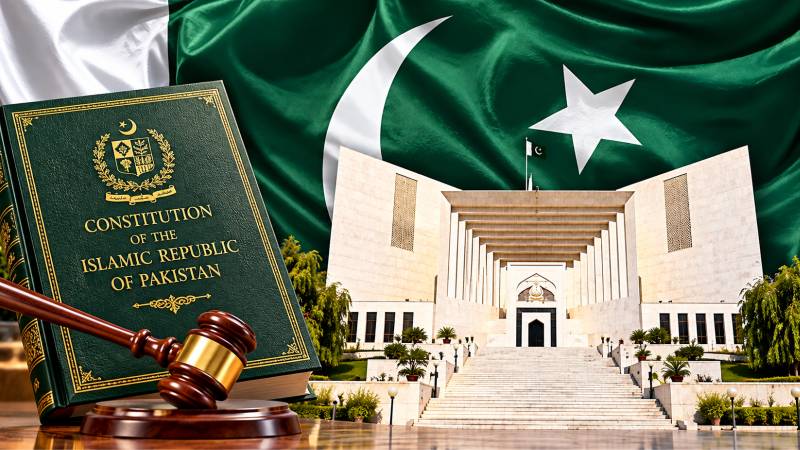
Pakistan does not need a stronger ruler. It needs a stronger system. For nearly eight decades, Pakistan has changed governments, constitutions, political alliances and balances of institutional power, yet the central governance problem has proved remarkably persistent; the difficulty of producing stable, accountable and consistently competent government. The question is therefore no longer simply who should govern, but how Pakistan should be governed. We have also tended to treat democracy and parliamentary government as though they were synonymous. They are not. Parliamentary government is one institutional form through which democracy may be organised; presidential government is another. To question the Westminster-derived system is not to question democracy. It is to ask whether the machinery through which we have practiced it remains suited to the Pakistan we have become.
Britain’s parliamentary system emerged from a particular history, political culture, party structure and civil service. Pakistan’s experience has been different. Here executive survival is inseparable from parliamentary arithmetic: prime ministers govern only while maintaining legislative majorities, and political energy is consumed by coalition management, constituency bargaining, allocations, appointments and the preservation of numbers. Legislators who should principally legislate, scrutinise expenditure and hold the executive accountable are simultaneously drawn into executive power and patronage.
A presidential system offers a different constitutional architecture. The executive and legislature derive separate mandates from the electorate. The president serves a fixed term; Parliament legislates and scrutinises; the judiciary interprets and protects the Constitution. Separation does not eliminate political conflict, but it can make responsibility easier to identify and power more visible. The familiar objection is that presidentialism risks one-man rule. It can, if badly designed. Executive authority can become personalised; separately elected presidents and legislatures can deadlock; and weak institutions can be overwhelmed by an ambitious executive. But authoritarian concentration is not unique to presidential systems. Parliamentary democracies can also produce elected leaders who accumulate power, weaken institutional checks and govern with increasingly autocratic instincts. The real question is therefore not simply whether a system is presidential or parliamentary, but whether institutions are strong enough to restrain those who wield executive power.
Pakistan should contemplate not an all-powerful president but a constitutionally bounded, directly elected chief executive serving a fixed term under strict term limits. Parliament would retain control over legislation, taxation and the public purse; committees would possess genuine investigative authority; courts would remain independent; emergency powers would be narrowly defined; impeachment would remain available for grave constitutional misconduct; and the Election Commission, audit institutions and other watchdogs would require protection from executive capture. A two-round presidential election, coupled with an appropriate requirement for a geographical spread of votes, could encourage candidates to build support across provinces and communities rather than relying predominantly on a single regional, ethnic or linguistic constituency. The cabinet, meanwhile, need not be confined to parliamentarians. Subject to transparent eligibility, conflict-of-interest rules and legislative scrutiny, presidents could draw ministers from a wider pool of professional expertise.
Nor should Pakistan’s past experience of presidential constitutions under military rule be confused with democratic presidentialism. A system born under military authority and indirect election cannot fairly be treated as a test of a modern presidential republic based on universal adult franchise, civilian constitutional supremacy, fundamental rights and institutional restraint. The objective should not be to replace one political monopoly with another, but to design a state in which no president, prime minister, family, party, bureaucracy or other centre of power can easily monopolise public authority. That institutional rather than personality-driven approach is also central to the case developed in my earlier work on local democracy and devolution.
The issue is not simply who rules Pakistan. It is how Pakistan should be governed: with stronger institutional checks at the centre, meaningful devolution to the provinces and empowered local governments capable of serving their communities.
Devolution is the indispensable second half of that argument. Changing the structure of government in Islamabad while leaving Pakistan’s concentration of power intact would achieve little. The Eighteenth Amendment and Seventh NFC Award shifted substantial responsibilities and resources from the federation to the provinces, but devolution largely stopped at the provincial capitals. The World Bank reported in July 2026 that the share of total government spending undertaken by local governments had fallen from around 10 per cent in 2005 to under 5 per cent in 2024. Federal-to-provincial devolution has therefore not been matched by comparably strong fiscal and institutional authority below the provincial tier.
The Constitution already recognises the principle. Article 140A requires each province to establish a local-government system and devolve political, administrative and financial responsibility and authority to elected local representatives. Yet schools, sanitation, drinking water, local roads, local policing, municipal transport, land use, waste management, neighbourhood infrastructure and much primary healthcare are experienced locally, while the institutions closest to these problems often possess the least authority and financial autonomy to address them.
A more coherent division of functions is required. The federation should remain strong where Pakistan must act as one country: defence and national security, foreign affairs, citizenship and immigration, currency and macroeconomic management, national communications and connectivity, interprovincial and external trade, strategic transport and infrastructure, national economic coordination, and equitable fiscal redistribution. Provinces or more manageable administrative units, where justified—should perform functions requiring that scale. What can competently be undertaken closer to citizens should move downward to metropolitan, district and local government.
The principle is simple: responsibility without money is fiction, while money without accountability invites waste and corruption. But decentralisation cannot merely multiply governments. If new provinces or administrative units reproduce the same bureaucratic hierarchies, patronage networks and political culture, Pakistan will replace a few huge white elephants with many baby elephants. Administrative restructuring, civil-service reform and devolution must therefore form one project.
A modern public service should be leaner, professional and technologically capable, protected from arbitrary political interference yet accountable for performance. Transfers and postings should cease to function as political currency; recruitment and promotion should be merit-based; services digitised; procurement transparent; and officials judged against measurable responsibilities. Ministers should determine policy; professional officials should administer it. Pakistan must move from the inherited conception of a ruling bureaucracy to a serving bureaucracy.
The same principle applies to new provinces. Boundaries are instruments of governance, not sacred ends. Where existing provinces have become too populous, geographically unwieldy or administratively remote, additional units can be debated according to governability, economic viability, accessibility and democratic consent rather than ethnic competition. But moving authority from one provincial capital to another achieves little unless power continues downward to empowered district, municipal and local governments. Any transformation of this scale must itself be constitutionally and democratically grounded. It cannot credibly be imposed by decree, military intervention or constitutional improvisation. The architecture should be debated publicly and scrutinised clause by clause.
Article 48(6) provides a constitutional route for direct popular endorsement: the Prime Minister may, with the approval of a joint sitting of Parliament, refer a question of national importance to a Yes-or-No referendum. Such a vote could supply a democratic mandate, but it would not itself amend the Constitution. Articles 238 and 239 require constitutional amendments to pass both Houses by two-thirds of their total membership; where provincial boundaries are altered, Article 239(4) additionally requires approval by two-thirds of the affected Provincial Assembly. Popular endorsement and constitutional amendment would therefore complement, rather than substitute for, one another. That matters because constitutional redesign cannot become another elite bargain among institutions. Its legitimacy would have to rest on both lawful procedure and public consent.
The broader proposition is thus larger than presidentialism alone: separate power horizontally at the centre and disperse it vertically throughout the federation. A president should possess enough authority to govern, but institutions enough authority to restrain the president. Parliament should be independent enough to scrutinise the executive; courts independent enough to enforce constitutional boundaries; provinces strong enough to discharge their responsibilities without becoming miniature central governments; and local governments sufficiently empowered to serve their communities. After nearly eight decades, changing personalities while preserving the machinery that repeatedly reproduces the same failures can scarcely be called reform. It is repetition in defence of the status quo—a dysfunctional system sustained, under one pretext or another, by those who benefit from it while presenting themselves as its custodians.
The case for a presidential republic therefore stands or falls on its institutional design. Without genuine political, administrative and fiscal devolution, presidentialism could merely create another centre of concentrated power. With strong checks, meaningful local democracy, fiscal authority following responsibility, more manageable administrative structures where necessary and a reformed civil service, it becomes part of a wider question Pakistan can no longer avoid. The issue is not simply who rules Pakistan. It is how Pakistan should be governed.