

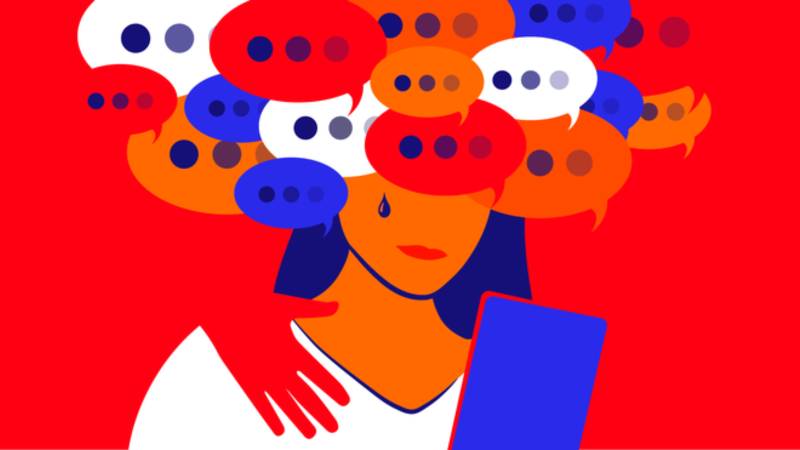
In today’s Pakistan, where the digital divide is rapidly closing, a more sinister divide is widening: the one between access and safety for women in online spaces. As more women step into digital realms—for education, activism, journalism, entrepreneurship, or simply self-expression—the backlash has grown not just in volume, but in violence. Technology-Facilitated Gender-Based Violence (TFGBV) has emerged as a new frontline in Pakistan’s enduring struggle to reduce Gender-Based Violence (GBV). In the digital age, Pakistan's women and girls face an escalating threat that is becoming visible and violent.
Digital technology and internet-based social media apps are being increasingly weaponised against them, mirroring—and amplifying—the patriarchal structures that already permeate society. From revenge porn to doctored videos, from character assassination to cyberstalking—TFGBV is now used as a weapon of harassment, suppression, and silencing. It targets not only private individuals but also high-profile women: journalists, politicians, lawyers, students, and activists.
This isn’t just trolling. It is calculated. Coordinated. Cruel. And increasingly political. For example, both Maryam Nawaz Sharif and Bushra Bibi have been targets of TFGBV through doctored images, digitally manipulated videos, and moral policing online. In both cases, the goal was not merely political critique but gendered character assassination—leveraging morality, honour, and religiosity as weapons to silence and shame. Unlike male politicians who are debated for their policies or corruption, women are attacked for their bodies, voices, attire, and perceived virtue. Female political party members, workers to supporters have also faced the same, confirming how digital violence is entrenched in Pakistan’s political playbook, transcending party lines. No woman in the public sphere is immune, and all are judged not just by what they say or do, but by how manipulable their digital image is.
Being a female with visibility and opinion is double jeopardy, but the worst part is that TFGBV and GBV are not socially recognised as crimes in Pakistan. Female journalists, rights activists and media persons are the second most targeted when it comes to TFGBV. Their social media profiles get abusive comments with the use of sexual innuendo, character slurs, and accusations of immorality. They face altered photos, AI-generated videos, and doxxing as routine. The online spaces provide anonymity and courage to the predators for continued abuse, while victims are blamed even when they are murdered. In the case of GBV, women are raped in graves, and in the case of TFGBV, their unfortunate death is turned into a character assassination or an honour-shaming contest. The recent case in point is Sana Yousaf to Humera Asghar.
According to the Digital Rights Foundation, over 12,000 complaints related to online harassment were registered between 2016 and 2024, with a sharp uptick post-COVID
In Pakistan, women entering online spaces face threats not just to their freedom of expression, but to their very safety, dignity, integrity and life. Their increased visibility is often met with backlash rooted in patriarchal control, socio-religious moral policing, and deep-seated misogyny. These are not isolated incidents. According to the Digital Rights Foundation, over 12,000 complaints related to online harassment were registered between 2016 and 2024, with a sharp uptick post-COVID. The Federal Investigation Agency (FIA) has repeatedly acknowledged its struggle to manage the scale, technical complexity, and sociocultural sensitivity of such cases.
Pakistan’s legal, policy, and institutional responses are struggling to catch up with the rapidly evolving digital landscape to both understand and address TFGBV. The laws covering digital rights are politicised in their construct and application, and law enforcement agencies are under-equipped and undertrained to deal with complex digital cases. Judicial response has been equally problematic, where even the positive court judgements include character assassination. For example, in the Noor Mukaddam case, the murderer Zahir Jaffer’s death penalty on rape charges was reduced to life imprisonment as the Supreme Court opined that “victim had a relationship with him”; similarly, kidnapping charges were reduced from 12 to 2 years on the grounds that she went there of her will—despite having video footage of her jumping from a floor of the house to escape.
There is no easy process even for women to access these laws. Despite the setup of specialised GBV courts, survivors often face victim-blaming, poor case handling, and procedural delays that discourage reporting. Moreover, TFGBV continues to be dismissed as a “Western concept,” deterring meaningful advocacy and institutional reform. The absence of a national narrative on women’s digital rights leaves victims without social support or legal redress.
However, the problem isn’t just legal—it’s political. Powerful actors, including political parties, often resist implementing women's protection laws for fear of challenging patriarchal structures that benefit them electorally and socially. Social media influencers who challenge conservative norms are routinely targeted in coordinated online smear campaigns, often fuelled by politically aligned troll armies. Not a day goes by when altered or leaked videos and pictures of social media influencers hit the market—and in some cases are available for digital transfer on payment.
In Pakistan, “consent” for women rarely means personal autonomy—it often means family approval. A girl’s choices are filtered through layers of kinship, community expectations, and societal honour codes. Her access to education, healthcare, work, or even social media is shaped by how her behaviour reflects on her family’s perceived reputation. The intersection of TFGBV with honour culture means many women are silenced by their own families, who fear social disgrace more than justice. The worst part is internalised misogyny, and when women lead as abusive trolls. This internalisation of control creates the perfect storm for TFGBV to thrive. When women speak out, the burden of shame doesn’t fall on the perpetrator—it falls on her, as their credibility is questioned.
TFGBV in Pakistan is not just a digital issue—it is a socio-political emergency threatening the core of women’s autonomy and public participation. It is not simply a lack of regulation—it is a systemic lack of empathy, capability, and political interest in protecting women’s digital lives. There is an evident policy vacuum—no national strategy for women’s digital rights or online safety, or even cross-sectoral integration of the socio-legal safeguards. Institutional fragility, with no cohesive engagement between Pakistan’s state, Meta, TikTok, or other platforms, further exacerbates this, and without coordinated action, the promise of the digital age will remain a perilous illusion for millions of women and girls.
The state must act—not just with words, but with decisive, rights-based governance—to ensure that the internet becomes a space of expression and debate, not violence. It must map the forces enabling TFGBV—from socio-cultural norms and institutional inertia to political disinterest. Only by understanding these structural and agency-driven drivers can policymakers develop holistic, survivor-centred solutions.