

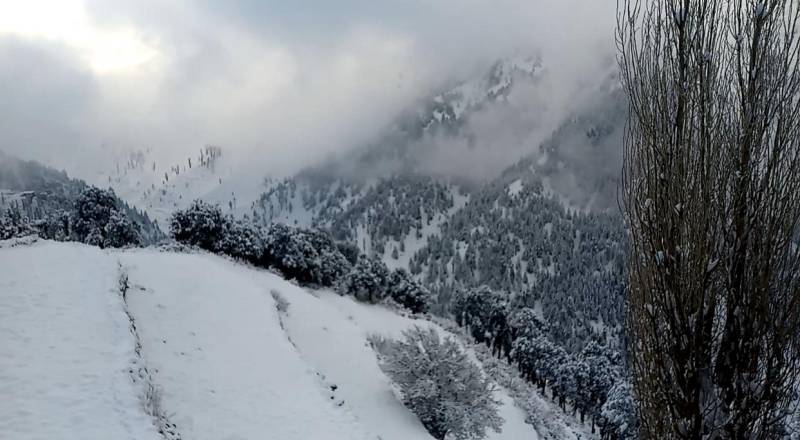
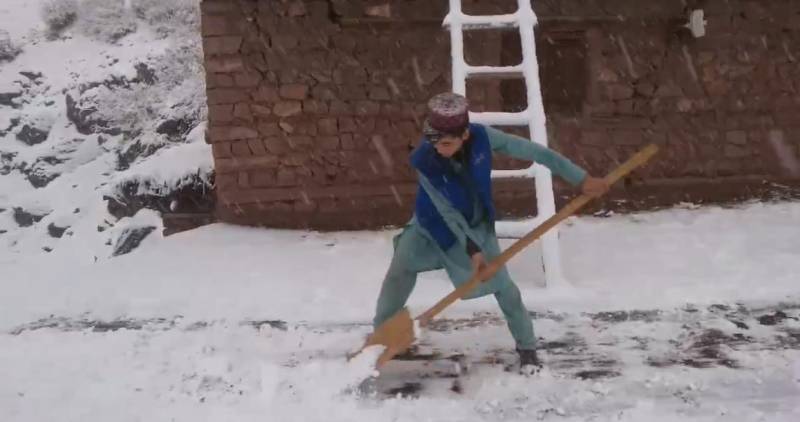
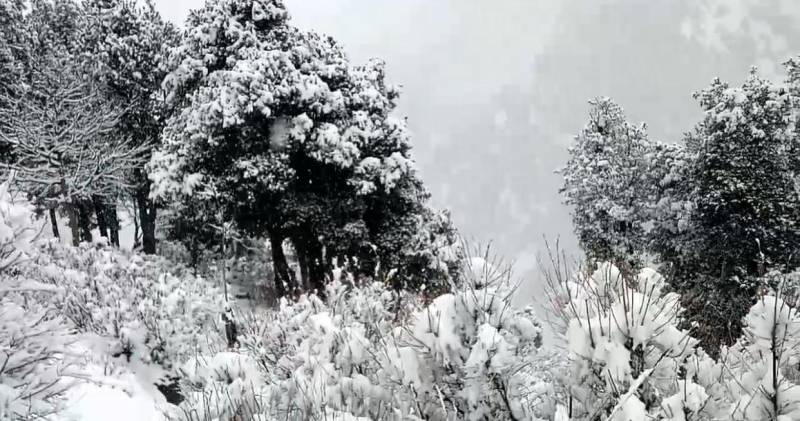
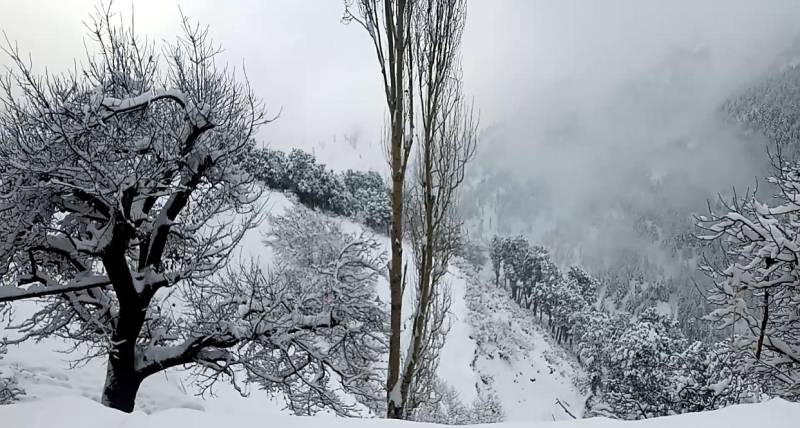
Asia's major river basins, which sustain an estimated two billion people and innumerable biodiversity, are increasingly under threat, with climate change directly affecting the weather cycle that adds water to this system. Snow, which critically replenishes Asia's water tower in the Hindu Kush and Himalayas (HKH) region, in turn feeding 12 major rivers of Asia, received its lowest snow persistence this year.
What makes the situation especially alarming is that 2025 is the third consecutive year when the region has received below-normal snow persistence. Moreover, this year it hit a 23-year low of receiving 23.6% below normal snowfall.
The alarm has been raised in a new report issued by the regional mountain climate watchdog, the International Centre for Integrated Mountain Development (ICIMOD). The report's findings are also complemented and confirmed by the Pakistan Metrological Department (PMD).
The report highlights the striking aspect of consecutive, below-normal snow persistence in the HKH region since 2020 due to climate change and the damage it has caused to Pakistan's lifeline, the 'Sacred Sindhu', River Indus. Put in the context of recent developments, including a brewing domestic conflict over the prospect of new canals on the Indus in the Pakistani Punjab and India suspending the Indus Water Treaty in the aftermath of the Pahalgam terrorist attack, the prospect of potentially reduced water availability in the Indus can further compound the problems for Pakistan.
Alarm bells for Asia's 12 major river basins
ICIMOD's annual report notes worrying trends of lower snowfall being recorded across the HKH region, where rivers depend heavily on snow and ice (seasonal cryosphere) as their primary source of water in a region known as the 'Third Pole' (for the largest number of glaciers outside the two polar caps of the earth). This region spans several countries, a population of over two billion people and feeds 12 major rivers of Asia such as the Amu Darya Basin which feeds rivers in Afghanistan, Tajikistan, Turkmenistan, and Uzbekistan; the Brahmaputra Basin which feeds rivers in China (Tibet), India, Bhutan, and Bangladesh; the Ganges Basin which feeds rivers in Nepal, India, and Bangladesh; the Helmand Basin which feeds rivers in Afghanistan and Iran; the Indus Basin which feeds rivers in China (Tibet), India, Pakistan, and Afghanistan; the Irrawaddy Basin which feeds rivers in China and Myanmar; the Mekong Basin which feeds rivers in China, Myanmar, Laos, Thailand, Cambodia, and Vietnam; the Salween Basin which feeds rivers in China, Myanmar, and Thailand; the Tarim Basin which feeds rivers in China (Xinjiang region); the Tibetan Plateau which feeds rivers in China (affects multiple basins like Indus, Mekong and Yangtze); the Yangtze Basin which feeds rivers in China; the Yellow River Basin which feeds rivers in China.
2025 recorded the lowest snow level of the past 23 years (23.6% below the average)
Sher Muhammad, a Remote Sensing Specialist at the ICIMOD and lead expert for the Snow Report 2025, told The Friday Times that snow acts as a natural reservoir of water, which is why they have been observing snow persistence across the region between November and March for the past 23 years. He said that they monitor how much snow falls in the region every year and compare it over time. He said this monitoring is carried out using satellite data in addition to other technologies.
The remote sensing expert noted that snowfall can vary from year to year; the HKH region has seen low snow levels on at least 13 occasions between 2003 and 2025. However, an increasing cause for worry is that this phenomenon has been happening with greater frequency and is becoming more serious. Sher said 2025 is the third consecutive year where less-than-normal snowfall was recorded. Moreover, 2025 recorded the lowest snow level of the past 23 years (23.6% below the average).
Snow persistence fell below normal levels across all twelve major river basins, with the most alarming decline observed in the Mekong (-51.9%) and Salween (-48.3%) basins, followed by the Tibetan Plateau (-29.1%), Brahmaputra (-27.9%), Yangtze (-26.3%), and Ganges (-24.1%). Even snow-dominant basins such as the Amu Darya (-18.8%) and Indus (-16.0%) also continued experiencing a reduction in snow persistence.
In addition to the lower snowfall, Sher said they had observed with great concern the accelerated melting of available snow, especially glaciers and permafrost, due to higher temperatures caused by global warming and climate change.
Talking about the report, Sher stated that it was a "12 River Basin Assessment Report" aimed at providing a baseline understanding of the countries covered by these twelve major rivers. "Through this report, we want to inform both the public and policymakers about the current situation," he said, adding that the report has been shared with the relevant stakeholders so that governments and policymakers can work on future water resource management strategies.
Indus Basin and South Asia's vital water reservoir
The Indus Basin spans four countries: Pakistan, India, China, and Afghanistan. It serves as a critical water source, with most of its flow benefiting Pakistan through the River Indus. The Indus Basin, fed by snow and glaciers from the Hindu Kush, Karakoram, and the Himalayan mountain ranges, is Pakistan's salvation. A 2021 World Bank report says that Pakistan's Indus Basin Irrigation System (IBIS) is the world's largest contiguous surface water irrigation system. Consisting of mighty dams, barrages and thousands of kilometres of canals, the IBIS not only irrigates millions of hectares of agricultural land but also hosts a vast reservoir of groundwater that is central to the country's water and food security. However, due to the climate crisis, lower snowfall and accelerated melting pose a significant threat to the Indus Delta.
Dr Shehzada Adnan, the Deputy Director at the Pakistan Meteorological Department (PMD), told The Friday Times that Pakistan's winter season typically spans from October to March. He confirmed that Pakistan has consistently recorded snowfall levels below the normal range over the past five years.
He said the country has two major water catchment reservoirs for all the melted glaciers and snow flowing downstream: Mangla, located on the River Jhelum in Punjab, and Tarbela, situated on the River Indus in the Khyber Pakhtunkhwa. Of the two, Dr Adnan explained that Tarbela had the larger snow catchment area, covering approximately 200,000 square kilometers and able to store around 11.6-million-acre-feet of water. These two reservoirs effectively serve as catchments for average snow covers of about 49.7 inches in the HKH and surrounding mountains.
The PMD official said that in the past 20 years, the highest snowfall in a single season was recorded in the 2004-05 season, reaching 102.7 inches. The lowest snowfall was recorded in 2017-18 when just 20.3 inches (almost 29% below the normal level) fell in the HKH region. Based on PMD's records, he said that since 2020, there has been a consistent decline in snowfall, with levels consistently recorded at 15% to 25% below average.
The southern regions of Sanghar and Tharparkar are experiencing unexpectedly high temperatures of 40°Celsius, which are unexpected
This year, just 27.2 inches of snow was recorded, which is approximately 21% less than normal. Dr Adnan told The Friday Times that there are two major consequences of reduced snowfall and early melting. The most noteworthy consequence is that glaciers no longer receive satisfactory snow cover or replenishment, which acts as a natural shield for them. Without this shield, Dr Adnan said, our glaciers are at risk. Moreover, he said that snowfall patterns have also changed over the past decade. Snow, which used to first fall in October, has now shifted to start around January 15, with the snowfall season shrinking from 150 days to just 50 days. For the past two years, the months of December and January have become increasingly dry, pointing towards a worsening situation.
The second major concern pertains to a decreasing flow of water in the River Indus, which poses serious threats to the environment, agriculture, and human livelihoods. Apart from lower snowfall, Dr Adnan said that over the past five years, they have observed with concern lower rainfall in December and January. Consequently, Tarbela and Mangla reservoirs were at dangerously low levels this year. Mangla, which relies on rainfall for nearly 80% of its inflow during spring, hit its dead level of 1,060 feet on March 16. Tarbela was just three feet above its dead level of 1,402 feet. If there is no rain in the next three months, growing Kharif crops could become a major challenge for Pakistan.
The anticipated water shortage could further exacerbate other climate change impacts, such as heat waves. Already, the southern regions of Sanghar and Tharparkar are experiencing unexpectedly high temperatures of 40°Celsius, which are unexpected.
However, the PMD official said Pakistan's impending water crisis due to lower snowfall and rainfall has more to do with its poor water management. Each year, the country has to watch some 40 million acre-feet of monsoon water drain into the sea because its downstream reservoirs can only store 15 million acre-feet of water.
Climate change impacts and water management
Climate change has ravaged Pakistan over the past decade and a half through floods, heat waves, and shifting weather patterns. It has propelled Pakistan into a list of the top five countries most affected by global climate change. The Asian Development Bank (ADB) estimates that Pakistan loses $2 billion annually due to climate change.
Environmental lawyer and activist Ahmad Rafay Alam pointed out to The Friday Times that the years 2023–24 were the hottest on record, with surface temperatures reaching unprecedented levels. This was a worrying moment as it caused the accelerated melting of glaciers in Pakistan and surrounding countries. Alam warned that if these trends continue over the next 50 years, living in and around the Hindu Kush and Himalayas could become a serious challenge.
"Scientists have repeatedly raised the alarm, but political leaders remain silent," he lamented, adding that studies have warned that if the world crosses the 1.5°C warming threshold set by the Paris Agreement, it could result in catastrophic impacts, including over 150 million premature deaths — mainly due to worsening air pollution.
While the rising temperatures contribute to accelerated glacial melt and, in turn, the flow of water in rivers, the country is unable to harvest it. Pakistan has around 150 dams, and the International Commission on Large Dams (ICOLD) reports that 73 are large dams over 15 metres in height. In addition to Tarbela and Mangla, the government has undertaken the construction of new reservoirs, such as the Diamer-Bhasha, Dasu, Mohmand, etc. While these projects inch towards completion, Pakistan has already started experiencing water stresses in its southern regions, such as Karachi and Tharkparkar in Sindh and Gwadar in Balochistan. Neighbouring Iran, which has similar topographical features and water stresses in its southern regions as Pakistan, has successfully integrated large-scale desalination projects to partially address its water needs, Pakistan's desalination initiatives continue to face significant hurdles, including high operational costs, heavy energy demands, and maintenance challenges.
Alam suggested that Pakistan has failed to calculate its water footprint or properly harvest available water.
"There is plenty of water, but the real issue is mismanagement," he said, emphasising the need for adopting advanced solutions such as water microchips and research. Alam criticised the government's reliance on retired engineers and traditional irrigation experts, who, he argued, are not adequately addressing Pakistan's water management challenges in the era of climate change. He also criticised the management of existing water recourses.
Around 90% of the country's water is consumed for agriculture, and the elite beneficiaries of this activity occupy key policymaking positions
Talking about the proposed new canals on the River Indus and the growing conflict over water between upper and lower riparian provinces, Alam said Pakistan fundamentally misunderstands its water crisis.
"We need to rethink and reshape our entire approach to water management," he stressed, terming the government's plan to divert more water from the River Indus and turn the Cholistan Desert into farmland as an "irrational" approach. He pointed out the contradiction of the plan to turn an area – which the Provincial Disaster Management Authority (PDMA) as drought-hit — into green farmland.
Sharing relevant maps during a Zoom meeting with The Friday Times, he remarked, "We are still blindly following the British-era water distribution systems and canal designs without adapting to today's needs."
Alam also criticised how water issues have been politicised, dominated by retired engineers and former irrigation officials, without fostering an inclusive dialogue between all stakeholders and glossing over critical aspects.
"Have you ever seen gender equality in water discussions? Have you ever heard a woman expert being consulted?" he posed as examples.
He further pointed out that the climate change aspect of the water crisis has almost entirely been ignored in the conflict as Pakistan continues to manage water through outdated, traditional methods. One reason why the country resists any change to its water policies, Alam suggested, is that around 90% of the country's water is consumed for agriculture, and the elite beneficiaries of this activity occupy key policymaking positions. He said Pakistan produces four major crops: cotton, sugarcane, wheat, and rice. "Cotton and rice, our key export crops, are monopolised by a few elites. Over 100 sugar mills are owned by politicians sitting in the assemblies."
The recent conflict between Pakistan and India, along with the potential abrogation of the Indus Water Treaty, may not bring about immediate consequences, but it could become a significant issue for both countries in the future. On the one hand, there are the impacts of climate change, and on the other, there are ongoing disputes over water, which indicate that we are not moving towards a solution. Alam emphasised that both countries must reassess the division of water in a new context.
Solving the crisis
Sher emphasised that the solution to the global anthropocene lies in global warming reduction. We must cut emissions, promote green energy, and expand forest areas, he said, adding that \local efforts are also underway, such as the construction of the ice stupas (https://tribune.com.pk/story/2538218/gilgit-baltistan-farmers-turn-to-artificial-glaciers-to-tackle-water-crisis) (an idea implemented locally based on the practice undertaken by mountain residents in Nepal) and work on water retention systems. Still, these need to be upscaled, and that remains economically challenging.
Alam noted that Pakistan has been seeking funding to recover damages caused to its struggling economy by climate change, but the world's major powers remain largely unaffected by its concerns. World leaders are willing to watch the Global South suffer, prioritising their constituencies. He criticised "wet diplomats" for failing to solve the crisis and noted that the Loss and Damage Fund had received little real money while UN-brokered talks on climate change are falling short of the goals outlined in the Paris Agreement, with global leaders making empty promises.
Alam pointed out that fewer than 100 companies cause 70% of all greenhouse gas emissions, while countries like Pakistan have a minimal contribution to those emissions. Referring to the devastating super floods of 2022, Alam noted that 33 million people were affected in Pakistan, with losses amounting to nearly $30 billion. Meanwhile, Shell Oil posted profits worth $40 billion in the same year, and Saudi Aramco reported record net profits of $161.1 billion that year. As a result of the capital system, the few are accumulating vast wealth, while the poor bear the brunt of rising global temperatures and other climate change impacts. Alam stressed the need to change the civilisational economic model. "We must discuss this and alter the practices of new colonialism," he said. "In reality, we need to change our economic behaviour, and a major transformation is essential."