

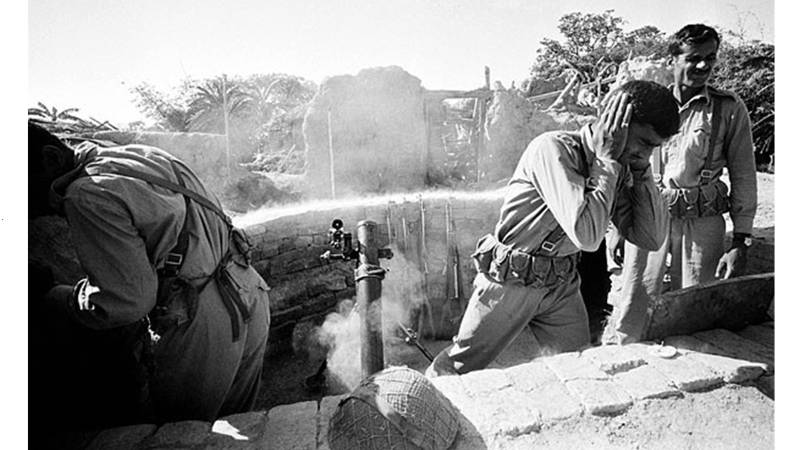
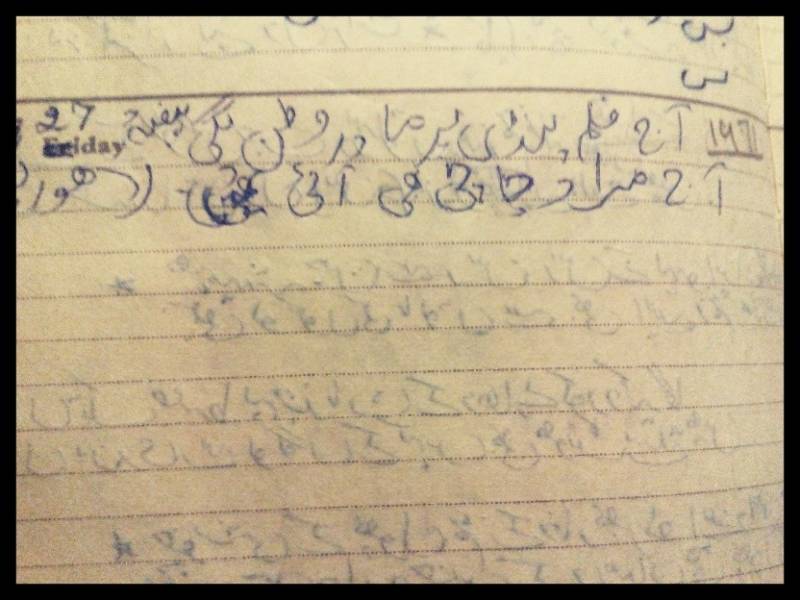
The surviving pages are scribbled on with 1971 being a deadly year. According to Dead Reckoning by Sarmila Bose,
“1971 was marked by a bitter civil war within Pakistan and war between India and Pakistan, backed respectively by the Soviet Union and the United States. It was fought over the territory of East Pakistan, which disintegrated to become Bangladesh. Through a detailed investigation of events on the ground, Sarmila Bose contextualizes and humanizes the war while analyzing what the events reveal about the nature of the conflict itself. The story of 1971 has so far been dominated by the narrative of the victorious side. All parties to the war are still largely imprisoned by wartime partisan mythologies.”
I, as a writer, am not here to reveal the history of that time, but to reflect about a memoir of my late mother’s experience during that time period. It indeed was a war zone. The surviving pages made me see the light at the end of the tunnel. Though, now I realize that we should not celebrate the resilience of anyone going through hard times. It is very traumatic.
We all are battling some kind of wars inside our heads, streets and as nations in this world. However, wars and their resulting bloodshed leave effects for the generations to come. A generational trauma is embedded within each cell between life and death. Carrying that inside us for birth and journey is not the narrative we would like to see and paint in our scarred heart. The band-aid we give to ourselves is the courage, but unfortunately, each time I visited this diary of my mother’s; it made me see her in a new light, for her words of the war stricken time of the 1970s made me realize something. I thought of how governments are pitted against people and how power is tested between neighbouring nations on one conflict – which they cannot resolve and the cost is given by the citizens.
Pakistan is again in the same face off – even if this time we are on the right side of history and so is our narrative. Indeed, it was India that broke international law and attacked Pakistan in the late hours of the night on 7th May, after blaming Pakistan for the attack in Kashmir. Without any evidence and inquiry, they attacked the civilians and labelled it as an effort to cleanse terrorist camps; but here’s the catch—the child that was martyred was an innocent pure little life and the count of causalities in May 2025 is increasing. I wrote this on the 8th of May when Pakistan shot down drones sent by India’s military.
Being global citizens, we are responsible for shaping our part of the world. This is how it has been. In the modern era, this kind of war is not about conquering lands or even attacks. It is about infecting mindsets with disease, turning people into products of a marginalized society. And then their battles begin. Some surrender and some rebel. Who we choose becomes part of us. Those choices follow us in our day-to-day lives. It is not about who is a loser or a winner, but about who survives. This survival of human beings through the decades began the race to live, and the war's aftermath still remains.
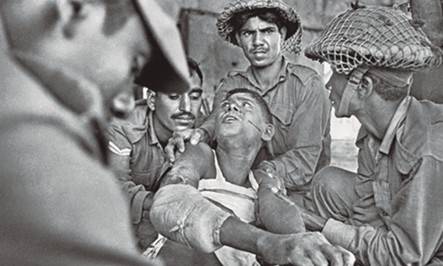
I can imagine the impact on well-being and the panic in this age of social media, with disinformation spreading and chaos growing. Today, the sirens, gunshots and explosions could be heard. Imagine - what sort of war brings peace when the opposition celebrates the loss of humanity in the name of nationalism?
Pakistan is again in the same face off – even if this time we are on the right side of history and so is our narrative. Indeed, it was India that broke international law and attacked Pakistan in the late hours of the night
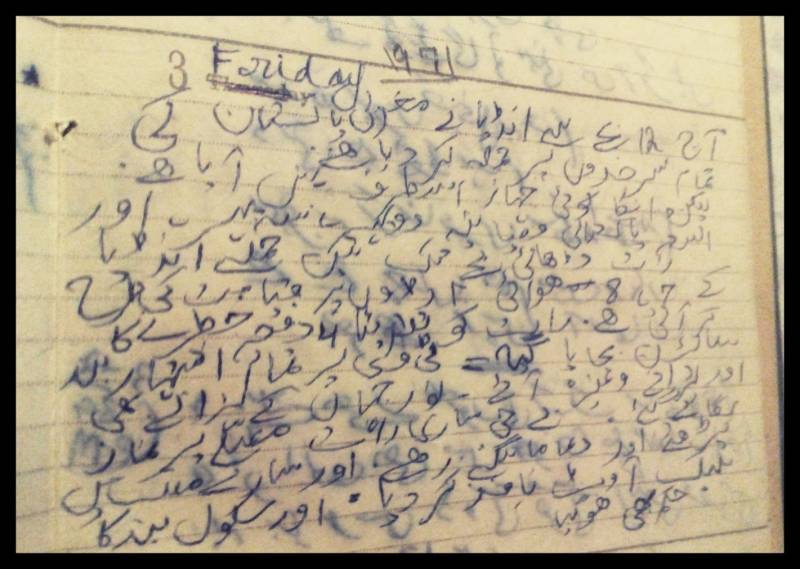
Yellow surviving pages
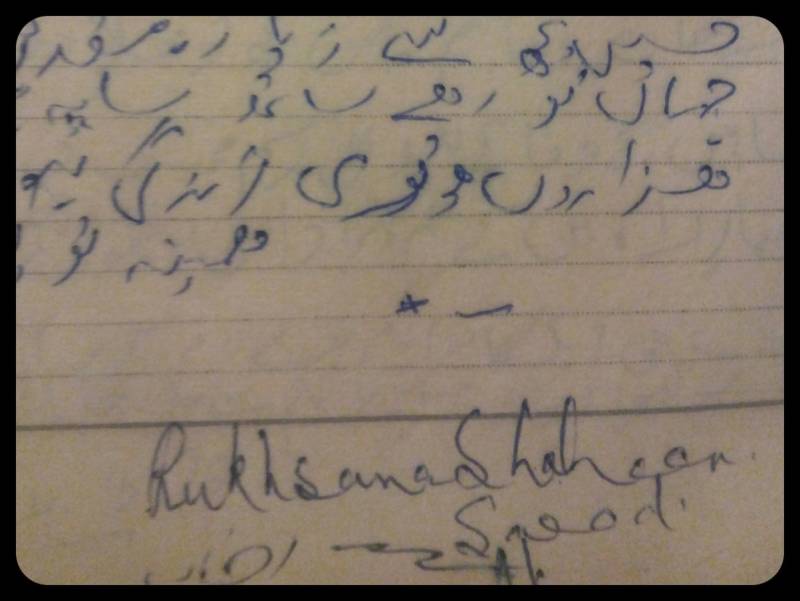
The yellow pages of my mother’s green diary and its blue blotted ink revealed a memory from 1971:
“On Friday at 12 pm, India attacked the east/west Pakistan’s borders. But until now no airplanes are seen coming our way. At 1 am in midnight, I heard the bombing sound somewhere far away from our place.”

This is written in a way that shows she was coping with the reality of life, along with the noises at any time. Reading this now makes me think: aren't we on the same page in our civil lives, where terrorism strikes at any given time of the day in any city? Where drone attacks have become a normal sight, with innocence being lost at a rate of one to ten? Where the sharks decide the future of third and second world countries? This violence that we inherited since the time of migration history lives within us and has been a part of each one of us.
Whether we're waging wars or creating warriors, we remain independent yet struggle for unity under one name, one ideal. Our land of peace has shrunk. This May's unseasonal rains - or climate change deluge - brings rising waters that herald darker times ahead.
They demand nationalism while terrorizing us with threats of "what if" - threats meant to ensure obedience. But we've forgotten to ask: Shouldn't our government foster peace rather than demand fearful devotion to armies and politicians? Consider the teacher hearing of lockdowns mid-lesson - forced to rebel or submit just to survive. They can't wage wars or aid armies. Soldiers should protect borders, but war - justified or not - solves nothing. Neither does blind nationalism. These only breed generational hatred that feeds terrorism by stripping away people's reasons to live.
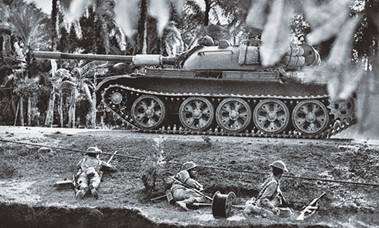
Then and Now
“It was raining heavily. Baji called to check her temperature. I was not feeling well either. The war has made the situation at a chaos, internally and externally. We kept hearing the news of innocent loss of lives and the bombing taking place each time, with another loud noise.”
As I read these lines, thoughts come rushing in. That was a war raging in 1971. We, the generation of the 1990s and 2000s, endure the same traumatic experiences daily - with drone attacks launched from across the continent, with bombs detonating at borders, even while we sit inside our homes. At the back of our minds, we unconsciously know that bad news waits somewhere. Each of us lives under watch, and the simple act of going to university carries risk. Only 2% among the 98% escape this reality. The rest sweat to grow their beards and make ends meet. There are no guarantees any of us will survive today - but who will mourn our loss? Danger could come anywhere, any day.
“The news on Pakistan Television transmission was stating that each minute we are losing lives and losing the war as well. The bloodshed maybe washed away by the rain, but the stains of the ruins are yet living. The soldiers are still fighting whether with an aim or with the training. Questions are coming. My education is at a stake. Would I be able to complete my aims of an educated woman? My thoughts kept interrupting with the fires and the transmissions of radio signals going weaker. Ami jaan called me up to sleep. And to pray for the good times. Schools are still closed and so are the colleges. And the effect was on my poetic thoughts. They were more like black shades than the colors’ of my rainbow sky.”
(Rukhsana Shaheen Saeed Khan, 1971)
As her daughter, going through similar struggles in different ways, I must say it's tough to stop thinking about all this and simply detach. This isn't my solution. Whatever we do, bit by bit things may be fading, but we must hold on. The signals might grow weaker, yet our strength must endure. Answers may remain elusive, but our questions should evolve with time. Even in ruins, we might find hope - proof of how far we've come.
One must know that there is a lot more going, than what the media reports or the events that are actually is a cover up for the activities behind the scenes. I clearly remember, when I was taking my O’levels exams and they were around the corner, the situation got worse. It was the ending of 2009 and a dreadful beginning of 2010. We used to have several holidays and closure of schools due to threats that our schools received. Education ministry must be having sleeping partners or the security enforcement. But, yes we did see the raising of the walls to keep the terror away.
At that time, I used to be happy that to have a little break. Unfortunately the situation did not get any better even now.
We are at the brink of war and the aggressor is India, who kept breaking and violating the airspace of Pakistan on 7th and 8th May 2025.I read these lines from my mother to let it sink in:
“The war ended. Left many of us to bleed the cry of other part dying—East Pakistan separated. I will write more, when Magrib Prayers are offered.”
This was in 1971. Today is 2025. In some ways, nothing has changed. Yet much has transformed - the lives lost, the generations passed, the yellowed diary pages reminding me that time has indeed flowed like winds carrying the Bangladeshi flag's echoes to this land, that still survives by the sheer will of its creation. This survival is the hope we cling to as this year ends.
And here we are again, facing the same Pakistan-India tensions. Cultural exchanges have ceased as governments command their citizens toward nationalism that condemns peace.
But borders shouldn't be battlegrounds for proving power or patriotism - this wasteful bloodshed of soldiers meant to protect, not fight without cause.
I skimmed through the pages but the ink was blurry and submerged around. The writing became illegible to read. The flipping of pages reminded me that though the hands that are holding this diary today are mine, once it was somebody else's struggle to keep it upright, and to write whatever came in her mind. To write for the record. To write for ourselves. To let it out. To exist. For the stories that need to get through our systems.
Just to get through life, seeking silence and hope. The loud noises are still heard but in a different moment of history.