

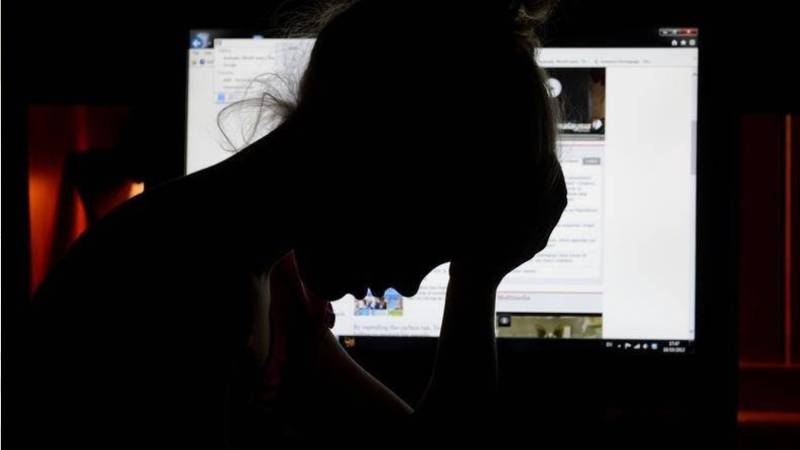
A young woman in Lahore fidgets with anxiety, reluctant to post a picture to Instagram, while the other in Karachi wonders if her textured skin can pass through the algorithm, as men around them generate AI images of themselves with their favourite celebrities. The thought of simply existing on the internet becomes gendered as women in a demographic feel uncomfortable while looking at the AI-generated images of each other, while men feel a sense of awe and wonder.
As per a report of the Digital Rights Foundation in 2024, globally, an estimated 90% of deepfakes target women, while 70% of Pakistani women feel unsafe online. These figures paint a stark picture; synthetic media is not a technological novelty but a gendered weapon. These anxieties stem from a new kind of fear: the fear of being remade, in any way, in any form, through the lens of a machine gaze.
Film theorist Laura Mulvey, in her work Visual Pleasure & Narrative Cinema 1975, demonstrated that cinema depicts women as visual objects for the “male gaze,” measuring them in numbers, sizes, and shapes. This was no distant abstraction; it is being promoted in South Asia too, even now. Bollywood movies and local Pakistani advertisements depict ideals of slimness, fairness, and youth as markers of female desirability. For women, the dangers of this new trend of AI-generated images are twofold. On one hand, they face unsafe exposure through harassment, surveillance, and deepfake abuse. At the same time, they are forced to live under unsafe standards, where AI-generated perfection reconstructs ideals of beauty; with poreless skin, no stretch marks, no dark circles, barely human-looking models as women. It has brought the automation of the old male gaze, now scaled and digitised in ways that are harder to resist.
90% of the deepfakes target women, and in Pakistan, these intersect with religion, culture, and honour
Today, the male gaze has been replaced by Generative AI systems that look at women as hyper-feminised entities barely exhibiting a flaw. More and more young girls have been posting their AI-generated photos on stories, and as much as they look alike, there remains a conspicuous difference, too hard to ignore, too comfortable to avoid. Where cinema once projected the male gaze onto the big screen, the machine gaze multiplies it infinitely, producing synthetic women detached from consent and humanity.
Deepfakes have become a rising issue for women in Pakistan in recent years. Legal scholars like Chesney & Citron argue that 90% of the deepfakes target women, and in Pakistan, these intersect with religion, culture, and honour. A criminological review of PECA 2025 reported that only 10% of 100 students had even heard of deepfakes, and just 15% knew about the Prevention of Electronic Crimes Act. Yet when asked if they would report a violation, only 35% said yes, while 65% admitted they would stay silent out of fear of social backlash. This silence is shaped not by ignorance alone, but by honour-based norms that punish women even for fabricated content. The Digital Rights Foundation has documented the presence of women in digital life shrinking due to the fear of being superimposed, perceived, or doctored.
Even when women are not being harassed via AI-facilitated gender-based violence, they face imposed ideals of beauty upon them through it. AI-generated women are not just enhanced, photoshopped like the magazine covers of the 2000s; they are being invented. One public health study of Pakistani students warned that women on social media are more prone to body image issues than those not present on it. A society that already valorises fairness creams and polices women’s appearances has found a new gaze, as the AI perfection models push those ideals further into the impossible realm. Thus, with the growing trend of Gemini-prompted images, women face a dual bind: unsafe from external manipulation, and unsafe within themselves.
In Pakistan, the policy in this matter is running in the opposite direction. Pakistan’s National Artificial Intelligence Policy 2023, drafted by the Ministry of Information Technology, speaks passionately of upgrading AI adoption, while privacy concerns are mentioned briefly. The policy does nod to ethics, awareness, and even women’s digital training, but only in broad strokes. It never names deepfakes, harassment, or gendered harms, thus the gap between lofty principles and real protections.
AI may be global, but its impact is local, reinforced by patriarchal norms that shift blame onto victims
Journalist Sahar Bandial argues that these concerns are treated as peripheral rather than central in the policy. PECA, passed in 2016, talks about cyberstalking and electronic defamation but does not explicitly address AI-generated synthetic media. Prosecutors are being forced to stretch outdated categories to fit new crimes, often with weak results. The policy also envisions an AI Regulatory Directorate to issue guidelines on disinformation, fake news, and data privacy breaches. The amendments introduced in 2025 Section 26-A criminalise “intentional dissemination of false and fake information,” but the text does not clearly define what “false and fake information” legally means. Though earlier this year, Dawn reported, three reports were registered under PECA in 2025, as AI-generated images of the CM of Punjab surfaced on the internet. But are more women aware of this? Is there a discourse regarding the broader mental health effects of these images? The answer remains, no.
This ambition-first approach is harming women when paired with outdated laws. PECA looks backwards, covering conventional harms, but remains unclear on synthetic media. Policy looks forward, celebrating AI’s potential while sidelining human rights. Women are being left vulnerable in the gap, and the cultural context adds to these stakes. In Pakistan, women are unfairly punished for digital violations, even fabricated ones. A deepfake can be enough to ruin reputations, strain families, or even endanger lives. That is why most students in the criminological review of PECA 2025 said they would not report abuse, not because they didn’t believe it mattered, but because they feared backlash more than justice. So, AI may be global, but its impact is local, reinforced by patriarchal norms that shift blame onto victims.
Consequently, the machine gaze is both a continuity and an escalation. It inherits the selective objectification of the male gaze but worsens it tenfold through automation. It exposes women to harassment while holding them to unattainable standards of beauty. And it does so in a country where laws need to be reframed, policies are being rebuilt, and culture discourages resistance.
Pakistan needs a multifaceted response to curb these issues pertaining to AI usage. PECA must be amended to explicitly criminalise synthetic abuse. Enforcement agencies require resources and training in digital forensics. Universities need to integrate digital literacy into the curriculum; they must teach young women about their digital rights. At last, the AI policy must be rebalanced; it must put human dignity, women’s safety, and mental health at its core rather than on its margins.
Until these reforms are implemented, women will continue to use social media with hesitation, fearing that a single image might be enough to either ruin their lives or push them into eating disorders. Thus, the machine gaze extends beyond looking; it reimagines women in ways they never consented to and can never match. For Pakistani women, safety online means not just avoiding harassment but reclaiming the right to exist as themselves, unfiltered, unmanipulated, and unperfected by machines.