

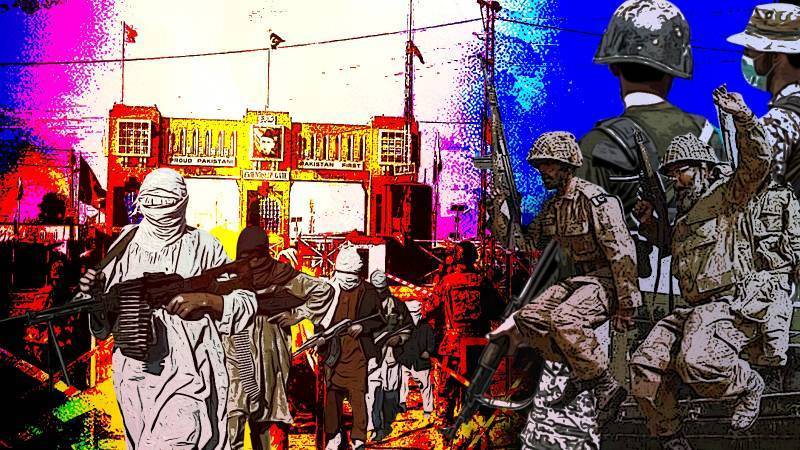
“Pakistan breeds terrorists.” That is the portrayal—one in which Pakistan is cast as the home of organisations such as Sipah-e-Sahaba, Lashkar-e-Jhangvi, and, more infamously, Lashkar-e-Taiba (LeT). The Resistance Front, alleged to be responsible for the recent Pahalgam attacks, is claimed by Indian authorities to be an offshoot of LeT. Consequently, the argument leads directly to Pakistan, and inevitably to Hafiz Saeed, implicated in the 2008 Mumbai attacks. The unfortunate incident in Pahalgam has, with predictable convenience, been linked to a recent speech by Pakistan’s Chief of Army Staff, General Asim Munir. This address, delivered at a convention of overseas Pakistanis in Islamabad on the 14th of this month, invoked the Two-Nation Theory—the ideological foundation of Pakistan’s creation in 1947.
During the Indo-Pak Dialogue segment on my programme Talking Politics, Indian guests referred to this speech extensively. They analysed and criticised it, arguing that Pakistan must dismantle not only the ideological narrative but also the Islamic and jihadist organisations it has fostered, in order to reclaim a respectable standing on the world stage. These were thoughtful, learned individuals, for whom I have deep respect. Taking a more nuanced stance, however, Dr Parminder Singh, a professor from Amritsar, warned against the perils of belligerent rhetoric emanating from both sides—India and Pakistan. Dr Malik reminded viewers of the rapidly evolving global landscape, wherein great power rivalries are pulling our region ever closer to dangerous instability.
These perspectives are not limited to my esteemed guests alone.
Indian media has been abuzz with speculation around General Munir’s speech—its timing, implications, and necessity. Some have gone so far as to interpret it as a covert signal to so-called Pakistani "assets" in Indian-administered Kashmir. The organisations under discussion—both by the Indian media and my guests—are, in reality, largely defunct. Their operational capacity has been severely restricted, their financial lifelines cut off, and their leadership absent from the public sphere for years following formal bans. Any ordinary Pakistani can attest to the fact that these groups no longer operate in any functional or visible form.
And yet, they persist—kept alive in the Indian media's imagination and in the minds of those who claim deep insight into Pakistan. When pressed to provide a direct link between General Munir’s speech and the tragedy in Pahalgam, the usual response is to point to history: to the era of General Zia-ul-Haq, when such groups were cultivated by Pakistan’s Inter-Services Intelligence (ISI). But in doing so, they conveniently omit a crucial context—whose agenda was truly being served, and whose resources made these organisations possible?
I shall refrain from speculating whether this omission stems from ignorance or deliberate selectivity.
Nonetheless, I feel obliged to remind the Indian media, my friends across the border, and the wider international community that these militant outfits were established at the behest of the United States and its NATO allies—first during the Soviet invasion of Afghanistan, and later during their post-9/11 intervention in the region. It is perhaps understandable why Indian commentators stop short of painting the full picture, choosing to name Zia-ul-Haq, while leaving the Western sponsors, particularly the United States, conspicuously unmentioned.
While Indian media continues to chant slogans of "terrorists" and "jihadists" in Pakistan, the very outfits they name cannot collectively win a single seat in the national parliament. In other words, they possess no political constituency—no popular public support.
By contrast, India is currently governed by the right-wing BJP, the political offshoot of the Hindu extremist organisation RSS. This is a party with the Gujarat massacre, the demolition of mosques, and the persecution and marginalisation of minorities to its credit. And yet, I’m told by well-meaning friends that Pakistan must become more progressive and curb religiosity!
When Pahalgam happened, the government and people of Pakistan extended their condolences and unequivocally condemned the violence
You’ll scarcely find this discussed in the international media. When Pakistan’s Defence Minister reminded a Sky News anchor of Modi’s past – the subject was the Pahalgam attack – she swiftly dismissed the point and moved on. That, it seems, is a no-go area on British television. Ironically, the same "Modi buddy" was once denied entry into the United States.
India, after all, is now a strategic partner of the United States—the very nation that once demanded the creation of these groups—and is simultaneously deepening ties with Saudi Arabia, as evidenced by the recent $100 billion investment pledge during Prime Minister Modi’s visit to the Kingdom. Small wonder then that certain names must be excised from polite conversation. Osama bin Laden was indeed found in Abbottabad, Pakistan. But which country’s national was he? That part of the narrative is seldom pursued. The rich and the holy, it seems, are exempt from the burden of inconvenient truths.
In Pakistan, we have lived through these crises. We have borne witness to them. We have paid—in both cash and blood. And yet, here we are. Why?
The Jaffer Express hijacking incident occurred on 11 March this year—not long ago—and claimed the lives of 64 innocent people. How many nations, including those self-proclaimed champions of Islamic brotherhood, condemned the attack? How many even offered condolences to the bereaved families?
When Pahalgam happened, the government and people of Pakistan extended their condolences and unequivocally condemned the violence. Pakistanis have never hesitated to express solidarity with victims of terror and tragedy—whether in the Middle East, Europe, the United States, or elsewhere.
But when tragedy strikes us, there is only silence. Not a single word of sympathy. Not even a whisper of condemnation.
Why is that?
What are we, to the world?
These are the questions that strike us to the core—I feel them personally.
I can understand the Indians. Deep down, they have never truly accepted the Partition of India—even that, in a way, is understandable. They remain uncomfortable with the legacy of Muslim rule in the subcontinent—that too is comprehensible. I can understand the Afghan people, who feel betrayed that we allowed the United States to utilise our land and logistics to conduct its operations in their country, even though we hosted over four million Afghan refugees when they had nowhere else to go.
I would even extend that understanding to the Saudis, who were deeply aggrieved when Pakistan declined to contribute troops to their joint operations with the UAE in Yemen in 2015. They harbour a sense that they once financed, supported—even protected—our leaders in exile, and yet we faltered when they called upon us. I can understand Iran as well. Iran stood by Pakistan during the 1965 war with India, offering military support. And yet, in subsequent years, we veered away, drawn into the sphere of their regional rival, Saudi Arabia.
What I have come to understand is this: these countries believed we owed them allegiance—even at the expense of our own national interest. They expected loyalty in exchange for patronage. Our lives, in return for their money.
So, it seems, that was the unspoken deal we failed to honour.
Ironically, we were always told it was about brotherhood.
That’s all fine. It's out in the open now—no illusions remain.
What I cannot understand, however, is why we have allowed our relationship with China to drift. Theirs was a friendship forged in steel. They honoured it. They invested heavily in Pakistan, asking for little in return—only security for their workers. And yet, one reckless and ill-considered statement by our Foreign Minister, Ishaq Dar, who accepted the post with evident reluctance, was enough to sour the relationship. President Zardari’s recent visit to China failed to rekindle the old warmth, and no serious effort appears to have been made to repair the damage.
There is still time.
The Western media, notably the German press, no longer seems as persuaded by the Indian narrative as it once was. Their reasons are clear. India has continued to purchase Russian oil, effectively fuelling the war in Ukraine. J.D. Vance’s speech to the EU has strained Europe’s ties with the United States. NATO’s credibility has been weakened, particularly following President Trump’s imposition of tariffs on European goods. In this context, India’s alignment with the United States may not be viewed so favourably in Europe. Increasingly, they may look to China as an alternative partner.
The question, however, remains—where are we looking in this hour of crisis?
As we continue to grapple with this question, it is perhaps time for the international community to ponder whether the personal sentiments I have expressed here echo the voices of countless other citizens in this country.