

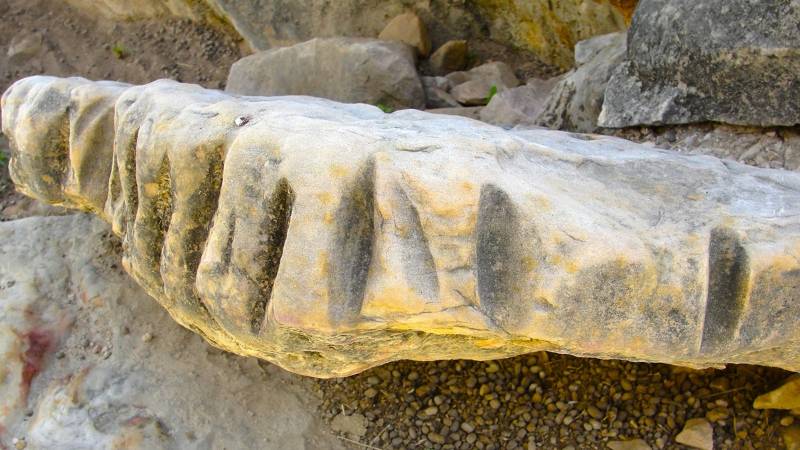
Discovering and documenting rock art sites in Sindh reveals new perspectives and themes that are less explored in Pakistan's rock art. Some are figurative, and others are non-figurative perspectives in Sindh's rock art.
Grooves are among the most understated yet revealing features of Sindh's rock art landscape, which are discussed in my upcoming book Stones That Speak: Rock Carvings of Taki Valley, Sindh. I share a few excerpts from that book here. At first glance, they appear to be simple lines: shallow channels carved into the surfaces of boulders, exposed bedrock, or cave and rock-shelter walls. Unlike the more visually striking images of ibex, bulls, warriors, or geometric designs, grooves rarely attract immediate attention from visitors. Still, they do not escape the attention of rock art scholars and anthropologists. Yet, these modest markings hold a depth of meaning that invites rock art scholars, anthropologists, and archaeologists to reconsider how we understand rock art and the human past. For rock art scholars and anthropologists, they are traces of repeated action, gestures preserved in stone.
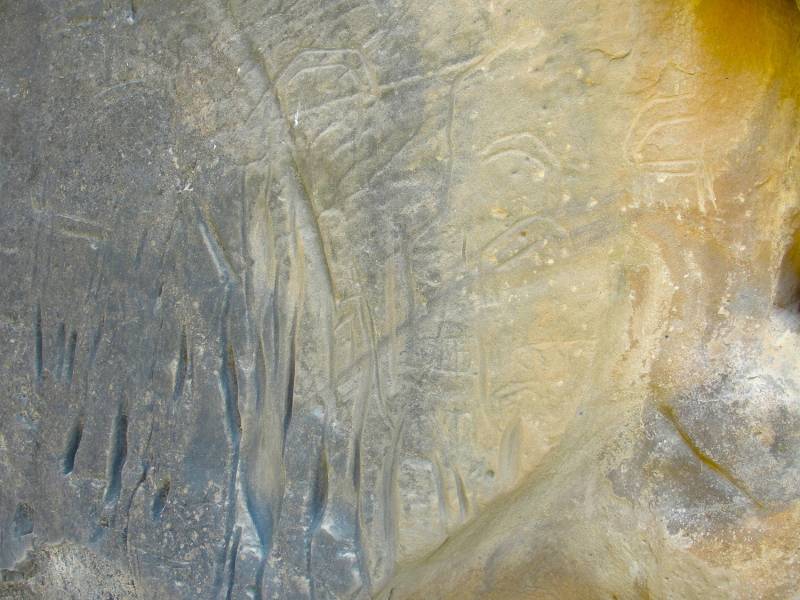
Across the various valleys, including Gaj, Makhi, Sallari, Taki, Khashani, Heengan, and Angai, grooves appear on selected rock surfaces, often in clusters. They vary in length, depth, and orientation, sometimes running parallel to one another, at other times intersecting in dense patterns. Their distribution is not random. They are typically found near pathways, inside cave walls, rock walls, and on the surfaces of rock shelters and boulders. They are also found on open-air bedrocks. Unlike figurative petroglyphs, which communicate through representation, grooves communicate through repetition. They embody action rather than image.
Interviews with pastoral nomads reveal that they regularly sharpen the blades of their axes, a practice that continues an older tradition reflected in Sindh's rock art
What makes grooves particularly significant is their temporal depth. Evidence from various rock art sites in Sindh's Khirthar, Bado, and Lakhi hills indicates that they were produced in both prehistoric and historic periods, and even in contemporary times, as is evident from interviews with pastoral nomads. This continuity of practice points to the enduring importance of certain locations within the landscape. More importantly, one notices that the same rock surfaces were revisited across generations, used and reused by different communities who may not have shared the same beliefs or cultural frameworks, yet recognised the same practical or symbolic value in these places. In this sense, grooves offer a rare insight into continuity rather than change. They suggest that while motifs and meanings may evolve, certain practices and the places associated with them persist over time.
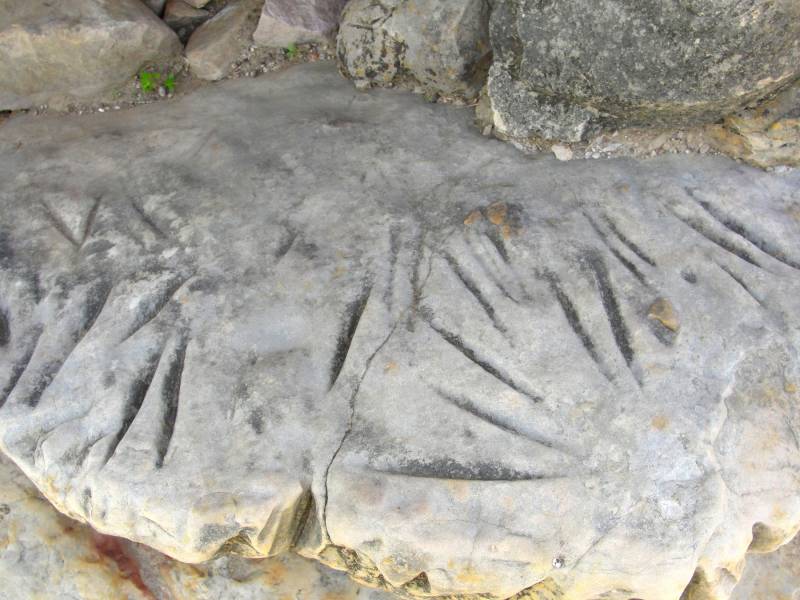
The question of function is central to understanding these markings, though it does not yield a single, definitive answer. One widely accepted interpretation is that the repeated sharpening of tools created grooves; hence, they are interpreted as axe sharpeners. The act of rubbing a blade—whether of stone or metal—against a rock surface would, over time, produce the linear depressions that one observes today. This explanation is supported by the form and wear patterns of many grooves, as well as by ethnographic parallels. I asked many pastoral nomads, who explained that they were used as axe-grinding grooves or axe-sharpening grooves. However, to reduce them solely to utilitarian traces would be to overlook their broader significance. Repetitive contact between stones may have produced sound, pointing to the possibility of acoustic or sensory practices embedded in these landscapes. Therefore, an acoustic perspective is also important to consider when studying the grooves of Sindh. Like cup-marks, some of which can be interpreted as rock gongs, their soundscapes present an important perspective that rock art scholars need to explore in that landscape as well.
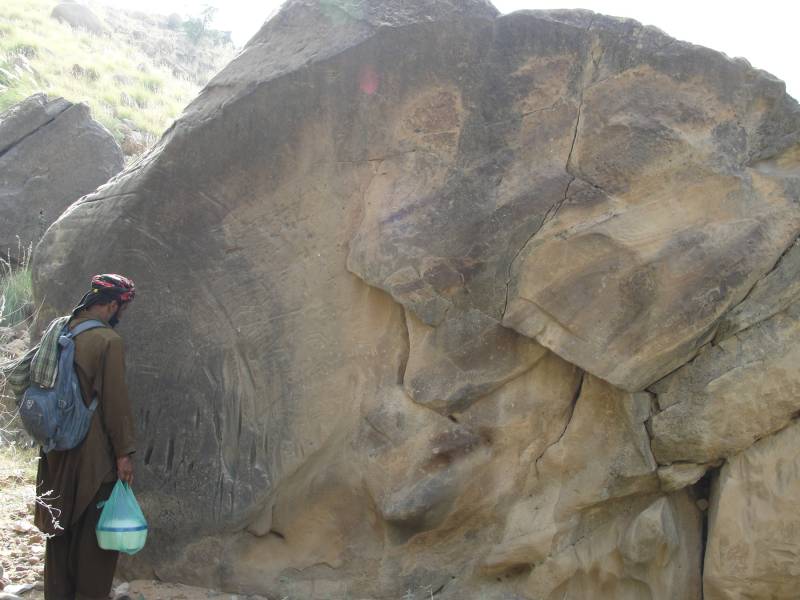
Field observations from sites such as Mamani Dhoro, Heengan Dhoro in Taki valley, and Tirg Dhoro in Gaj valley further deepen our understanding of these mysterious grooves. While grooves are present at these locations, they are far more numerous and densely concentrated at the Ban Sath rock art site in Mamani Dhoro and Tirg Dhoro in the Gaj valley, and at various other locations in the Khirthar Mountain Range. In Khirthar, particularly in Mamani and Gaj, clusters of grooves cover selected rock surfaces, creating a visual impression of intensity and repetition. This density suggests that the activity associated with groove-making was not occasional but sustained over time. It may indicate a preferred location for specific practices—whether practical, social, or ritual. At Heengan Dhoro, by contrast, grooves are fewer and only found at one site.
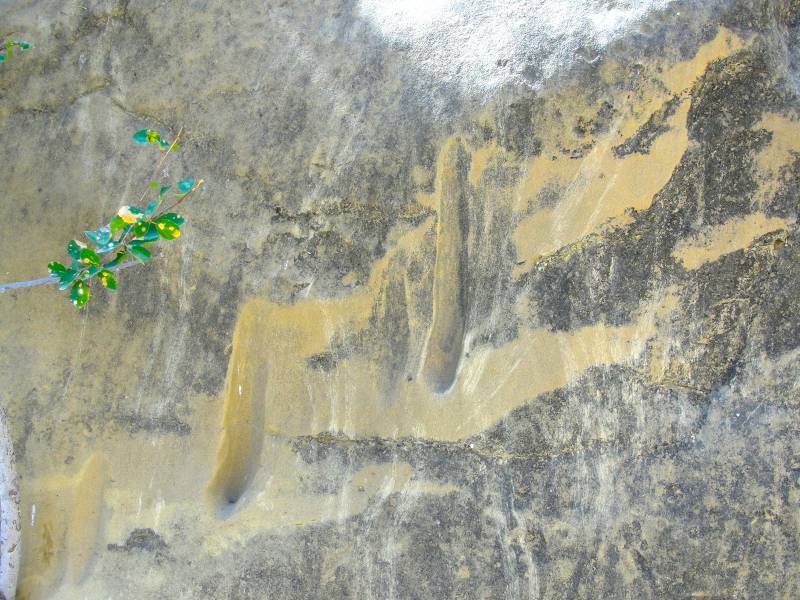
Importantly, grooves should not be treated as separate from the wider corpus of rock art in Taki and Gaj valleys. They are an integral part of the same cultural landscape, alongside animal figures, anthropomorphic forms, and symbolic motifs. The rocks of Taki and Gaj valleys were not passive surfaces awaiting decoration; they were active participants in human life. People did not only carve images onto them—they touched, struck, rubbed, and interacted with them in ways that left lasting marks. Grooves, in this sense, are the physical record of that interaction.
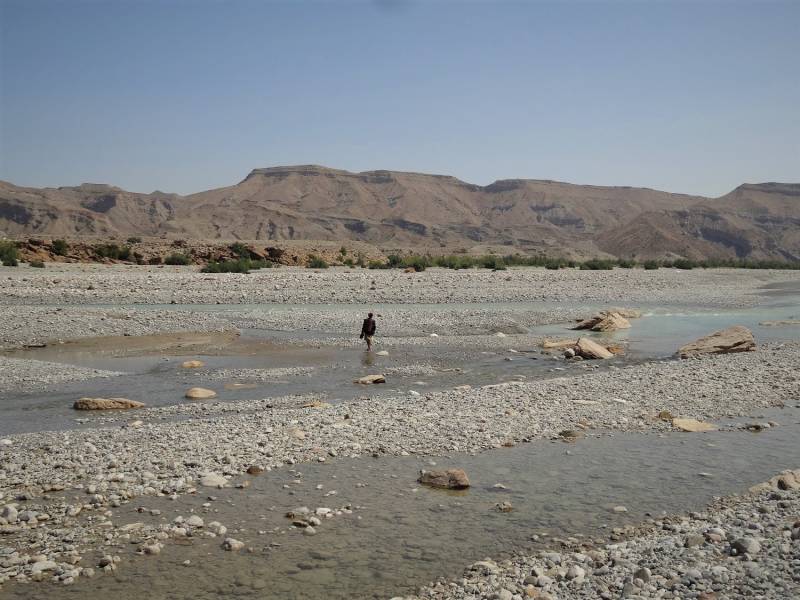
These markings also invite rock art scholars and anthropologists to think about the relationship between humans and their environment. The making of grooves is an embodied activity. It involves movement, pressure, repetition, and time. It is not simply a matter of representation but of engagement. This aligns with a broader understanding of landscape not as a static backdrop but as a lived and experienced space. The grooves of Taki and Gaj valleys are evidence of this lived experience. They show how people inhabited the Mamani, Heegan, and Tirg dhoras of Taki and Gaj valleys, how they used specific locations, and how their actions became inscribed in the material world.
Despite their significance, grooves remain largely overlooked in discussions of rock art. Their lack of figurative content makes them less immediately appealing, and their meanings are often more difficult to interpret. Yet, it is precisely this ambiguity that makes them valuable. They open up questions rather than closing them down. They challenge rock art scholars and anthropologists to think beyond images and symbols, to consider the full range of human activities that shaped these landscapes in Sindh's various mountain ranges and hills, be it Khirthar, Bado, or Lakhi. People's interaction with the landscape continues, and they still create grooves. Ethnographic grooves provide essential insights into the reasons behind the creation of such markings. Interviews with pastoral nomads reveal that they regularly sharpen the blades of their axes, a practice that continues an older tradition reflected in Sindh's rock art.