

Recently, I had the privilege of delivering a talk to visiting students and faculty from the University of Malaya, who were on an academic exchange with the Lahore School of Economics. The engagement was intellectually stimulating and diplomatically significant, highlighting the potential of educational and cultural exchanges between Pakistan and Malaysia, two countries that share not only a historical affinity but also a forward-looking regional vision. This interaction prompted a deeper reflection on the broader contours of Pakistan–ASEAN relations, a subject that remains understudied but increasingly vital.
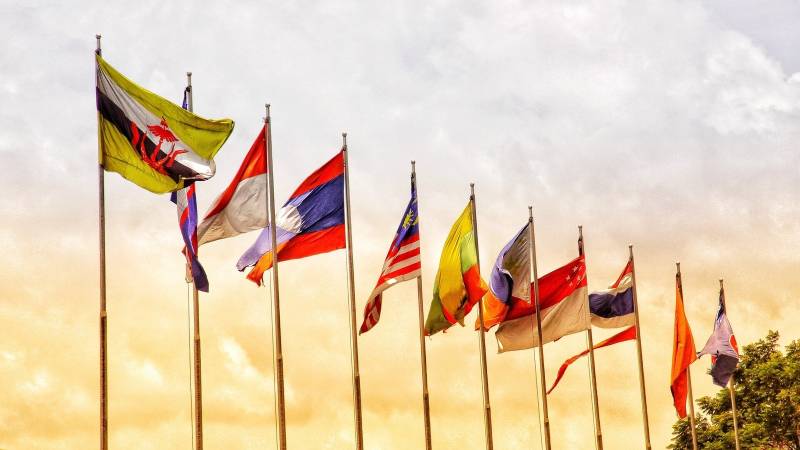
In a world that is becoming increasingly multipolar and fragmented, the importance of international and regional organisations cannot be overstated. From the perspective of neoliberal institutionalism, these bodies reduce transaction costs, build trust among rational actors, and foster long-term cooperation even in an anarchic international system. The Association of Southeast Asian Nations (ASEAN), established in 1967 by the Bangkok Declaration, serves as a prime example of this institutional utility. In response to the Cold War environment marked by superpower rivalry and internal insurgencies, ASEAN’s founding members—Indonesia, Malaysia, the Philippines, Singapore, and Thailand—sought to promote regional unity, peace, and gradual economic integration. Over time, ASEAN has developed a sophisticated structure that facilitates political dialogue, economic collaboration, and action on transnational challenges such as terrorism, climate change, and cybercrime. For a country like Pakistan, strategically positioned at the crossroads of South and Central Asia, engagement with ASEAN offers an opportunity to enhance its economic presence, diplomatic relevance, and regional connectivity.
Pakistan’s formal engagement with ASEAN began in the 1990s when it became a Sectoral Dialogue Partner in 1993. While the relationship lacks the historical depth and institutional maturity seen in ASEAN’s ties with countries like India, China, or Japan, it holds considerable promise. The shared post-colonial trajectories of many ASEAN and South Asian states, coupled with mutual interests in regional peace, trade, and technological collaboration, provide fertile ground for cooperation.
Visa restrictions, limited professional exchange frameworks, and bureaucratic inertia are some of the barriers hindering the full potential of Pakistan–Malaysia relations
Bilateral trade between Pakistan and ASEAN countries has surpassed $7 billion in 2024, with key exports including textiles, rice, and surgical instruments. However, the trade balance is skewed heavily in ASEAN’s favor, with Pakistan importing electronics, chemicals, rubber, and palm oil. Despite these trade figures, the current economic exchanges highlight both the potential and limitations of Pakistan’s engagement with ASEAN. Potential exists in untapped sectors like fintech, green energy, and halal trade, while limitations stem from Pakistan’s limited export diversification, bureaucratic inefficiencies, and infrastructural challenges in connecting with Southeast Asia’s core. Furthermore, Pakistan’s application for Full Dialogue Partner status remains pending, and its engagement with ASEAN remains under-institutionalised and reactive. To achieve policy coherence and tangible outcomes, Pakistan must integrate ASEAN more effectively into its regional and economic planning.
Beyond trade, education and cultural diplomacy also offer promising avenues for strengthening Pakistan's ties with ASEAN. Thousands of Pakistani students are enrolled in Malaysian universities, and educational collaborations in fields such as biotechnology, smart agriculture, and digital ecosystems have begun, especially with Malaysia and Indonesia. However, despite these positive developments, Pakistan’s strategic engagement with ASEAN needs to evolve from episodic to proactive, embedded within broader institutional frameworks that facilitate deeper cooperation in multiple sectors.
Among ASEAN member states, Malaysia stands out as Pakistan’s most enduring and multifaceted partner. Diplomatic relations between the two countries were established in 1957, soon after Malaysia’s independence from the British. Over the decades, this relationship has evolved into a broad-based partnership, grounded in shared values such as Muslim solidarity, sustainable development, and peaceful coexistence. High-level visits by leaders from both countries, along with cooperation in multilateral forums such as the Organisation of Islamic Cooperation and the United Nations, have helped sustain the momentum of the partnership.
Economically, the Malaysia–Pakistan Closer Economic Partnership Agreement (MPCEPA), signed in 2007, has laid the foundation for bilateral trade. The trade volume currently ranges from $1.5 to $2 billion annually. Key exports from Pakistan include rice, textiles, seafood, and sports goods, while Malaysia primarily exports palm oil, electronics, and rubber to Pakistan. However, the trade relationship is characterised by an imbalance, with Malaysian exports outweighing Pakistani imports significantly. This imbalance is exacerbated by procedural bottlenecks and a lack of awareness among Malaysian businesses about the opportunities in Pakistan. These challenges hinder the full potential of the FTA, and greater efforts are needed to facilitate business exchanges and streamline bilateral trade.
On the cultural and educational front, thousands of Pakistani students are enrolled in Malaysian universities, contributing to a growing intellectual bond between the two nations. Collaborative initiatives, such as academic seminars and joint research programs, particularly in fields like Islamic banking, science, and technology, further strengthen the relationship. Additionally, cultural diplomacy initiatives like the Pakistan–Malaysia Friendship Week and halal industry expos reflect the increasing people-to-people ties between the two countries.
Despite the positive momentum, challenges remain. Visa restrictions, limited professional exchange frameworks, and bureaucratic inertia are some of the barriers hindering the full potential of Pakistan–Malaysia relations. Nevertheless, the bilateral relationship offers a microcosm of what broader Pakistan–ASEAN cooperation might look like—pragmatic, multifaceted, and grounded in mutual respect.
At the heart of ASEAN’s identity is its ability to harmonise diversity—whether in political systems, religious beliefs, or economic models. This capacity for inclusivity offers Pakistan a valuable model and mirror. ASEAN’s regional vision is rooted in consensus-building, development, and non-interference principles that resonate with Pakistan’s diplomatic inclinations. ASEAN’s success in institutionalising free trade areas like the ASEAN Free Trade Area (AFTA) and the Regional Comprehensive Economic Partnership (RCEP) stands in stark contrast to the underperformance of SAARC, the South Asian regional bloc to which Pakistan belongs. This comparison offers Pakistan a vital lesson: regional success depends not only on political will but also on the design and institutionalisation of cooperation.
Finally, ASEAN’s growing external relations with the EU, China, the United States, and India underscore the bloc’s global relevance and strategic centrality. Within this framework, Pakistan must locate its ASEAN policy. One promising area for collaboration is green energy, where Malaysia’s expertise could align with Pakistan’s growing needs. In addition, educational and digital cooperation, particularly in smart cities and academic exchanges, could provide opportunities for deeper engagement in the foreseeable future.