

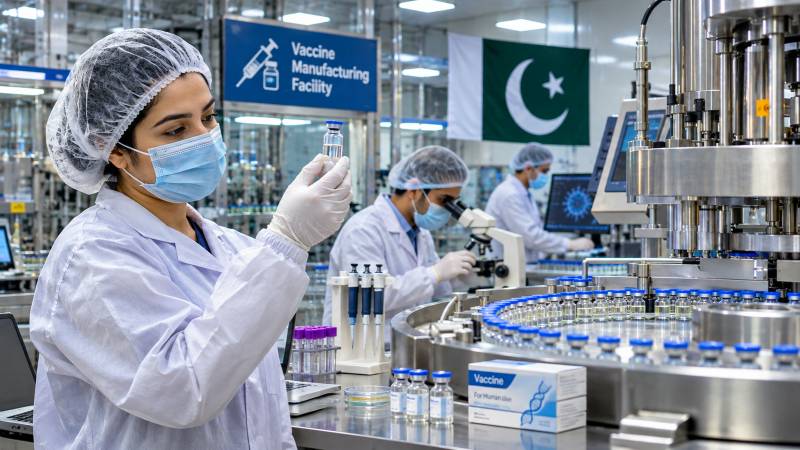
Pakistan has an opportunity to strengthen its vaccine security, develop its pharmaceutical industry, create skilled jobs, and build capabilities that contribute to health security far beyond its borders. New manufacturing investments and partnerships are important steps. Yet factories alone cannot deliver these ambitions. Sustained production depends on the expertise, regulatory systems, financing, and demand that make manufacturing viable over the long term.
The COVID-19 pandemic exposed the risks of depending on a concentrated global vaccine supply. When demand surged, countries with limited access to manufacturing capacity found themselves competing for scarce supplies. Expanding production across more countries can help make supply chains more resilient and ensure that countries are better prepared for future health emergencies. Pakistan does not need to manufacture every vaccine it uses to achieve this. It needs a stronger domestic manufacturing base, the ability to develop and produce strategically important vaccines, and dependable partnerships to access products it cannot make itself.
Pakistan has a foundation on which to build: an established pharmaceutical sector, scientific talent, and growing international partnerships, including cooperation with Indonesia and China. Recent business-to-business agreements with Chinese partners signal interest and momentum. The challenge now is to translate these partnerships and commitments into sustainable manufacturing capacity, skilled teams, and products that meet international standards.
The first priority is to build manufacturing expertise, not simply manufacturing facilities.
Technology transfer is not accomplished by installing equipment or signing an agreement. It requires people who know how to operate complex processes, maintain consistent quality, troubleshoot problems, and adapt production as technologies evolve. That expertise is built through sustained training, practical experience, and long-term collaboration.
Fill-and-finish manufacturing in which vaccines produced elsewhere are filled into vials or other containers, finished, and packaged locally can be an important starting point. But Pakistan's ambitions should extend further upstream, towards producing vaccine ingredients and advancing into more complex stages of manufacturing. This progression will not happen overnight. It requires deliberate planning, investment in infrastructure, and opportunities for Pakistani scientists, engineers, and manufacturing specialists to develop increasingly sophisticated skills. Partnerships should support this progression, with clear pathways for expanding local capabilities over time.
The goal is not simply to operate a facility, but to build teams and institutions capable of sustaining, improving, and eventually expanding production independently. The expertise developed today should be transferable across products, technologies, and generations of workers.
The second priority is to ensure that regulatory systems keep pace with industrial ambitions.
Vaccine manufacturing is fundamentally different from producing many other medicines. Vaccines are administered to healthy people, often millions of children, and their safety and quality must be assured at every stage. Strong regulatory systems are essential — not only to protect the public but also to give manufacturers clear requirements and the confidence to invest.
Regulatory capacity also determines whether manufacturers can compete beyond domestic markets. Countries seeking to export vaccines must meet the standards of the markets they hope to serve. WHO prequalification, where applicable, can provide a pathway to broader procurement opportunities and help demonstrate that products meet internationally recognised requirements. This is an area where targeted technical collaboration can make a difference. Our experience working with vaccine manufacturers in China on clinical evidence and WHO prequalification readiness illustrates the importance of connecting manufacturing, clinical development, quality systems, and regulatory requirements from the outset. Pakistani manufacturers and regulators can benefit from similar technical collaboration that builds on national expertise and priorities.
Planning for regulatory requirements early is essential. Facilities, manufacturing processes, quality systems, and clinical development strategies should be designed with future requirements in mind, rather than being retrofitted once a company is ready to pursue international markets.
The third priority is to make the economics of vaccine manufacturing sustainable.
Vaccine facilities require significant investment before producing their first dose. And the costs do not end there. Maintaining equipment, retaining skilled workers, ensuring quality, and keeping production lines operational require predictable financing and demand. Manufacturers cannot sustain production if orders are sporadic or uncertain. Governments and procurement agencies, meanwhile, need assurances that domestically produced vaccines meet quality standards, are competitively priced, and can be delivered reliably.
Progress should be measured not by the number of facilities announced, but by whether they can sustain quality, retain expertise, expand capabilities, and reliably supply vaccines.
Pakistan's anticipated transition away from Gavi support makes planning for the future of vaccine financing and procurement particularly important. As financing arrangements evolve, government and industry will need to align manufacturing ambitions with immunisation needs, realistic procurement commitments, and the resources available to sustain them.
Predictable demand can help manufacturers make long-term investment decisions, improve production efficiency, and build viable businesses. Domestic procurement can provide a foundation, while access to regional and international markets may create opportunities to expand production and diversify revenue. These markets, however, require preparation, quality assurance, and the ability to compete.
Domestic manufacturing must complement, not undermine, the national immunisation programme. Pakistan's priority must remain ensuring that people have access to the vaccines they need today while building capacity that strengthens access tomorrow. International partners can help connect these priorities. Their contribution should go beyond financing factories to supporting the technical capabilities that link manufacturers, regulators, quality systems, workforce development, and market access. Working alongside Pakistani institutions, partners can help translate investments into expertise and lasting capacity. The priorities, direction, and ownership of this effort must remain rooted in Pakistan.
We have worked with partners to develop vaccines, transfer manufacturing technology, and bring products into use. Experience across this work has reinforced a simple lesson: progress at one stage does not guarantee success at the next. A promising vaccine must be manufactured consistently, meet regulatory requirements, have a sustainable financing model, and reach health services that are prepared to deliver it.
Pakistan's vaccine ambitions are also important to the wider region and the world. A more geographically diverse manufacturing base gives countries more options, reduces dependence on a limited number of suppliers, and can strengthen resilience during emergencies. Pakistan has the potential to become not only a stronger producer for its own needs but also a contributor to regional vaccine supply over time. That potential will take sustained commitment. Government, industry, regulators, financiers, and technical partners must continue working together beyond the initial investments and agreements. Progress should be measured not by the number of facilities announced, but by whether they can sustain quality, retain expertise, expand capabilities, and reliably supply vaccines.
Ultimately, vaccine security is not about how many factories a country builds. It is about whether families can count on lifesaving vaccines when and where they need them. The foundations Pakistan lays today in people, institutions, partnerships, and sustainable markets will determine whether its manufacturing ambitions become a lasting achievement.