

In a series of 21 chapters, Yuval Noah Harari highlights pressing issues like backsliding democracy, inequality, climate change, terrorism, and disrupting technologies. He argues that in the 20th century, the issue faced by people was exploitation, in the 21st century, it is irrelevance (p 9). He also argues that democratic systems cannot deal with AI just as liberalism cannot address “ecological collapse and technological disruption” (pp 6, 17). Moreover, he contrasts between the exaggerated emphasis on terrorism and the “underappreciated threat of technological disruption” (p 223).
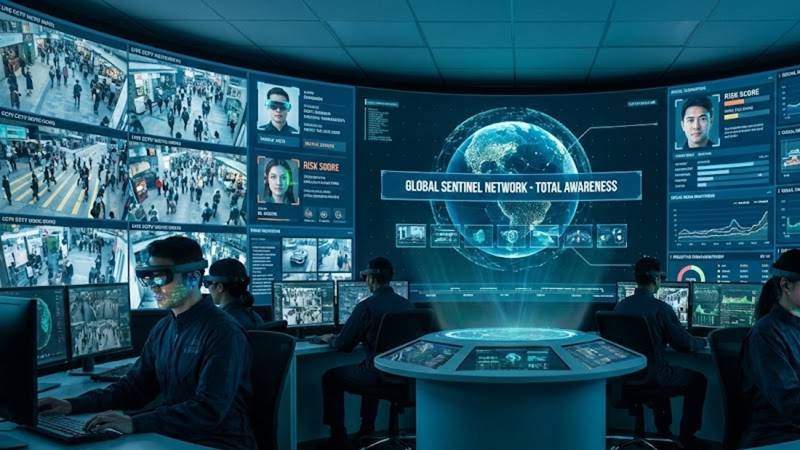
Harari argues that democracy cannot survive the “merger of biotech and infotech”, where data flows from the brain to machines (pp 68, 80). This is because Big Tech can shape preferences and opinions through algorithm-based advertisements and propaganda, which undermine “democratic elections and free markets” (pp 54-55, 57). He adds that big data algorithms can engage in individual specific discrimination, which would be difficult to prove, as none other would face the same discrimination (p 69). Another problem is that big data algorithms can result in a “total surveillance regime” (p 65). Harari also argues that the problem with AI and robots is not that they would disobey humans but that they would never rebel, as in that case they would commit oppression without remorse and show no human compassion, disgust, or fatigue (pp 63, 64).
He argues that whilst automation has created new jobs, the future could be marked with “high unemployment and shortage of skilled labour”, as a cashier replaced by a robot may not be able to become a cancer researcher (p 31). He adds that the systemic mass unemployment would cause “social and political disruptions” and that as AI improves, people will have to “repeatedly reinvent themselves without losing their mental balance” (pp 34, 36). Harari shifts the focus from saving mind-numbing jobs to universal basic income based on taxing tech oligarchs that control algorithms and robots or universal basic services with free education, healthcare, and transportation (pp 38-39). Harari also warns that cheap labour in developing countries will become irrelevant with AI, robots, and 3-D printers (p 40).
Harari argues that economic inequality can lead to biological inequality (p 76). He underscores the problem of future inequality where biotechnology will allow the elite to upgrade their children, extend life, or slow down aging compared to the masses (p 42). Thus, he states that humankind would be divided between the elite superhumans and the less able masses (p 76). He adds that as the masses lose their economic and political power, governments would lose incentive to provide healthcare, education, and welfare (pp 76-77).
Harari argues that terrorism is a strategy used by weak parties that cannot inflict much damage to change the political situation through fear, as they have “nothing to lose (but) much to gain” (pp 163, 167). He adds that terrorists want to elicit a violent military response and persecution that would shift public opinion and hence the balance of power (pp 165, 166). Moreover, he states that the efficient response to terrorism is not military action but rather cutting off the financial networks that abet terrorism (p 170).
Harari argues that people are susceptible to “communal groupthink” and that providing facts backfires, as people “don’t like to feel stupid” (p 225). Alluding to Mein Kampf, he notes that propaganda is based on the repetition of a few key points (p 244). He adds power is based on spreading fictions, which provide people with an identity and higher purpose (pp 249, 282, 287). This helps explain the echo chambers on past glory and perceived grievances (p 283). For instance, just as the Chinese claim that the inventions of the West, Indians, or Muslims is a “pale copy of the original Chinese”, Hindu nationalists argue that “airplanes, nuclear weapons, and missiles were all invented by ancient Hindu sages (p 186). Similarly, Jewish orthodoxy believes that that “Jews are intrinsically superior to all other humans” (p 190). Some Jewish sages argued that “love your neighbour” refers only to Jews and even invoked Biblical commands against the Amalekites and Canaanites to present genocide as a “binding religious duty” (pp 194-195).
Harari notes the blind faith of liberals in democracy even as authoritarian politicians are elected to power (p 217). He adds that such ruling oligarchs manufacture crises to prolong their rule by displacing attention towards external threats (p 11). For instance, the Japanese army staged a false flag operation to justify its invasion of China (p 240). Similarly, the Zionists erased the history of the local Arab population through its narrative of “there is no Palestinian people” or “a people without land for a land without people” (p 240). More generally, democracy has not been a panacea against war. For instance, while China avoided armed conflict and focused on rising economically, democratic US wasted trillions of dollars on military fiascos in Iraq and Afghanistan, (p 177).
Harari argues that given the problem of information overload with contradictory information, education must emphasize the four Cs, critical thinking, communication, collaboration, and creativity (pp 267-268). Such education would shift the focus from technical skills to life skills to help deal with change, limit stress, and enable to learn anew (p 268). Critical thinking is important, as people can end up holding contradictory beliefs. For instance, Harari notes that a Hindu may mistreat his elderly parents but believe himself pious for supporting the destruction of the Babri Mosque, a Bernie Sanders supporter may discuss unjust wealth distribution whilst showing off their Wall Street portfolio, or a Buddhist monk in Myanmar may preach compassion for a mosquito but justify anti-Muslim bigotry (pp 297, 298, 312).
Overall, Harari highlights irrelevance with technological unemployment, the power of Big Tech and the associated inequality, surveillance regimes and control, the overemphasis on terrorism and not technological disruption, the flow of propaganda and the limits of democracy, and the need for critical thinking on inconsistent beliefs that allow one to inflict oppression whilst feeling good about oneself.