

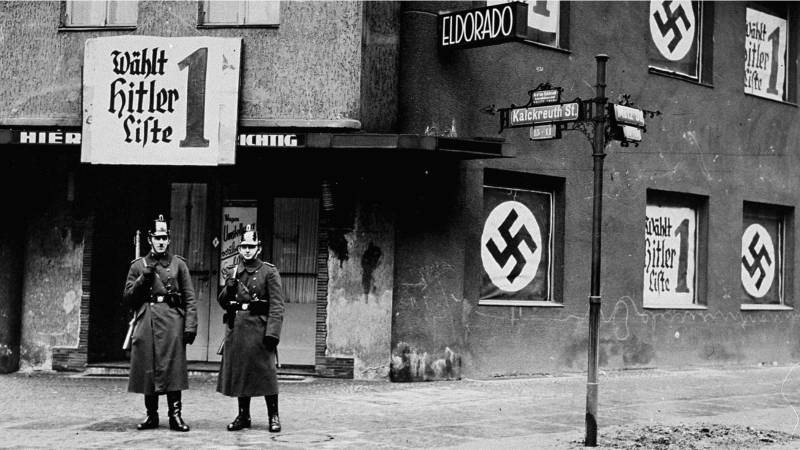
On 30 August 2025, Finland announced that it would phase out the swastika from its Air Force unit flags. The official explanation was simple: the symbol had become “embarrassing” and risked creating “awkwardness” with new NATO allies. Yet the news was startling. It suggested that traces of Nazi fascism still lingered in official symbols, eight decades after the fall of Hitler’s regime in 1945. While neo-Nazi cells and covert extremist groups are known to exist across Europe, discovering the swastika embedded in the official fabric of a modern state was deeply unsettling.
Curious about this continuity, I turned to AI-powered research, which opened up an uncomfortable truth. Our common understanding of fascism is shaped by films, documentaries and textbooks that depict Hitler, the Nazi Party and the swastika as the sole embodiment of evil. The story is usually told as if Germany alone descended into barbarism, while the rest of the world stood on the side of innocence and resistance. But history, when examined closely, tells a far more complicated tale. Long before Hitler seized power, the intellectual, cultural and even legal foundations of extremism had already been laid across Europe and the United States.
The Finnish Swastika: A “Soft Gesture” with a Dark Shadow
Take the curious case of the Finnish Air Force. Its blue swastika, adopted in 1918, long predates Nazi Germany and carries no connection to antisemitism or racial hatred. The symbol was introduced by Count Eric von Rosen, a Swedish nobleman who donated the first aircraft to Finland after its independence from Russia. Von Rosen’s personal emblem, a swastika representing good luck and protection, was painted on the plane. The Finnish Air Force, grateful for the gift, adopted it as its emblem.
This is a clear example of a “soft gesture”: a benign, even hopeful, cultural symbol, a token of gratitude and national pride. Yet within decades, the same symbol would be appropriated by the Nazis and transformed into a global emblem of terror. Finland only recently began phasing it out, not because the original meaning had changed, but because the international association with Nazism made its continued use politically toxic.
The lesson is clear: ideas, symbols and gestures that appear harmless can later be weaponised when they intersect with power and ideology.
Eugenics: Science Turned into Oppression
Long before Hitler came to power, eugenics was a widely respected scientific and social movement in Europe and the United States. In Germany, figures such as Alfred Ploetz and other advocates of “racial hygiene” promoted sterilisation, marriage restrictions and the segregation of the mentally ill, disabled and socially marginalised. These ideas were not confined to fringe politics; they were taught in universities, debated in medical journals and absorbed into public discourse well before the Nazi Party existed.
At its core, eugenics drew inspiration from Darwin’s theory of the “survival of the fittest.” Yet what Darwin had described as a natural and historical process was recast by scientists and policymakers into a prescriptive social programme, a forced application of natural law onto human society. Darwin explained the evolution of all species within the broader laws of nature, but doctors and scientists selectively applied it to human beings, turning a biological observation into a dangerous ideology. This opened the door for extremists to cloak their persecution policies in the authority of “science.”
Eugenics, in practice, was less about “improving humanity” than about social control, a way of policing the reproduction of the powerless while leaving the privileged untouched
Across the Atlantic, the United States had already turned these ideas into law. Virginia’s 1924 Sterilisation Act allowed the state to forcibly sterilise individuals deemed “feebleminded,” mentally ill or socially undesirable. The infamous Supreme Court case Buck v. Bell (1927) legitimised this law, with Justice Oliver Wendell Holmes declaring, “Three generations of imbeciles are enough.” Over 60,000 Americans were sterilised under similar statutes, a practice that continued in some states into the late twentieth century.
Crucially, these laws were never applied to the wealthy or elite. The victims were overwhelmingly poor women, minorities and institutionalised individuals. Eugenics, in practice, was less about “improving humanity” than about social control, a way of policing the reproduction of the powerless while leaving the privileged untouched.
European Eugenics: A Widespread Phenomenon
Sweden, through the Law on Sterilisation of 1934 and its revision in 1941, sterilised more than 60,000 people between 1934 and 1975, targeting the poor, the disabled and Roma communities. Denmark, Norway, Switzerland and even Iceland enacted similar sterilisation policies aimed at institutionalised and marginalised populations. Britain, while never passing a nationwide sterilisation law, nonetheless embedded eugenic principles into public health, psychiatry and adoption practices, indirectly controlling reproduction while sparing the wealthy and powerful.
These practices reveal a sobering truth: extremism did not emerge from Germany in isolation. Across the Western world, scientists, policymakers and social reformers created the intellectual and bureaucratic conditions that made mass sterilisation, and later Nazi atrocities, possible.
The Intellectual Enabling of Fascism
What does this tell us? The fascist and extremist policies once wielded by monarchs and religious authorities against the thinkers of the Renaissance resurfaced in the twentieth century in a new guise. This time, authoritarianism was led not by monarchs or priests but by scientists, legal authorities and cultural elites. Eminent figures, respected in their fields, advanced eugenics and racial hierarchies as if they were progressive ideas. The United States provided the legal blueprints, while European intellectuals supplied the ideological framework.
When Hitler rose to power, the Nazi regime did not invent these ideas out of thin air. They radicalised and weaponised a pre-existing ecosystem, turning “soft gestures” of reform and scientific curiosity into instruments of coercion and extermination. The Law for the Prevention of Hereditarily Diseased Offspring (1933) authorised compulsory sterilisation for those with mental illness, epilepsy, hereditary blindness or deafness, physical deformities and even “severe alcoholism.” Between 1934 and 1939 alone, an estimated 200,000 to 250,000 people were sterilised, roughly half men and half women.
The victims were overwhelmingly Germans and Austrians with disabilities, the poor and the socially marginalised, not Jews or political dissidents. Jews, Roma and communists were targeted instead through segregation, incarceration or outright elimination under other Nazi programmes. The sterilisation campaign was part of a larger effort to “purify” German society, transforming vague notions of white superiority, echoed by figures such as Count Eric von Rosen, into a militant doctrine of Aryan supremacy.
The belief in superiority, whether rooted in race, religion, culture or intellect, is the seed of exclusion, oppression and violence
The swastika, sterilisation boards and racial hygiene doctrines together reveal how seemingly rational scientific ideas can metastasise into monstrous outcomes when fused with state power and extremist ideology. What began as “public health policy” in laboratories and legislatures paved the way for euthanasia programmes and ultimately genocide.
The Broader Lesson
For humanity, the warning is urgent: extremist ideologies rarely appear fully formed. They often begin as harmless-seeming cultural symbols, fashionable scientific theories or intellectual curiosities. Left unexamined, these ideas fuse with prejudice and power, producing horrors that later seem inevitable.
From Finland’s swastika to the sterilisation programmes of Virginia, Sweden and Germany, history shows that every “soft gesture” of supremacy matters. A society that tolerates notions of superiority or exclusion is quietly laying the groundwork for future atrocities.
The roots of fascism were not confined to Hitler’s Germany; they were international, intellectual and deeply structural. Colonial domination in the nineteenth century, which placed much of the world under European rule, normalised the ideology of white supremacy. Nazism’s Aryan supremacism was less an aberration than a radical extension of this superiority complex, one that eventually boomeranged back into Europe with catastrophic results.
The transformation of the swastika, from a benign emblem on Finland’s aircraft to the terror symbol of Nazi Germany, makes sense only when seen against this wider backdrop of supremacy. Viewed in isolation, it is incomprehensible. Seen in context, it becomes inevitable.
A recent report in The New York Times shows how this mindset lingers: Greenlandic children born in Denmark are five times more likely to be taken from their parents than other children. Authorities justify this with “parental competency” tests, but critics see it as a harsh, discriminatory intrusion into family life. That it persists reflects not bureaucracy, but the same presumption of superiority that once legitimised sterilisation, segregation and conquest.
The enduring lesson is clear: the belief in superiority, whether rooted in race, religion, culture or intellect, is the seed of exclusion, oppression and violence. The moment any group convinces itself it is inherently better than others, the path to domination and persecution lies wide open.