

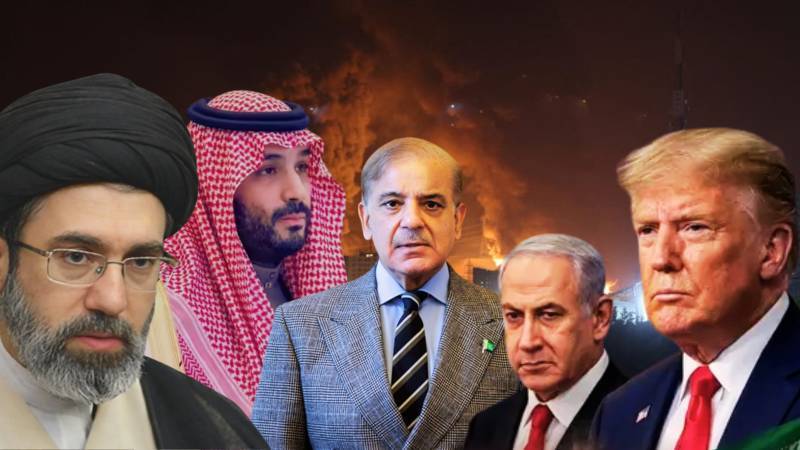
A year ago this week, we measured ourselves by what we could send up in the air. The country marked its first anniversary of Bunyan un Marsoos and Marka-e-Haq with the quiet satisfaction of having held the line in May 2025.
Today we are measuring ourselves by something subtler and harder to weigh: what we can broker across a conference table, whose phone calls we can take, whose praise we can collect. The stage is bigger. The applause is louder. The ledger, unfortunately, is less flattering.
Consider the past five weeks. On 8 April, after weeks of careful Pakistani shuttling, Washington and Tehran agreed to a two-week ceasefire in the latest round of their long war. On 11 and 12 April, the Islamabad Talks brought American and Iranian delegations into the same building for roughly twenty-one hours of negotiation, mediated by us.
They left without a deal. Iran’s nuclear programme and the status of the Strait of Hormuz proved, as they always do, the rocks on which language breaks. A second round, attempted in late April, did not happen; Tehran declined to send a delegation.
We are still passing messages through back-channels. The talks are alive only because we keep breathing on the embers.
This would be a thin diplomatic harvest if it were the whole story. It is not.
Around us, the chessboard has been moving with unusual speed. The Americans have been sitting with the Chinese. The Russians have been hosting Afghans. The Israeli Prime Minister has, at long last, confirmed what everyone already suspected about his quiet visits to Abu Dhabi.
Pieces are rearranging in patterns that do not wait for Islamabad’s blessing. Donald Trump, for his part, has continued his now-familiar habit of praising Pakistan in public: warm, generous, slightly extravagant praise, of a kind that travels well on television and badly into bank vaults.
While we were working the phones between Tehran and Washington, something less photogenic was happening on the financial side of the ledger. On 4 April, the United Arab Emirates declined to roll over its $3.45 billion deposit with the State Bank of Pakistan. It was the first such refusal in seven years.
Pakistan had, by all reports, assumed a quiet extension was a formality; the International Monetary Fund, too, was caught off guard. The repayment, when it came, came at speed: $450 million on 11 April, $2 billion on 17 April, $1 billion on 23 April. Three weeks.
The reasons Abu Dhabi gave, according to analysts and regional reporting, were not subtle: our deepening tilt towards Saudi Arabia, our muted response to Iranian strikes on Emirati territory, and, the one worth pausing on, our ambition to broker peace between Washington and Tehran. The very seat at the table that earned us Trump’s praise appears to have cost us $3.45 billion in friendly money.
A year ago, we asked the world to take us seriously. The world did
The Saudis showed up. They almost always do. Riyadh extended an additional $3 billion in fresh support, rolled over its existing $5 billion deposit on a longer term, and quietly became, with roughly $8 billion now sitting in our central bank, our single largest sovereign creditor.
Qatar contributed to the wider lifeline. The rescue was real, and the gratitude on this end is genuine.
But friendships of this size are rarely free of conditions, and one should not need a degree in international relations to suspect that a defence understanding with Riyadh is now woven somewhere into the architecture of the relationship. The question of what we have promised, and on whose behalf, will be answered slowly, and not always in our favour.
And then, on 12 May, the International Monetary Fund tranche landed: a combined $1.3 billion, split between the Extended Fund Facility and the Resilience and Sustainability Facility, following the Executive Board’s approval of the third and second reviews on 9 May. The official statements treated it as a vindication. Foreign reserves stabilised. Programme on track. Confidence restored. All true, in the dialect of dashboards.
But this is also where the column has to leave the conference rooms and walk into a Lahore petrol station, or a Faisalabad textile unit, or a Karachi shop that has not seen a real customer in weeks. The pump price, in fairness, is not rising for one reason alone. Global crude has been climbing through the very Middle East war we were trying to defuse, and every importing economy is feeling the burn.
The difference is what each country can do about it. Stronger states absorb the shock through subsidies, strategic reserves, and the political latitude to spend. Pakistan, under the conditions of an International Monetary Fund programme, cannot. The terms of our rescue are precisely what prevent us from cushioning our own people from a price shock partly produced by the war our diplomats were shuttling to end. Subsidies stay clipped, the rupee stays on its tight leash, credit stays expensive, and business, to use the word the business community itself keeps using, stays frozen. The same event is a triumph in Islamabad and a tightening of the belt three notches everywhere else.
This is the part that bears repeating, because it is the part our foreign-policy commentary forgets most often: the fruits of diplomacy are not abstract. They are supposed to ripen somewhere. They are supposed to reach a kitchen, a payroll, and a school fee.
And right now, the harvest is being eaten in transit. The applause from abroad and the squeeze at home are not separate stories; they are different chapters of the same one.
Meanwhile, the neighbourhood, the one we actually live in, the one whose problems do not pause for Islamabad Talks, has not moved. Our relationship with India remains somewhere between grey and grim. Afghanistan is a managed mess, with isolated terrorist incidents puncturing what is otherwise a fragile, exhausted peace.
Iran is volatile in a way that no mediation, however earnest, has yet altered. We have spent a year reaching outwards; the perimeter has stayed exactly where it was, perhaps a little tighter.
So what is the balance on the anniversary of Marka-e-Haq? It is this. We have been noticed. We have been needed. We have been praised. We have hosted talks that the great powers were content to hold on our soil. None of that is small.
But noticing is not the same as investing, needing is not the same as paying, and praise is not the same as a deposit rolled over for another seven years. The diplomacy is real; the dividend has been slow, and the cost has been quicker than the dividend.
The harder question, and the one our policy class will have to answer in the budget that arrives next month, is whether being taken seriously by everyone else has produced anything serious for ourselves. A seat at the table is a fine thing to have. But the man at the door is still presenting the bill, and right now it is the shopkeeper, the salaried family, and the small manufacturer who are being asked to pay.
A year ago, we asked the world to take us seriously. The world did.
The work that remains is to make that seriousness mean something to the people who paid for it.