

On the night of 10 May 2025, I was deeply immersed in reading in my study when the glass in my window began to tremble, as the loud sound of a blast disturbed the quiet of the small room. I ran towards the TV lounge, where the anchors on GEO Television were masterfully avoiding reporting what this blast—and the trembling of windows just a few miles away from GHQ—signified. They were shouting at the top of their lungs to condemn India and its belligerence in their special transmission from the War Room—as they aptly named their studios designed to report and analyse the unique conflict that had adopted new methods and new technologies to inflict damage on each other. I was disappointed. There was nothing about the blast that had been heard far and wide in the twin cities.
My daughter, Zehra, came running into the TV lounge holding her mobile phone in her hand. “Indians have attacked Nur Khan Air Base,” she told us. I went into a state of shock—attacking Nur Khan Air Base meant a major escalatory step. Zehra showed me social media posts—a visual clip taken from the surroundings of Nur Khan Base, which is located in the heart of the city. The visuals only showed flames of fire erupting from far away. Nobody could have figured out what place it was. GEO was still silent. But social media was abuzz with reports about the Indian attack on the airbase in Islamabad.
My curiosity and background knowledge as a news reporter about the city and its structures prompted me to think deeply and worry. Nur Khan Air Base was not only located in the heart of Pakistan’s capital city, it was also located close to Pakistan’s military nerve centre. An Indian strike in the heart of the military nerve centre meant the Indians had thrown all caution to the wind. How would the Pakistani military respond? We had been told during the last three days—since India struck alleged terrorist sites on the night of 7 May—that Pakistan would respond at the time and method of its choosing.
I waited in front of my television, and around the morning call for prayers, a GEO anchor quite enthusiastically and merrily announced that Pakistan had started responding to Indian aggression and that Pakistani missiles had been launched to hit military bases in northern and western India.
Within half an hour, all Pakistani television channels were showing video clips of the launch of FATEH-I and FATEH-II missiles from unknown and unidentified locations. The GEO anchor was telling his viewers that around 26 military sites in India were under attack. He was also describing the next escalatory step: “This time Indian military sites are under attack. But if Indians continue to strike inside Pakistan, the next missiles from Pakistan’s side will be launched against Indian industrial and economic targets,” he said.
This is not stopping anytime soon, I thought to myself. I took out my car and started driving towards Islamabad. I wanted to see the city's beauty—the sun was rising and there were few vehicles on the Expressway—the link road between Islamabad and Rawalpindi. The greenery and low clouds on the Margalla Hills looked majestic. There was a feeling of serenity that gripped my thoughts. But the situation we were in—and the sinister military developments that were taking shape in the region—were about to play havoc with this serenity.
I continued to drive around the cities of Islamabad and Rawalpindi. There was life everywhere. Could somebody stop the madness? I am sure things would have seemed similar, on the other side of the border in New Delhi, to anyone looking at the situation from a non-military perspective. After driving around the city for one hour, I went back home and went to sleep. The thoughts that crossed my mind, after looking at the life in the twin cities, and contrasting it with the developing military situation, were too distressing. I was tired and disturbed. For the next eight hours I kept drifting in and out of sleep, with my subconscious in a deeply chaotic state. At around 5pm, my daughter woke me up to inform me about the ceasefire.
Someone familiar with the true and complete picture of the military situation in Pakistan at that moment would be justified in nominating US President Trump for the Nobel Prize
The strategists and military experts will continue to debate how close Islamabad and New Delhi came to a nuclear exchange during the four-day war. This time both Pakistanis and Indians downplayed the nuclear fear, but someone as important and well-informed as US President Donald Trump played up the nuclear dimension of the whole conflict.
On 10 May 2025 at 7:30am, British wire service Reuters reported, “Pakistan Prime Minister Shehbaz Sharif has called a meeting of the National Command Authority on the same day.” This appeared as sinister as the Indian attack on Nur Khan Base—National Command Authority is the institution that controls the decision of deployment and employment of nuclear weapons. The US diplomats and leaders who started contacting their counterparts after the attack on Nur Khan Air Base sped up their diplomacy after reading Reuters’ report. The Pakistani Defence Minister later denied ever convening this meeting.
Someone familiar with the true and complete picture of the military situation in Pakistan at that moment would be justified in nominating US President Trump for the Nobel Prize. Only a few people in the military bureaucracy—and perhaps Prime Minister Shehbaz Sharif—would have known how close the country’s security apparatus was to taking the fateful decision of deploying, and even employing, nuclear weapons.
The four-day conflict was unique in the history of military conflicts in the region, in the sense that neither side mobilised its land forces in any substantial way. In the case of a land war, most international experts agree that Pakistan’s nuclear threshold would be very low. In other words, in case of a land forces conflict, Pakistan’s threshold to use nuclear (or tactical nuclear) weapons would be reached very early in the conflict.
During the four-day conflict in May 2025, Pakistan behaved very unexpectedly when it didn’t use nuclear sabre-rattling as a tool to browbeat the Indians. Perhaps success in the initial phase of the conflict—when it shot down six Indian fighter jets—boosted confidence in its conventional capability. So much so that the FATEH rockets it used to target Indian military bases on 10 May were not nuclear-capable systems, it is pertinent to mention here that most of Pakistan’s ballistic missile systems are dual-capable, with the ability to deliver both nuclear and conventional payloads. So when Pakistan would have also thrown caution to the wind in the conflict was anybody’s guess. Perhaps President Trump, with all the technical means at the disposal of the security establishment he presides over, would be in a better position to judge when Pakistan might have brought nuclear weapons into the conflict.
President Trump and his team should be given credit for two things:
a) They should be given credit for good intentions—intentions to prevent a nuclear war between Pakistan and India. They had good intentions and translated those into diplomacy. But this is nothing exceptional—more than half of the world had the intention to prevent a full-fledged war in South Asia. b) What was unique about the American role in the four-day conflict was the technical means and expertise the American security apparatus possesses, to judge and assess the military situation on the ground and to intervene at the right moment and place—I mean calling the people who were calling the shots on both sides of the border at the right moment. I think a delay of even a day or a few hours could have made a ceasefire impossible.
So, President Trump should be given credit for intervening at the right moment with the technical assessments presented to both sides during their diplomatic assessments, without which it would have been impossible to convince the main players on both sides to stop firing at each other.
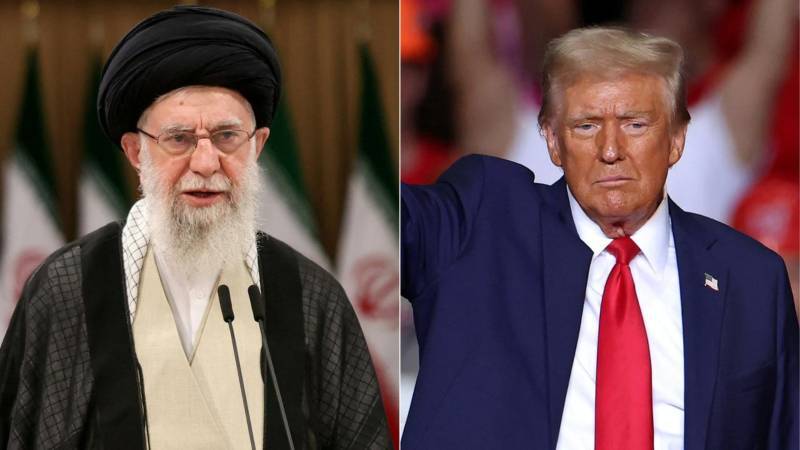
If President Trump could secure a ceasefire between Iran and Israel at this stage, I think there would be no one more deserving than him for a Nobel Peace Prize
I think President Trump deserves the Nobel Prize for averting a nuclear war in South Asia. But wait a moment. How come a man of peace in South Asia started talking about war and pre-emptive strikes in the Middle East?
President Trump’s initial assertions about Iran were clearly in line with his praiseworthy role in preventing a nuclear conflict in South Asia. He said he could bring peace between Iran and Israel. He only gradually turned belligerent—and that too under pressure from the pro-Israeli lobby in Washington. But he clearly proved his critics wrong—who used to accuse him of uncontrolled prattling—when he told the media in the Oval Office, after he met with Field Marshal Asim Munir, that Pakistanis were not happy with the Iran situation. I think this was the height of diplomatic finesse on his part, when he mentioned the sensibilities of his Pakistani interlocutors about Iran, a country he and his security establishment are planning to bomb. He told the media he heard Field Marshal Asim Munir in Iran: “They know Iran very well,” he said.
American diplomats, journalists, and intellectuals are in the habit of underestimating the depth of Pakistan’s relations with Iranian society. They usually see Pak-Iran relations through the prism of the Shia-Sunni conflict—a conflict that has greatly distorted perceptions of the relationship between Pakistan, predominantly a Sunni country, and Shia Iran led by a Shia clergy.
In my understanding, Pakistan and Pakistani intellectuals would face difficulty in defining Pakistaniat (Pakistani nationhood) in the absence of the influence the Persian language and culture have had on the Muslims of Pakistan. Let me give you an example: Pakistan’s national poet, Allama Iqbal, could be described as a proto-Pakistani—someone who died nine years before the birth of Pakistan—yet he was the first Muslim intellectual in British India to give concrete ideological shape to the political aspirations of Muslims of this region.
Allama Iqbal would not have been Allama Iqbal without his Persian poetry. My generation is the first after the birth of Pakistan that doesn’t understand the Persian language. The generation immediately preceding us enjoyed Persian poetry in their day-to-day life. It is a pity that no serious attempt has been made in Pakistan to understand Allama Iqbal’s poetry in Persian. In other words, we don’t understand why we call him a national poet and philosopher of the nation. It is truly a pity.
The other great Urdu poet, Mirza Ghalib, would not have been as great as he is now considered without his knowledge and understanding of Persian poetry. Persian poetry and its norms and patterns were a source of inspiration for Urdu poets and literary figures in the early phase of the development and growth of the Urdu language. Modern literary critics are of the opinion that Ghalib’s Persian poetry is a witness to the fact that he was one of the first representatives of Muslim exceptionalism in British India. So, President Trump is right: Pakistanis are not happy about the Iran situation.
If President Trump could secure a ceasefire between Iran and Israel at this stage, I think there would be no one more deserving than him for a Nobel Peace Prize. The ceasefire should not necessarily include a change in the political positions of the belligerents. Ceasefire should only mean one thing: no more drones, air strikes, or missile strikes.
President Trump would be able to prevent another horrible disaster in the making by the ceasefire he should orchestrate in the Middle East. On the night of 22 June 2025, the President himself became a party to the conflict when US fighter jets bombed three Iranian nuclear sites. What does it mean? Why two different sets of standards for nuclear haves and have-nots? Does it mean that in President Trump’s logic, a war between two nuclear weapons states is bad, but it ceases to be bad when one of the states in the conflict is a non-nuclear weapons state?
Ironically, for Pakistan, President Trump is a hero. While for Iran, President Trump is a villain. In such a situation, how much weight does Pakistan’s political and diplomatic support to Iran carry? At least in public, Pakistan’s positions will appear hypocritical when, on the one hand, it extends political support to Iran, while on the other hand, it nominates President Trump for the Nobel Prize.