

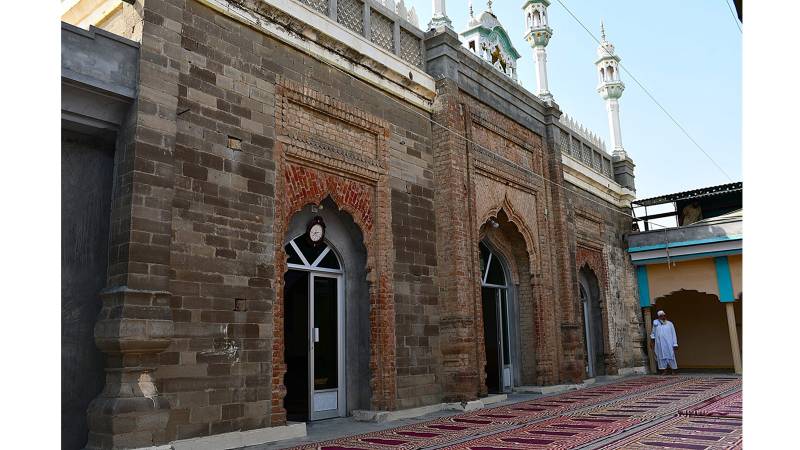
Leti is a historic village in Lawa tehsil in Talagang district. It is located about 12 km south of Tamman village. Formerly, it was part of the Talagang tehsil. This village was famous for the celebrated masons in the Talagang tehsil. The masons of Talagang have historically played a pivotal role in the cultural and social fabric of communities in Leti, Jabbi Shah Dilawar, Suriali, Pachnand, Jasial, Tamman, Multan Khurd, and Mirjan, as well as other villages, not only through their craftsmanship but also as bearers of tradition and community identity. In Leti, the work of masons is not just about constructing buildings; it embodies the heritage and artistry that shaped the local environment.
There are eight mosques in Leti village, of which four were built in the pre-partition era. I visited this village twice in 2022, accompanied by Tariq Mehmood Malik, a local historian with extensive knowledge of the region's history and cultural dynamics. Through these visits, I aimed to gain a deeper understanding of the socio-cultural fabric of Leti village, including its historical narratives about the mosques and masons who built them. I met several people to interview them about the masons and their distinctive style of stone and wood carvings that were the identity of these artisans in the village communities.
The masons of Leti village were more than just builders; they were artists and historians who made significant contributions to the social and spiritual fabric of the community
These individuals were highly regarded for the innovative craftsmanship reflected in their work. The ethnographic perspective, drawn from the local community, enabled an exploration of the interplay between the village's past and present, shedding light on how historical memory and community identity are expressed and preserved in Leti village.
Leti village, which derives its name from Leti Nala that passes by north of the village, is a tributary of the Soan river, a river which is itself a tributary of the Indus river.
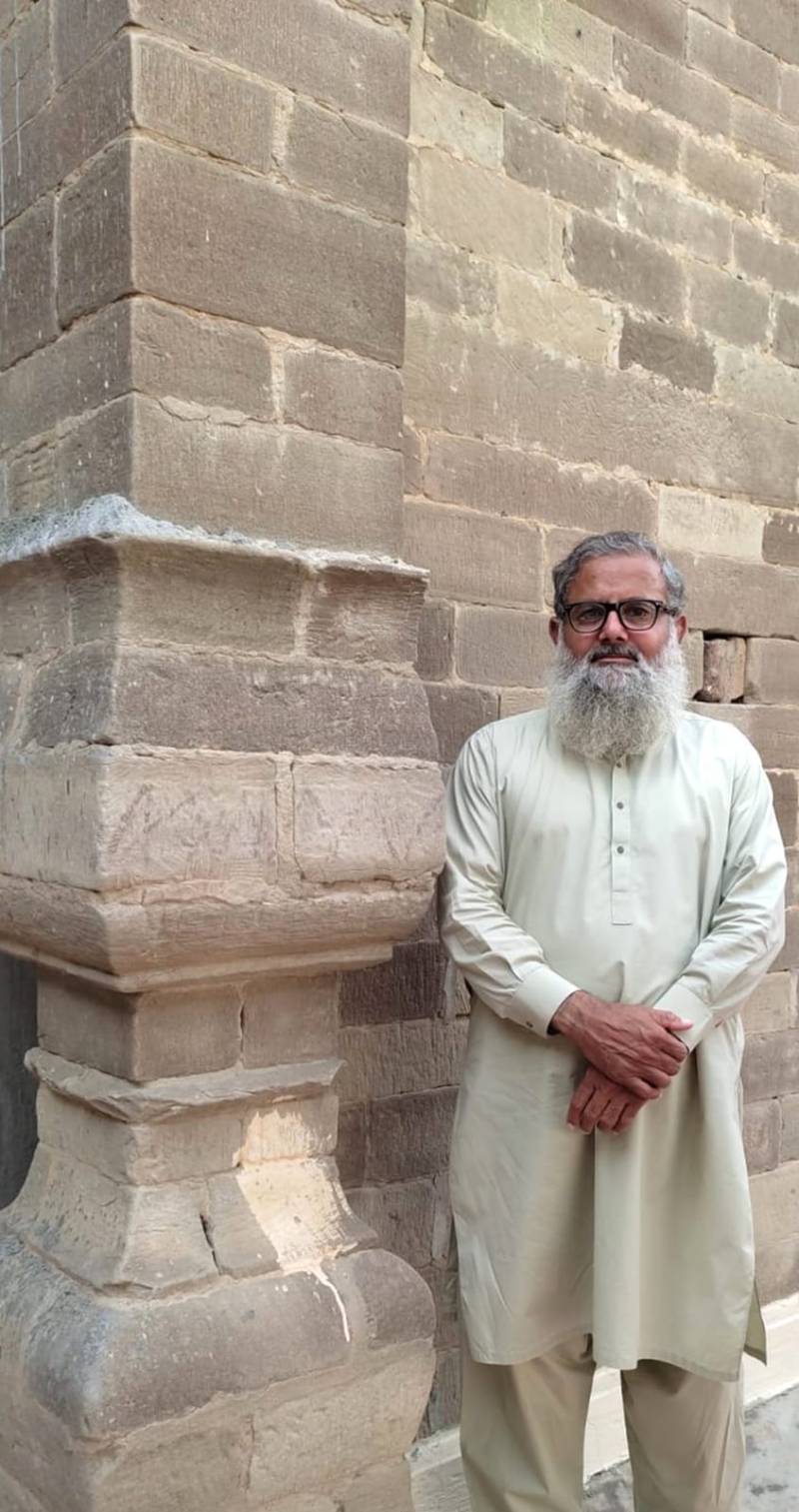
The four historical mosques include Piran or Piron Wali Masjid, Jamia Masjid Syedna Ameer Muawiya, Jamia Masjid Abu Zar Ghaffari, and Ghousia Masjid. All of the mosques have been renovated and expanded; however, three of the mosques —Jamia Mosque Syedna Ameer Muawiyya, Jamia Mosque Abu Zar Ghaffari, and Piran Wali Mosque —retain some of their original features. The Piran Wali Mosque is the oldest in the village.
The Jamia Mosque, Syedna Ameer Muawiya, is located beside the main road of Leti, which connects it to Tamman village. The same road also leads to Suka village, another historical village in Lawa teshil. There is also a historical mosque in Suka, which I visited along with Tariq Mehmood Malik.
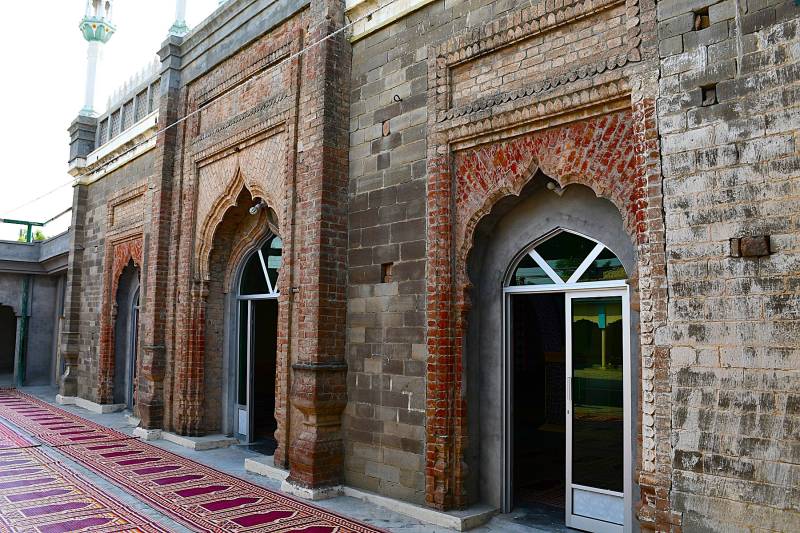
From the interviews with local historians, I learned that the mosque was built around 1938 or 1939 by Baba Muhammad Ji Amral, a notable figure in the village. Three brothers from the mason community, Mistri Yar Muhammad, Mistri Fateh Muhammad, and Mistri Hayyat Muhammad, were employed to construct the mosque. Stone for the mosque was brought from nearby Leti Nala. Qazi Misri Khan, also known as Abdul Majid of Leti village, informed me that camels were used to transport the stone from Leti Nala to the construction site. The father of Qazi Misri Khan, Auliya Khan Awan, also brought stone on his camel from Leti Nala, not only for Jamia Masjid Syedna Ameer Muawiya, but also for Jamia Masjid Abu Zar Ghaffari.
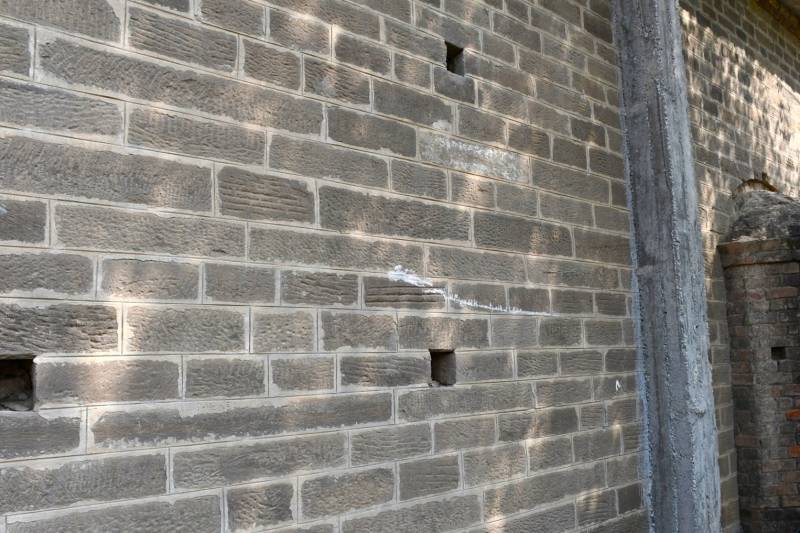
Later in 1992, the mosque underwent expansion and renovation. During the expansion and renovation, an eminent mason from Leti Haji Muhammad Hayyat was employed. I must clarify that there were two individuals named Hayyat, both from the Mistri community. Hayat Muhammad, who was popularly known as Baba Hayyat, was the brother of Mistri Yar Muhammad and Mistri Fateh Muhammad. The second was Haji Muhammad Hayyat, whose father migrated from Kalabagh and settled in Leti village in the early 1950s. The ancestors of Baba Hayyat Muhammad had been living in Leti for centuries. Haji Muhammad Hayyat was a young when the senior Hayyat Muhammad or Baba Hayyat was building the Jamia mosque Syedna Ameer Muawiya.
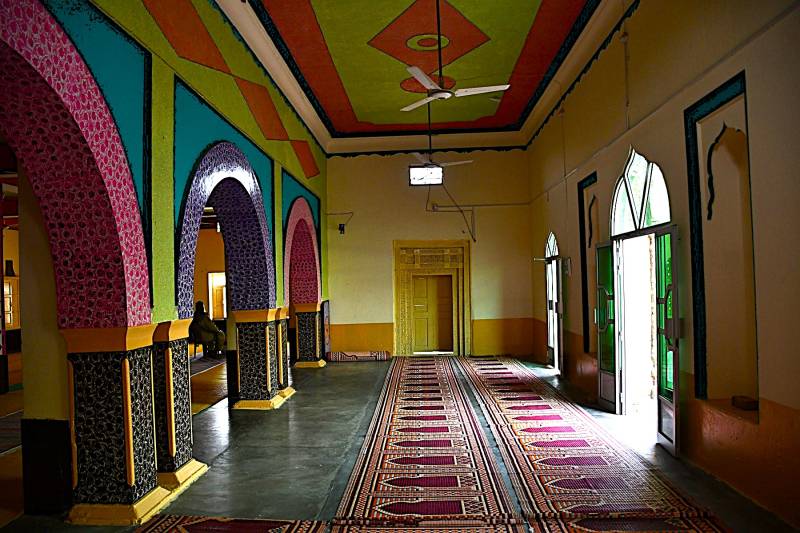
Haji Muhammad Hayyat was one of the most eminent masons of Talagang tehsil who was known for his skilled work. He was celebrated for his stone masonry and brickwork. It said that he also built several other mosques in various villages in Talagang. Apart from building new mosques, he was also employed to renovate and expand the old mosques in Talagang tehsil. He also renovated one of the most magnificent Jamia mosques, Singwala. I wrote an article about this mosque, which was published in The Friday Times-Naya Daur on 22 September 2022. Singwala is located about 18 km from Talagang town on the Talagang-Tamman road. The Jamia mosque of Singwala village, now known as Jamia Masjid Farooq-e-Azam, is noted for its impressive paintings and woodwork—a level of craftsmanship that is not seen in any other mosque in Talagang tehsil today. Sirajuddin, the renowned mason of Pachnand village in Lawa tehsil, constructed the Singwala Jamia mosque. His son also assisted him in dressing the stones that were brought from a nearby hill stream. Sirajuddin was a celebrated painter, woodcarver, and mason from Pachnand village.
When Haji Muhammad Hayyat renovated the Jamia Mosque of Syedna Ameer Muawiya, he replaced the original wooden carved ceiling with RCC (Reinforced Cement Concrete) ceiling. Furthermore, he replaced the stone used on all three arched entrances with burnt bricks. However, the stonework on either side of the arched entrances, which was first crafted and installed by Mistri Yar Muhammad, Mistri Fateh Muhammad, and Mistri Hayyat Muhammad, has been preserved.
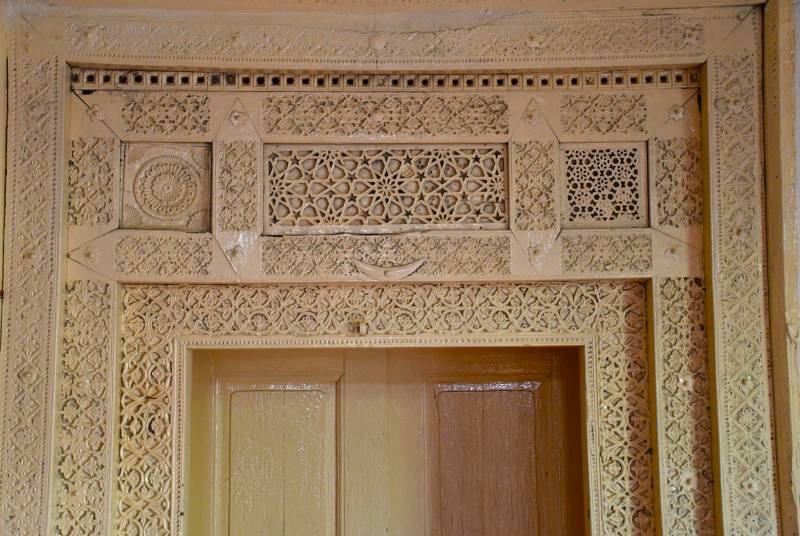
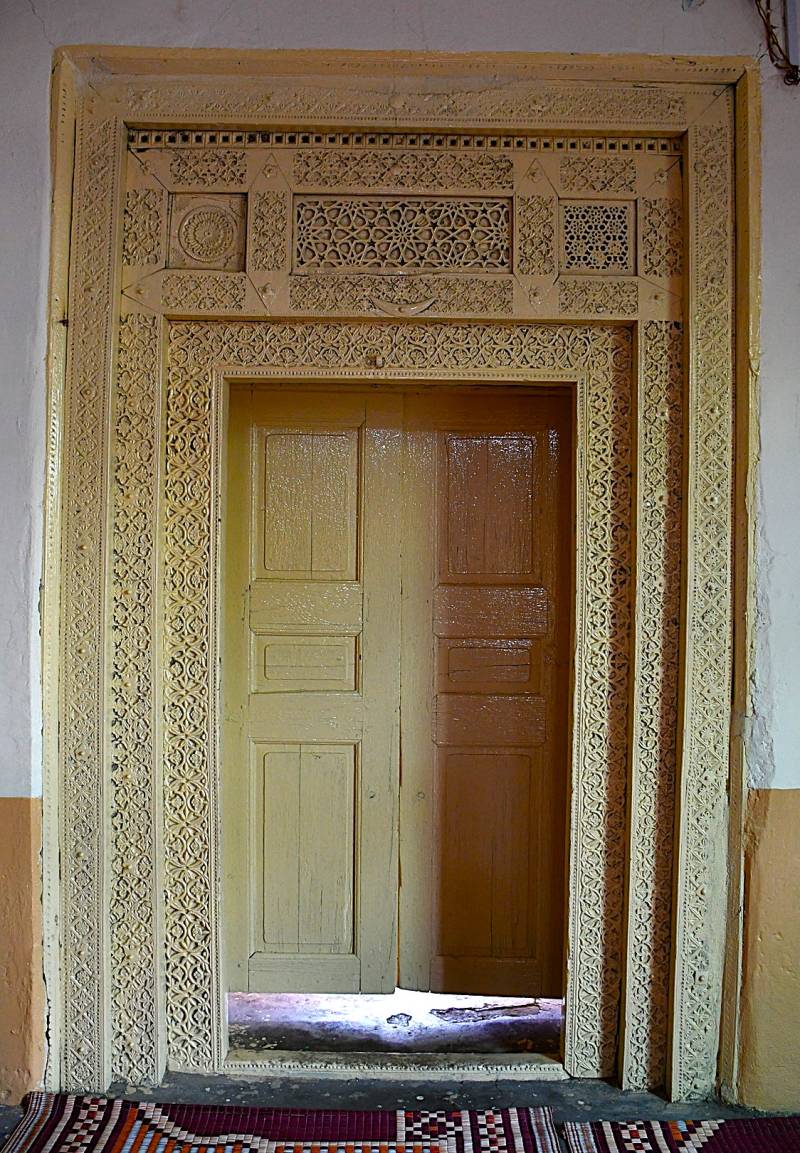
The mosque was also well-known for its beautiful wooden carvings. While most of the doors were tastefully engraved and have since been replaced, one remains: an exquisitely carved wooden door that was also engraved by Baba Hayat and his brothers. Such ornately carved wooden doors can be found in various mosques throughout the Talagang and Lawa tehsils.
Apart from the Jamia Mosque, Syedna Ameer Muawiya, another significant mosque in Leti village is the Jamia Masjid Abu Zar Ghaffari. This small mosque was originally built during the pre-partition era and was later renovated and expanded by Mistri Haji Muhammad Hayyat. It was constructed using stone sourced from the nearby Leti Nala. According to Qazi Misri Khan who served as the former Pesh Imam of the mosque, Mistri Haji Muhammad Hayyat was primarily responsible for its construction, with assistance from Mistri Ghulam Ameer. Mistri Ghulam Ameer, a well-known mason from Leti village, was also a relative of Mistri Haji Muhammad Hayyat.
Qazi Misri Khan shared a story about Qazi Roshan Din, who was the Pesh Imam of Jamia mosque Abu Zar Ghaffari during the colonial era. He recounted how Qazi Roshan Din's son, Ghulam Mohiuddin, committed a certain crime that the British police were aware of, leading them to come to arrest him in Leti village. The residents of Leti initially insisted to the British police that Ghulam Mohiuddin was not involved in any wrongdoing. However, when Qazi Roshan Din learned that the residents were trying to protect his son by lying, he decided to act honourably. He confessed to the police that his son had indeed committed the crime and accepted the punishment that followed.
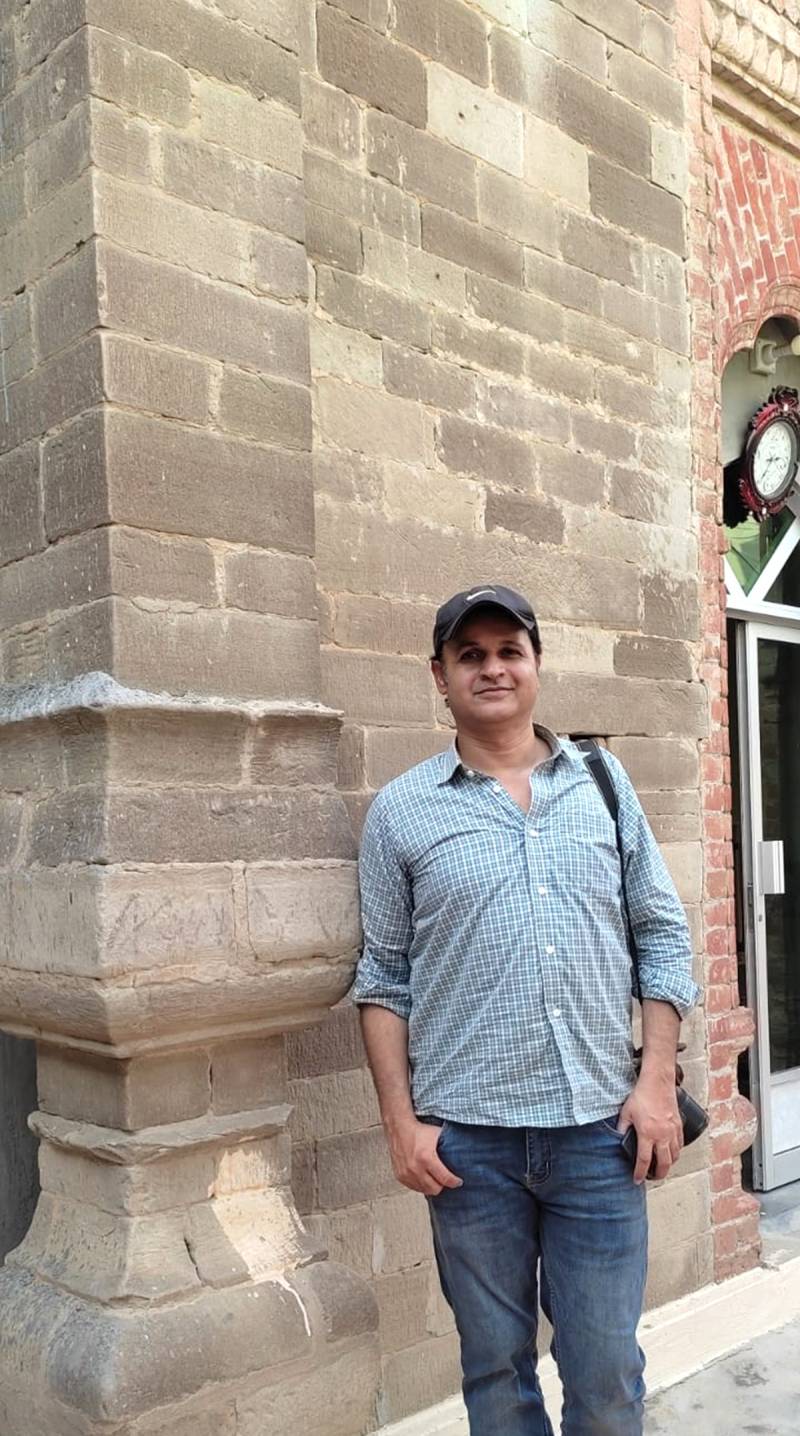
As a result of Qazi Roshan Din's honesty, Ghulam Mohiuddin was ultimately spared by the British police. The purpose of sharing this story is to highlight how religious leaders served as role models for the community in the village, embodying honesty, morality, and integrity.
The Jamia Abu Zar Ghaffari mosque has undergone renovations three times. The most recent renovation, led by Qazi Misri Khan, took place in 2022. The front and ceiling of the mosque were refurbished by Mistri Noor Muhammad, the son of Haji Muhammad Hayyat. Notably, the western wall of the mosque still showcases the original work by Mistri Haji Muhammad Hayyat. Haji Muhammad Hayyat passed away in 2009, leaving behind two sons, Noor Muhammad and Muhammad Asif, who are also well-known masons in Leti village.
Two other mosques, Piran Wali Masjid and Ghousia Masjid, were built by the Mistri community of Leti village. The Ghousia Mosque, which was constructed by the Arain community, is also known as Arainyon Wali Masjid.
Masons from Leti village, including Mistri Baba Hayyat, Mistri Yar Muhammad, Mistri Fateh Muhammad, Mistri Ghulam Ameer, and Mistri Haji Muhammad Hayyat, were renowned for their exceptional skills in stone masonry and wood carving. Their expertise is evident in several local mosques, which serve not only as places of worship but also as symbols of the village's historical legacy.
The masons of Leti village were more than just builders; they were artists and historians who made significant contributions to the social and spiritual fabric of the community. They preserved the richness of local culture and ensured that the region's architectural heritage would continue to thrive for future generations.