

India’s, or rather Modi’s, grave miscalculation in launching Operation Sindoor against Pakistan just keeps on backfiring and exposing his flawed strategic thinking in the most telling of ways.
The way the Indian Air Force was roundly beaten in just an hour on the night between 6 and 7 May, with 7 to 8 Indian jets shot down, showed the rest of the world that Pakistan’s formidable military was more than a match for the much larger Indian military.
In fact, the air battle that night, which also marked the first time the much-hyped Rafale was shot down by the Pakistan Air Force, showed that Pakistan was no pushover militarily when it came to India. It was actually far ahead, and India’s reputation as a strong military power lay in tatters.
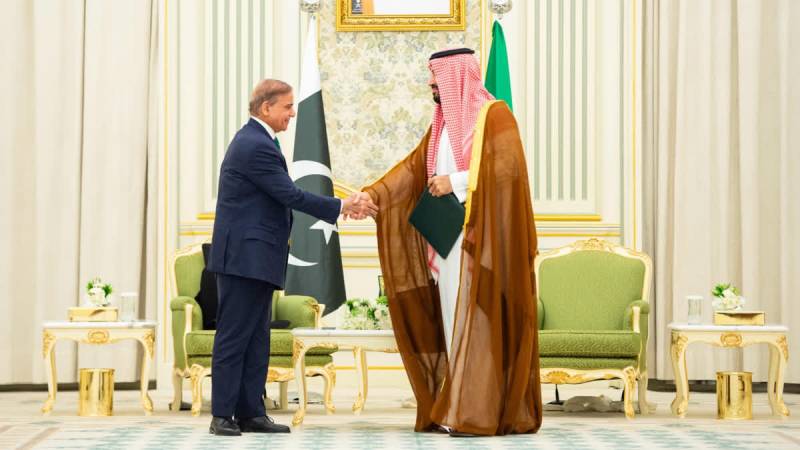
That set the stage for a slow but steady shift in geo-strategic ties, not only in South Asia but in the region as a whole. The seismic shift strongly elevated Pakistan’s status as a geostrategic and security ally, culminating in the landmark Strategic Mutual Defence Agreement signed between Pakistan and Saudi Arabia on 17 September.
This is a landmark achievement for Pakistan diplomatically because it brings Pakistan’s strong military prowess, proven just a few months ago in the conflict with India, right into the heart of the Middle East.
Pakistan will benefit from Saudi Arabia’s strong economic standing, investment appetite, and abundance of oil, while the latter will benefit from coming under Pakistan’s strategic defence umbrella. The use of the word “strategic” is intended by Pakistan to include its nuclear assets as well as missile capabilities, and it would be fair to assume that the title of the defence pact has been worded specifically to reflect that. This, in turn, means that Saudi Arabia will come under Pakistan’s nuclear umbrella, and it also sends a strong signal to Israel, given that it attacked Qatar just last week, which is at Saudi Arabia’s doorstep.
Pakistan does not need Saudi Arabia’s help to defend itself against any act of aggression, and that, in fact, it is quite the other way round
Furthermore, since China supplies Pakistan with military hardware, including missiles and fighter jets, and since these proved themselves very well in the recent conflict with India, Saudi Arabia will now be in a position to benefit, albeit indirectly, from the proven effectiveness of China’s military armaments.
Riyadh will also be able to withstand overtures from Washington to establish diplomatic ties with Israel and normalise relations with it, because of its strategic security pact with Pakistan.
And of course, there is India. The effect on India from this security alliance will be of considerable interest to many Pakistanis, and the effect is clearly negative. It is already being seen as a monumental setback to India diplomatically, even by several independent Indian analysts.
The reasoning is straightforward, and you do not have to be an expert analyst to figure out why.
As a direct consequence of this pact, the security guarantor of one of India’s largest suppliers of oil will be its archenemy. That is an embarrassing blow for Modi’s government and explains why, even several hours after the deal had been signed and made public, the Indian Government responded that it was “studying” the deal. After the May conflict, even India’s opposition parties and whatever segments of relatively independent media exist in the country were quick to point out that not a single country spoke up in favour of India, except Israel, which is seen as a pariah by much of the world. As for Pakistan, China and Turkey stood unambiguously by its side, and now there is Saudi Arabia.
And then there are the naysayers in Pakistan. They are mostly supporters of a particular political party whose leader has been in jail for over two years. Their reasoning is as flawed as it is laughable, and their scepticism centres on one question that they repeatedly asked on all possible (usually social media) forums: if India attacks Pakistan, will Saudi Arabia come to Pakistan’s rescue?
Clearly, the naysayers have not been following the events of the last few months, particularly since the beginning of May. If they had, they would know that Pakistan does not need Saudi Arabia’s help to defend itself against any act of aggression, and that, in fact, it is quite the other way round.
Of course, what Pakistan may well be in need of is increased trade and investment from Saudi Arabia in its economy, along with a steady supply of oil. These are precisely the things that the security pact will bring to the table for Pakistan to benefit from.