

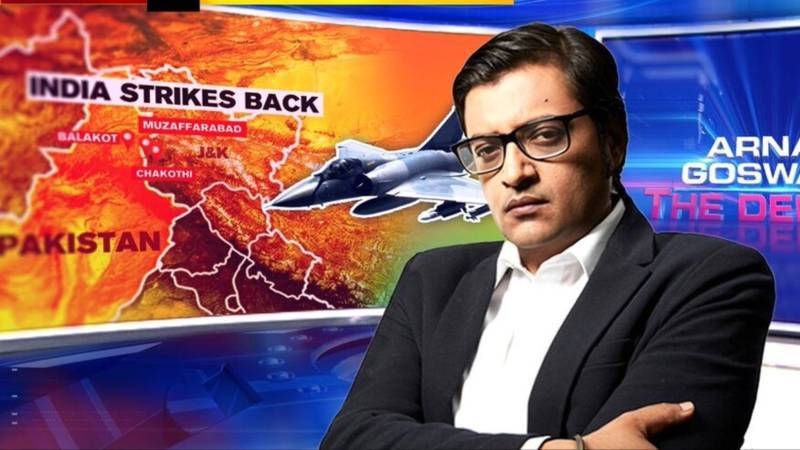
As I glanced across a story in the New York Times on May 17 about how the India media had perfected disinformation and misinformation to an art form, I noticed that while the report was about coverage in the media of the recent India-Pakistan conflict, and hence related to two countries, the article was written mainly by the Times’ reporters based out of India.
Prior to this, the New York Times ran a multimedia story comparing the damage that Pakistan and India had done to each other’s military installations during the conflict. In that story as well, while the report was about the India-Pakistan conflict, and hence was about literally two countries, the reporting was done by the New York Times’ reporting staff in India.
The reason I mention these two examples on reporting on the India-Pakistan conflict because it’s a very valid question – especially for me as a journalist – to ask the editors at the New York Times that why did they not have any of the reporting staff in Pakistan do these stories – or at least contribute from the Pakistan side since they were based in Pakistan and would be expected to have first-hand onground knowledge.
Delving deeper into this example of the New York Times’ recent coverage of the conflict, I went back to the story comparing the damage done by Pakistan and India to each other, and something about the report was blatantly obvious – and that was that while it should ‘before’ and ‘after’ satellite imagery in three instances in Pakistan, in the case of India it showed only one installation, and there was a single satellite photo and no ‘before’ and ‘after’ comparison.
They both need to understand that the best approach to this would be not to have civil servants and serving officers engage in this, but to invite those whose bread and butter is pushing narratives, managing perceptions, and disseminating information
How a publication as self-professedly venerable and prestigious as the New York Times could miss this obvious imbalance in the reporting on the India-Pakistan conflict was difficult to fathom.
There are numerous other examples as well. Take the case of Sky News’ main international news presenter Yalda Hakim, born in Afghanistan and moved to Australia as a child.
She invited a BJP spokesman, Jaiveer Shergill, on her show, and he went on to, as expected, defend India’s airstrikes on Pakistan, also comparing the latter to the Devil in the process. Later, some enterprising individuals did some digging and they found out, from Ms Hakim’s own social media handles, that she was good friends with Mr Shergill, something that she had not mentioned either to her audience or (more importantly) to her employers.
There have been numerous other such instances, such as the CNN news presenter based out of Abu Dhabi who wouldn’t let Pakistan’s Defence Minister Khawaja Asif speak a complete sentence without interrupting, and her tone was also out of line as a journalist speaking to an invited guest and the representative of a sovereign state.
There was also the interaction that Pakistan’s High Commission to the United Kingdom, Dr Muhammad Faisal, who came on BBC and was repeatedly interrupted and not allowed to speak a full sentence, until he was forced to vigorously interject and stop the interruption. Furthermore, his BBC interlocutor seemed to think that it is okay and within the bounds of international law for one country to attack another country without first ascertaining whether the other country was even involved in any kind of violent act against the initial country. Only after Dr Faisal asserted this point did the BBC interlocutor let him speak.
This information war, or call it a disinformation war, is going to continue and the gains that Pakistan has made in the air, on the battlefield, in the minds of military and airforce observers all across the world, and the major gain on the diplomatic front (with the Kashmir issue again being hyphenated with Pakistan-India issues) will come to nothing if there isn’t a deliberate and well-planned comprehensive effort by the government of Pakistan as well as the state to counter and fight this war.
The fact is that one cannot expect bureaucrats sitting in the Information Ministry or even officers deputed in ISPR to take the lead on this and achieve a successful result in countering and pushing back the Indian disinformation and propaganda factory, which is already churning out output to be disseminated worldwide.
Countering India’s narrative where it seeks to whitewash its humiliating defeat and instead turn perceptions 180 degrees around to make the world think that it was Pakistan and not India that ran to the US to get the opposing belligerent to agree to a ceasefire should be an important priority of the government as well as the military.
And they both need to understand that the best approach to this would be not to have civil servants and serving officers engage in this, but to invite those whose bread and butter is pushing narratives, managing perceptions, and disseminating information. For any effort to counter India’s vast disinformation and propaganda machine to be successful, it needs to be done by media organisations since much of what they do by way of their work and profession relates to narrative building and perception management.
India has already started on this and has an advantage since its general perception in the eyes of the rest of the world (prior to this conflict) is, by and large, more favourable than that of Pakistan.