

While viewing Bangladesh's election coverage on our TV channels recently, scrolling between different news programmes, I had to admit something: I was deeply pained. Anchors and elite guests serving as panellists were laughing. Some had some exposure to Bangladesh, some diplomatic or sponsored visits perhaps, and they were talking enthusiastically about the sights, sounds and Gen Z of Dhaka.
No one mentioned us, the unconditional lovers of Pakistan living in 4x4 settlements across Bangladesh. No one mentioned Major Akram Shaheed, Nishan-e-Haider recipient, hero of Hilli 1971, buried in Dinajpur. No one mentioned the many other unsung, anonymous soldiers who laid down their lives trying to prevent the fall of Pakistan, whose dead bodies could not even be brought home.
I understand I am emotional and unintelligent too. I admit I am an ordinary being, not an IR or DSS expert who can discuss human catastrophe with a straight, stoic face. But someone needs to say this and much more.
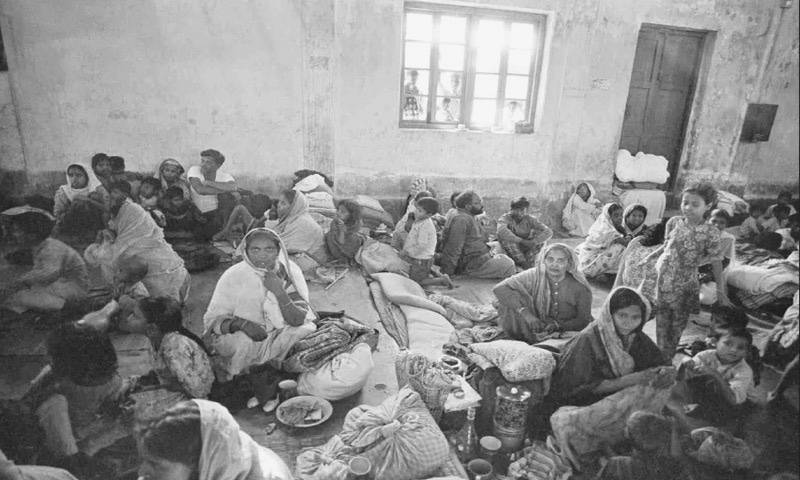
Imagine being abandoned in a 4x4 cage in 1971. Now imagine your children being born in that cage. Your grandchildren. Fifty-four years. Three generations raised in spaces never meant for human life, only temporary shelter. More than 300,000 people are living this reality across Bangladesh right now.
We are the inconvenient stakeholders of 1971, unwelcomed, unacknowledged, erased from the narratives that shaped two nations. Gen Z in Pakistan and Bangladesh did not live through 1971. But we, the Urdu-speaking non-Bengalis, often called Biharis, are still living inside it. Our confinement did not end with a peace treaty. It became our inheritance. Settlements with names like Geneva Camp, Mohammadpur, and Mirpur are not addresses. They are verdicts. They are where Pakistan and Bangladesh both decided we do not belong.
Most young people today learn history through social media clips, curated TV debates, or even AI tools like ChatGPT. They hear of mass atrocities against Bengalis — a chapter rightfully documented in scholarship and survivor testimonies. But here is what Gen Z must understand: if they ask these AI tools about the slaughter and disownment of Urdu-speaking non-Bengalis, they will not get a precise picture. Our stories were sealed. Our suffering was never fed into the global information machine.
After the blood-soaked "liberation war," large numbers of Urdu-speaking people, originally from Bihar in united India, found themselves hunted, dispossessed, and herded into settlements established by the International Committee of the Red Cross (ICRC)
If Gen Z wants to know what happened to us, they will have to dig deeper. They can start with Qutubuddin Aziz's book Blood and Tears, published in 1974, a meticulously documented account of the violence we endured. For more recent updates and analysis, they can read my books and monographs, all freely available on my websites.
They can visit my YouTube channel, where I have uploaded non-viral but archival vlogs: testimonies, eyewitness accounts, voices that were never amplified. These are not trending videos. They are historical records that mainstream platforms ignore. This is not self-promotion. This is documentation. This is evidence. This is where the sealed stories live.
We are not invited to mainstream TV channels. We are not represented at human rights conferences, minority rights forums, or feminist gatherings, even those with dedicated sessions on 1971.
Elites from civil and military institutions talk about that year in their own fancy vocabulary, polished academic terms, and diplomatic euphemisms. They exclude the human stories. Our human stories. The screams. The blood. The decades of waiting.
After the blood-soaked "liberation war," large numbers of Urdu-speaking people, originally from Bihar in united India, found themselves hunted, dispossessed, and herded into settlements established by the International Committee of the Red Cross (ICRC) for temporary protection from violence. Temporary became permanent. Protection became prison.
Current estimates place this community at between roughly 240,000 and 324,000 people, living in concentrated settlements across about 14 towns and cities. These 4x4 to 7x7 spaces exist in Dhaka (including Mohammadpur and Mirpur), Narayanganj (Adamjee Nagar), Saidpur, Rangpur, Chittagong, Dinajpur, Khulna (Khalishpur), Jessore, Mymensingh (Patgudam), Faridpur, Rajbari, Thakurgaon, Parbotipur, and Bogra. Some accounts refer to more than 60 settlements, with Geneva Camp in Dhaka among the largest and most infamous.
For decades, many residents lacked full legal citizenship. We existed in a legal void, neither Pakistani nor Bangladeshi, just displaced bodies waiting for someone to claim us. In 2003 and 2008, Bangladesh's Supreme Court finally recognised citizenship rights for some Urdu-speaking "camp" residents, especially those born after 1971. These rulings were major legal milestones, documented by UNHCR and minority rights researchers.
Gen Z deserves more than algorithmic blind spots and conference-room diplomacy that excludes the human beings it is supposedly about
But limited and conditional legal recognition alone does not return stolen decades. It does not restore confiscated homes, murdered family members, or childhoods lost to statelessness. Field reports show that many still face barriers to documentation, property rights, employment, and social integration.
Here is what Gen Z must understand about how narratives were constructed after 1971: global media and textbooks documented atrocities against Bengalis in East Pakistan. That documentation was necessary and remains important. But the suffering of the devastated patriotic Biharis was systematically omitted. Our chapter was torn out of the history books before they were printed.
What pains me further is that even today, I have noticed a new generation of Pakistani academics and historiographers, many with all the right surnames and connections, who are highlighting Bengali miseries while unfairly accusing Pakistan, yet they remain silent about our suffering. This selective historiography perpetuates the same erasure.
In West Pakistan, Bengalis were not subjected to organised mass reprisals. They returned safely to Bangladesh under repatriation arrangements. Some prominent Bengali figures even chose to remain in Pakistan, including Raja Tridiv Roy, Najma Sadeque, and Shabnam. They were welcomed, respected, integrated, looked after — not caged.
In East Pakistan, we faced a different fate. Non-Bengali civilians endured guerrilla warfare, targeted killings, looting, confiscation of homes, and sexual violence. We were collectively labelled as collaborators — men, women, children, elderly — all guilty by ethnicity. Our suffering, our deaths, our displacement and our genocide were rarely acknowledged internationally. Controlled narratives highlighted Bengali suffering while sealing ours away. Our slaughter, dispossession, and decades-long marginalisation were never widely disseminated. We were inconvenient to both national narratives.
Scholars in the UK and US, including research published in Quest: Multidisciplinary Journal and South Asian studies, have documented "retaliatory violence against non-Bengalis" in East Pakistan. These studies show that identity, violence, and belonging were utterly entangled in ways that defy naïve narratives. But these academic papers sit behind paywalls and university firewalls. They do not appear on your TikTok feed.
Gen Z should know this complexity. Loyalties did not align neatly along ethnic lines. Some Bengalis supported a united Pakistan. Biharis in East Pakistan had no weapons, no political power, no choice. Our civilians were caught in crossfire and targeted simply for who they were. These are documented facts, not political talking points. But they are facts you will have to deliberately search for, because they were never given algorithmic priority.
If Pakistan and Bangladesh speak today of a reset, of renewed diplomatic ties, of economic cooperation, Gen Z must ask: what happens to us? What happens to communities still defined by our 1971 status, still living in settlements, still stateless or semi-stateless? Some of us seek voluntary repatriation to Pakistan. Others seek full citizenship and dignity in Bangladesh. Both positions reflect ongoing human experience, not political abstractions.
Reconciliation is not about erasing history. It is about acknowledging its unresolved consequences. It is about naming the inconvenient stakeholders. Gen Z does not need sanitised memory or curated hashtags. They need the confidence to hold multiple truths at once. 1971 dismantled one nation and created two states, but it also produced a stateless population whose daily lives still carry that rupture forward, in 4x4 cages, generation after generation.
We deserve more than erasure. Gen Z deserves more than algorithmic blind spots and conference-room diplomacy that excludes the human beings it is supposedly about. Our stories exist. They are archived. They are waiting. But they will not auto-play. You will have to search for them. You will have to choose to listen.
Postscript
Gen Z is independent enough to decide its own queries. But if I were a Z today, I would have dared to ask:
- Who was Major Zia-ur-Rehman? Was he simply the hero portrayed in selective narratives, or also the figure who oversaw brutal actions against non-Bengali, mostly Bihari, civilians in East Pakistan?
- What will be done about hate content in Bangladesh's curriculum and war museums? How will young people be taught a full, honest history that acknowledges all victims, not just one narrative?
- What will Pakistan do about decades of silence? How will the country recognise the Urdu-speaking Biharis and others whose lives remain defined by statelessness, marginalisation, and prolonged neglect?
- These are questions that cut to the heart of unfinished history, moral responsibility, and reconciliation. They are difficult. They are uncomfortable. They expose the limits of elite discourse and diplomatic niceties. But they are necessary. And they are ours to ask.