

Every hour a container ship waits outside a port and adds to transport costs, delays exports, and weakens a country's competitiveness. Now, ports are no longer judged by the size of their terminals or the depth of their harbors, but by how quickly they move cargo, connect industries, and integrate supply chains. China understood this transformation early. Pakistan now has an opportunity to learn from it.
The World Bank Container Port Performance Index (CPPI) once again highlights China's maritime dominance. Ports such as Fuzhou, Dalian, Mawan, Chiwan, Ningbo, and Xiamen recently ranked top globally. This ranking reflects decades of Chinese investment in digitalization, multimodal connectivity, and industrial development. Meanwhile, Karachi Port ranked 69th, while Gwadar, despite its strategic location at the crossroads, remains significantly underutilized. The contrast is a reminder that strategic location alone is insufficient without sustained investment and institutional reform.
For many years, Pakistan has concentrated on infrastructure challenges. It focused on deeper berths, larger terminals, and additional storage facilities. China demonstrates that modern port competitiveness depends far less on concrete and cranes than on speed, coordination, and data-driven management. Efficient ports reduce logistics costs, strengthen supply chains, attract investment, and enhance export competitiveness. In other words, the real value of a port is not measured by the elegance and structure spectacles, but how efficiently it serves the economy.
China's leading ports have transformed port operations through integrated digital platforms. These platforms connect customs authorities, shipping lines, terminal operators, freight forwarders, and transport providers in real time. Cargo documentation is processed before the arrival of vessels. The efficiency enables faster berthing, shorter turnaround times, and seamless cargo movement. Automation, artificial intelligence, and smart logistics systems have further enhanced operational excellence. The lesson is simple: cargo moves faster only if the information flow is faster.
Pakistan has made important progress through the Pakistan Single Window (PSW) initiative, yet port operations remain fragmented. Information is still exchanged across multiple agencies. The coordination between ports, customs, railways, and logistics operators is weak. The next stage of reform should therefore focus on full integration of ports with PSW, terminal operators, shipping companies, inland transport providers, and regulatory agencies into a comprehensive digital Port Community System. Such reforms would reduce delays, lower trade costs, and improve Pakistan's overall logistics performance. Without seamless coordination, even the best infrastructure cannot deliver world-class performance.
Fuzhou Port provides perhaps the clearest illustration. Infrastructure alone does not create competitiveness. In 2025, the port handled more than 345 million tons of cargo and 3.85 million TEUs after sustained investment in modern terminals, rail connectivity, and digital infrastructure. More importantly, Fuzhou integrated its port with surrounding manufacturing clusters and an efficient rail-sea transport network. The result was not merely higher cargo volumes but the emergence of an industrial ecosystem where manufacturers, logistics providers, transport infrastructure, and ports reinforce one another. It is also inevitable for Pakistan to build the business around the ports because ports become successful when businesses grow around them, not simply because ships arrive there.
The lesson is clear that a port can attract ships only when the economy behind it is strong enough to generate trade.
Other Chinese ports followed similar principles through different approaches. Yangshan has become a global leader in automated container handling. Qingdao has pioneered 5G-enabled smart logistics. Ningbo-Zhoushan has developed extensive sea-rail intermodal connectivity. Dalian, a modern port city in the southern tip of China, has successfully linked port development with advanced manufacturing and regional trade. Although each port adopted a different strategy, all share four common characteristics: digitalization, seamless multimodal connectivity, close integration with industry, and continuous modernization. China's ports show that innovation and integration drive competitiveness
Pakistan's maritime sector presents a different reality. The container dwell time is significantly higher than several regional competitors. These delays increase logistics costs for exporters and importers alike. Equally important, Pakistan's institutional landscape remains fragmented, with limited coordination among port authorities, customs, transport agencies, and railway operators. Without integrated governance, even substantial infrastructure investments cannot deliver world-class efficiency.
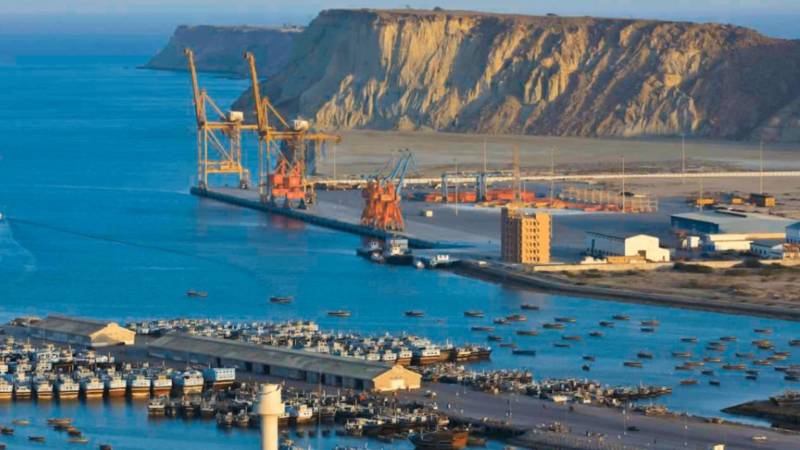
Gwadar presents an even more important lesson. While considerable investment has created modern port infrastructure, cargo volumes remain modest because ports cannot generate trade on their own. They require productive hinterlands, competitive industries, reliable transport connections, and sustained private investment. Delays in industrial development, limited manufacturing activity, and weak hinterland connectivity have constrained Gwadar's transformation into the regional gateway. The lesson is clear that a port can attract ships only when the economy behind it is strong enough to generate trade.
The lesson is clear. Port development must be synchronized with industrial policy. Special Economic Zones under CPEC should evolve into export-oriented manufacturing clusters. Textiles, engineering goods, food processing, electronics assembly, renewable energy equipment, and mineral processing should be focused. As production expands, ports would naturally experience higher export volumes, better container utilization, and stronger economies of scale. This is the model that Pakistan should adapt to its own circumstances.
So, where should Pakistan begin? The answer is neither complicated nor unrealistic. In the short term, port operations should be fully integrated through the Pakistan Single Window and a national Port Community System. Over the medium term, investment should focus on rail freight, inland logistics hubs, and multimodal transport. In the long run, Karachi, Port Qasim, and Gwadar must support export-oriented industries rather than function only as cargo-handling facilities. Ports should become engines of production, not merely points of transit.
China's experience offers Pakistan more than a success story. It offers a practical roadmap. Strong ports are built on strong institutions, efficient logistics, modern technology, and competitive industries. Pakistan already has a strategic location. What it now needs is better coordination, faster reforms, and an export-driven vision. If Karachi, Port Qasim, and Gwadar become part of an integrated industrial and logistics system, they can do far more than move containers. They can move Pakistan's economy forward. The future of Pakistan's maritime sector will not be decided by the size of its ports, but by the strength of the economy they help build.