

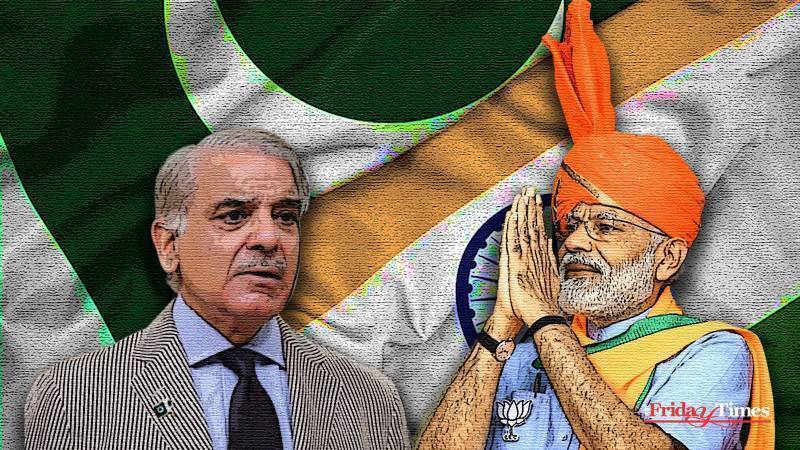
The Indian government's impulsive decisions, which have significantly shifted the balance in this region in particular and overall in general, are baffling. This behavior highlights the immaturity of the Indian government, as it indirectly accuses Pakistan without providing any evidence and attacks Pakistan unprovoked to start a war.
Conversely, Pakistan has consistently alleged Indian involvement in terrorist activities in Balochistan. Pakistan asserts that it has documentary proof of these actions, emphasising that Kulbhushan Jadhav, who confessed to being an Indian Navy operative working for Indian intelligence, is a living testament to these claims. Despite this stance, Pakistan has refrained from making hasty decisions and has sought international avenues and arbitration to resolve the issue. This demonstrates Pakistan's desire to live peacefully with its neighbor and resolve all issues amicably, including the Kashmir conflict, which has been a flashpoint since 1947.
International powers, including the United States, had to quickly intervene to save India from further embarrassment and to protect their own reputation, as they had placed all their eggs in one basket—India.
Given the rapidly changing global order, now is an opportune time to come to the table and resolve all issues. India should be urged to present credible evidence of Pakistan's involvement. If such evidence is accepted by the international community, Pakistan should take appropriate action, as it has been combating terrorism for decades. It is time to shut the door on terror, horror, and war—none of which any country can truly win, as history has never proven them to be solutions to any conflict or dispute.
Such demonstrations of unity not only bolster internal confidence but also send a clear signal to the international community that Pakistan, beyond its political divisions, remains unwavering in protecting its sovereignty and interests
The ongoing conflict between India and Pakistan not only affects the two nations but also has broader implications for regional stability and global peace. Both countries must prioritise diplomatic efforts and constructive dialogue to address their differences. By fostering mutual understanding and cooperation, they can pave the way for a more secure and prosperous future for their citizens and contribute to a more stable international community.
Simply repeating the mantra that "terrorism and talks cannot go together" does not suffice if there is no evidence to corroborate the claim. If even the international media remains unconvinced and the government fails to protect its own citizens—while terrorists continue to target them—then this issue of terror will remain active and unresolved.
When both countries come to the table, they should also consider establishing a joint commission that not only works to mitigate terror activities on both sides of the border but also investigates any terror-related violence after the fact. This would instill a greater sense of confidence among the people of both nations.
Indian civil society once upheld a balanced and impartial stance, demonstrating rationality and fairness in its approach. It has played a crucial role since 1947, acting as a safeguard against both religious extremism and government overreach. However, one may wonder what has led to its transformation over time, as its once-significant role in maintaining societal and political equilibrium appears to have shifted.
In the face of this crisis, two positive developments have emerged in as many days. Imran Khan stated that "we are one nation" in response to Indian aggression and, as reported today, has agreed to accept Shehbaz’s offer for talks. The second development came when Mr. Moeed Yusuf, Pakistan's former National Security Advisor—appointed by PTI—gave a notably nonpartisan interview with Indian journalist Karan Thapar. His remarks sounded less like those of a PTI-era pick and more like those of a government spokesperson addressing the escalating India-Pakistan crisis.
This is the statesmanship we need from our leaders, regardless of their stark internal differences. One recalls when Bilawal Bhutto Zardari, the then foreign minister, made an official visit to the United States and supported former Prime Minister Imran Khan’s visit to Moscow on the very same day Russia invaded Ukraine—another example of statesmanship.
This is an especially promising sign for Pakistan and its political landscape, emerging from within the PTI ranks. Historically, whenever foreign aggression looms over the nation, Pakistan stands united. However, the endorsement of a unified stance from the political sphere further reinforces a strong collective resolve and national solidarity.
Such demonstrations of unity not only bolster internal confidence but also send a clear signal to the international community that Pakistan, beyond its political divisions, remains unwavering in protecting its sovereignty and interests. This solidarity strengthens the nation's position on the global stage.