

Pakistan’s greatest challenge today is not defending the idea of the state, but completing the work of building one. Every country carries a story about why it was created. Pakistan’s story began with a powerful idea: that Muslims of British India constituted a distinct political community whose cultural, religious, and political interests required protection through a separate homeland.
That idea shaped the creation of Pakistan and remains central to how many Pakistanis understand their national identity. But nearly eight decades later, the question facing the country is no longer only why Pakistan was created. The more difficult question is what kind of state it wants to become.
Pakistan’s challenge is not choosing between its history and modernity. It is finding a way to preserve a sense of national identity while building a state based on equal citizenship, constitutional government, tolerance, and institutional strength. Many countries struggle with this balance, but Pakistan’s experience has been particularly complex because questions of identity, security, democracy, and economic development have always been deeply connected.
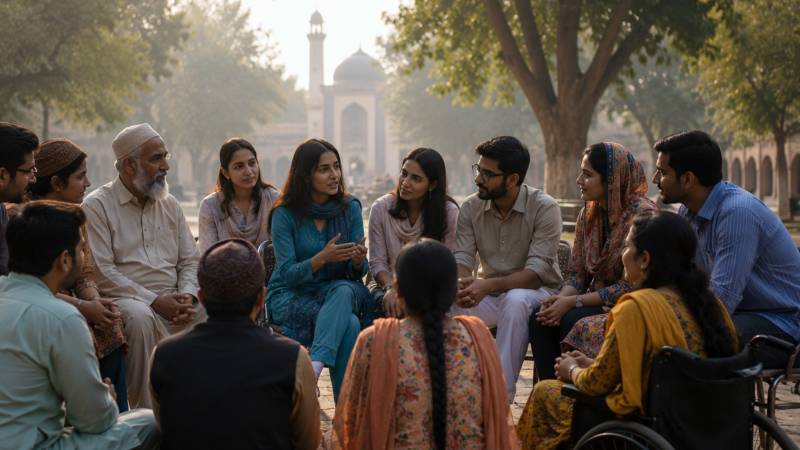
From its earliest years, Pakistan has wrestled with the challenge of managing diversity. It is a country of different languages, cultures, ethnicities, and regional identities. A strong national identity cannot be built by ignoring these differences or demanding conformity. Successful states create unity not by eliminating diversity, but by ensuring that different communities feel represented and invested in a shared future.
The Pakistan of the future will not be built only through stronger defenses or louder political battles. It will be built through trust: trust that institutions serve citizens, that diversity is respected, that rights are protected, and that national progress belongs to everyone.
This is why federalism is more than a constitutional arrangement; it is a foundation of national cohesion. Pakistan’s provinces have different histories, resources, and political aspirations. A healthy federation does not view these differences as threats. Instead, it creates institutions that allow diversity to coexist with a common national purpose.
When citizens believe their voices matter and their regions are respected, diversity becomes a source of strength. When communities feel excluded or unheard, differences can become sources of political tension and instability. The challenge is not creating uniformity, but creating belonging. Pakistan’s security concerns are also real. Its geography, regional rivalries, terrorism challenges, and difficult neighborhood have ensured that national defense remains a major priority. The Pakistan Army has played a central role in protecting the country’s territorial integrity, and many citizens continue to view it as an important national institution.
The challenge, however, is not whether Pakistan needs a capable security institution. It does. The challenge is ensuring that all national institutions operate within a constitutional framework that strengthens, rather than weakens, the state. History shows that security alone cannot create a successful nation. Military capability can protect borders, but only strong civilian institutions, accountable governance, rule of law, and economic opportunity can build lasting national confidence. The strongest states are those where institutions complement each other and where legitimacy comes from both security and public trust.
Pakistan’s economic journey reflects a similar challenge. For decades, the country has moved through repeated cycles of external assistance, debt management, and short-term stabilization. These measures may provide temporary relief, but they cannot replace the deeper reforms needed to create a productive and self-reliant economy.
National power in the 21st century is built not only through military strength, but through human development, technological capability, exports, education, and innovation. Countries that succeed economically are those that create conditions where businesses can grow, talent can flourish, and citizens can participate in a productive economy. Pakistan must move beyond a cycle of crisis management toward long-term economic transformation. Social protection remains essential, but redistribution cannot permanently substitute for wealth creation. A country must first expand its economic capacity before it can sustainably provide opportunities and security for its people.
This also requires rethinking the relationship between the state and society. Citizens do not judge a state only by its ability to defend territory; they judge it by whether it provides justice, opportunity, dignity, and a sense of ownership. National strength comes when people believe institutions work for them rather than above them. Ultimately, Pakistan’s unfinished task is not simply political—it is institutional. The country must answer difficult questions about the relationship between the state and citizens, the center and provinces, security and liberty, identity and pluralism.
The Pakistan of the future will not be built only through stronger defenses or louder political battles. It will be built through trust: trust that institutions serve citizens, that diversity is respected, that rights are protected, and that national progress belongs to everyone. The true measure of Pakistan’s success will not only be whether it survives challenges. It will be whether it builds a republic where its people believe they have a meaningful place within it.