

“Wonderful fields of flowers were enjoyed. In some places sheets of yellow flowers bloomed in plots; in others, sheets of red (arghwani) flowers in plots, in some red and yellow bloomed together. We sat on a mound near the camp to enjoy the site. There were flowers on all sides of the mound, yellow here, red there, as if arranged regularly to form a sextuple. On two sides there were fewer flowers but as far as the eye reached, flowers were in bloom. In spring near Parashawar the fields of flowers are very beautiful indeed.”
(Babur in the Baburnama)
“There's no city like Peshawar, for it hums with the life of the Frontier and the allure of the unknown beyond.”
(Rudyard Kipling in The Man Who Would Be King)
"Peshawar has always been more than a city; it is a gateway to the mountains, a melting pot of civilisations, and the pulse of the Frontier."
(Olaf Caroe, British administrator and historian)
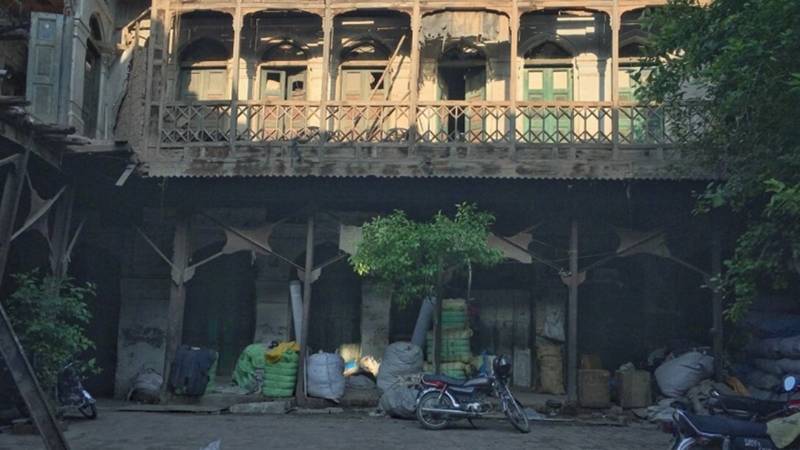
“Peshawar is not about the clatter of armoury, the tramp of soldiers’ feet and the raging din of battle; it is not of a city on fire and the cries of the dying. Peshawar is about murmured prayer, of the ringing of the temple bell and the call from the minaret, the clang of the jaras – the bell around the camel’s neck in the caravan – and the soft plop of the animals’ feet on unpaved streets, it is of the vendor crying his wares in streets where rows of shops run on either side and which are crowded with buyers and sellers. Peshawar is about long distance travellers, of caravanserais and story-tellers.”
Peshawar (Hindko: Peshor; Pashto: Pekhawar), being the oldest living city of Pakistan, boasts a rich and varied history in terms of both governance and nomenclature. It has been known by several names over time. From being called “Frontier Town” (due to its location near the Khyber Pass) to “Pesh Awardan” (first from the side of Kabul), its current name Peshawar is attributed to Emperor Akbar.
Abul Fazl mentions four variations of the name of the former western capital of Gandhara valley: Parshpur, Parashawar, Peshawar and Pashawar. Babur consistently referred to it as Parashawar, while Abul Fida called it Farshabur. Alberuni, on the other hand, used Parshawar and Purshur. In the 7th century, the Chinese pilgrim Xuanzang (Hiuen Tsang) wrote it as Po-lu-sha-pu-lo, while a 5th-century traveller recorded it as Fo-lu-sha.
According to Hindu tradition, the city was named Parashapur, after the Hindu king Purrus (or Purrush). Persians, however, claim it means “Lord of Parsa.” The oldest known record, dated to the Kanishka era, spells it as Posha Pura, derived from Pushpa (meaning “flower”) and thus translated as “City of Flowers.” Some historians suggest that the city’s naming history reflects a cultural crossroads where different civilisations left their interpretations, symbolising the convergence of traditions, beliefs, and languages. A fraction of historians has referred to the city as Puruṣapura which is a Sanskrit term translating to ‘‘City of Men.’’
From its nomenclature to its governance, Peshawar’s history is a tapestry of diverse cultures, rulers and civilisations that left their indelible marks on the city. During the Vedic period, Peshawar emerged as a prominent city to the west of Indus region, home to a thriving Indo-Aryan civilisation influenced by Vedic Hinduism. Over centuries, it evolved through numerous phases of conquest and reconstruction, each adding layers to its rich heritage.
The Durrani Empire elevated Peshawar to the status of a winter capital. This was the first time when city came under a Pashtun kingdom with a ruling tenure of more than fifty years, flourishing as a cultural and economic centre
The city’s significance was recognised early on, becoming a focal point for trade, religion, and culture. The arrival of Alexander the Great in 327 BC brought Hellenistic influences that lingered long after his departure. This was followed by its incorporation into the Mauryan Empire in 303 BC, where Ashoka’s patronage transformed it into a Buddhist hub. Later, under the Kushan Empire, Peshawar became a capital city of monumental importance. Kanishka the Great, known for his patronage of Buddhism, established landmarks such as the Kanishka Stupa and Mahavihara, cementing the city’s place as a centre of learning and spirituality.
As time passed, the city faced waves of destruction and revival. The Sasanian Empire and later the White Huns left their marks, the latter significantly altering its Buddhist heritage. Despite this, Peshawar persevered, transitioning into the hands of the Hindu Shahis, who presided over a period of cultural enrichment. However, the city’s fate changed in 1001 AD when Mahmud of Ghazni defeated the last Shahi king, bringing Islam to the forefront of its identity.
Peshawar’s location made it a valuable prize for every empire that sought to control the region. The Ghaznavid and Ghurid empires further cemented its role as a key Islamic and trade centre, while the Dilazak Pashtuns were the first Pashtuns to contact the city, whose identity became popular in the city eight centuries later. During the Mughal era, Peshawar reached new heights of prosperity. Babur captured the city in 1526, and Akbar’s renaming of it to Peshawar underscored its importance as a frontier town. Positioned strategically on the Grand Trunk Road, it became a bustling hub for trade and culture. Subsequently, the Persian Afsharid dynasty conquered Peshawar under Nader’s Shah’s command. The Persian culture of the Mughal and Afsharid dynasties has left a long lasting impact on the walled city, with area names such as Kocha Risaldar.
The Durrani Empire, established by Ahmad Shah Durrani in 1747, elevated Peshawar to the status of a winter capital. This was the first time when city came under a Pashtun kingdom with a ruling tenure of more than fifty years, flourishing as a cultural and economic centre during this time. However, its fortunes fluctuated with the arrival of the Sikh Empire in 1823. Heavy taxation and strict military oversight marked this period until the British annexed the city in 1849 after the Second Anglo-Sikh War.
Under British rule, Peshawar became a key frontier outpost, playing a significant role in the colonial administration of the Indian subcontinent. In 1901, political developments shifted its administrative affiliation from Punjab to the newly established North-West Frontier Province (NWFP) buffering British India from the Barakzai Emirate of Afghanistan. The city’s strategic location along the Khyber Pass gave it geopolitical importance, making it not only a garrison town but also a site of cultural blending, as influences from British, Central Asian, Kashmiri and Afghan traditions intermingled. The cultural transformation is evidently visible in the transition of the lingua franca of the walled city from Sanskrit to Lahnda/Peshori Hindko, Persian (non-Dari dialect) and Pashto. In 1947, Peshawar became part of the newly formed state of Pakistan, continuing its legacy as a vital cultural and economic hub.
Today, the city stands as a living monument to its past—a crossroads where ancient history and modernity coexist. Its narrow alleys echo the footsteps of the empires that ruled it, while its bustling bazaars reflect the vibrant spirit of its people. Peshawar’s story is one of resilience, transformation, and an enduring connection to the civilisations that have shaped it, from Parashawar to Peshawar.