

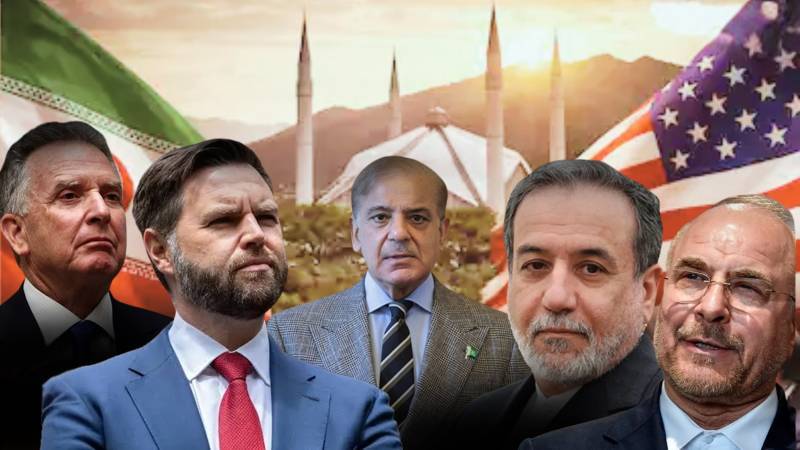
The fact that no agreement emerged after just one day of direct talks between Iran and the United States—their first high-level face-to-face engagement since 1979—should still be viewed as a meaningful diplomatic success for Pakistan, not a setback. In international relations, particularly when dealing with adversaries separated by decades of mistrust, the first breakthrough is not always a signed deal; sometimes it is simply getting both sides to sit down in the same room and begin speaking again.
A closer look at what actually occurred in Islamabad makes this clearer. Pakistan succeeded in bringing senior officials from Washington and Tehran together for direct, face-to-face discussions. That alone is a significant diplomatic achievement. The United States and Iran have not maintained normal diplomatic relations for decades, and even indirect communication has often been limited, fragmented, or conducted through intermediaries. To facilitate a setting where both sides agreed to engage directly at senior levels reflects a considerable degree of trust in Pakistan’s neutrality, security arrangements, and diplomatic credibility.
Equally important is the public recognition Pakistan received from both sides for its role in enabling the talks. In diplomacy, acknowledgements of this kind are not routine courtesies; they are signals of confidence. When adversaries both credit a third party for facilitating dialogue, it indicates that the host has managed to remain sufficiently balanced and credible to avoid being perceived as biased.
Effusive praise directed toward Pakistan’s leadership, including Prime Minister Shehbaz Sharif and Army Chief Field Marshal Asim Munir, further reinforced this perception. Senior American figures, including US Vice President JD Vance, were among those noted as acknowledging Pakistan’s efforts to bring the two sides closer to a possible understanding. That level of recognition matters because it reflects Pakistan’s emergence, at least in this instance, as a serious facilitator rather than a passive observer.
It is also significant that multiple other countries expressed appreciation for Pakistan’s role. In a polarised international environment, where diplomatic initiatives are often viewed through competing geopolitical lenses, broad-based acknowledgement is not easy to secure. Yet Pakistan appears to have earned goodwill from a range of states that see value in de-escalation between Washington and Tehran. This broader approval strengthens Islamabad’s diplomatic standing beyond the immediate context of the talks themselves.
Pakistan’s involvement in the Islamabad talks has strengthened its image as a capable and credible diplomatic intermediary
Another important dimension is that the Islamabad discussions were not merely symbolic or procedural. They appeared to take on a more engaged, trilateral character, with Pakistan playing an active role throughout the process. Rather than acting as a neutral bystander simply hosting delegations, Islamabad was visibly involved in shaping the flow of discussions and maintaining momentum between the two sides. In diplomatic terms, this distinction is crucial. A mediator can facilitate contact, but an active facilitator can influence tone, structure, and continuity. That Pakistan’s role was perceived in this more substantive way underscores the seriousness with which both parties treated its involvement.
At the same time, Pakistan managed to maintain the confidence of key strategic partners, including China and Saudi Arabia, while preserving workable relations with both Iran and the United States. This balancing act is not trivial. Each of these actors has distinct and sometimes competing strategic interests, and navigating those relationships without alienation requires careful diplomatic calibration. Pakistan’s ability to remain acceptable to all sides, even in the midst of such sensitive negotiations, reflects a degree of strategic positioning that is often underestimated in external analyses.
Naturally, it would have been preferable for the talks to produce a concrete agreement. No one disputes that a diplomatic breakthrough between the United States and Iran would have been the best possible outcome for regional stability and for Pakistan itself. The country’s economic situation remains fragile, with significant dependence on imported energy and financial inflows from the Gulf. In this context, stability in the broader Middle East is not just a foreign policy preference but an economic necessity.
Pakistan’s reliance on Gulf partnerships is particularly important here. Energy imports and financial support from regional partners have long played a stabilising role in managing external account pressures. Arrangements involving states such as Saudi Arabia and Qatar have provided crucial breathing space at key moments, including multi-billion-dollar financial cushions that have helped Pakistan meet external payment obligations. Any deterioration in regional stability would therefore have direct and immediate consequences for Islamabad’s economic outlook.
The security implications are equally serious. A wider escalation involving Iran and the United States could quickly draw in regional powers, including Saudi Arabia, placing Pakistan in an extremely difficult position. Given its defence ties and longstanding strategic relationship with the Kingdom, Islamabad could face pressure to honour existing commitments in the event of a broader conflict. Pakistan has already contributed to Saudi Arabia’s security framework through the deployment of military personnel and assets under bilateral arrangements, highlighting the depth of that relationship. Any regional escalation would therefore not only be a diplomatic challenge but also a potential security dilemma with domestic implications.
However, acknowledging that a full agreement would have been the ideal outcome is not the same as concluding that the talks themselves were a failure. That interpretation conflates outcome with process. In diplomacy, especially in conflicts as entrenched as that between Washington and Tehran, initial rounds of dialogue are rarely expected to deliver final resolutions. Instead, they serve to reopen channels of communication, clarify positions, and establish a foundation for future negotiation.
From this perspective, Pakistan’s role takes on added importance. By enabling direct engagement after nearly five decades of estrangement, Islamabad helped restore a diplomatic channel that had long been dormant. Even without an immediate agreement, this act of facilitation carries intrinsic value. It reduces uncertainty, lowers the risk of miscalculation, and creates a framework within which future progress becomes more likely.
Ultimately, Pakistan’s involvement in the Islamabad talks has strengthened its image as a capable and credible diplomatic intermediary. It has demonstrated an ability to engage multiple stakeholders, manage complex geopolitical sensitivities, and facilitate dialogue between adversaries with a long history of hostility.
That in itself is a significant outcome. While critics may focus on the absence of an immediate deal, such a view overlooks the incremental nature of diplomacy. Breakthroughs are often preceded by quiet, unglamorous steps that make dialogue possible in the first place. On that front, Pakistan has delivered a result that is difficult to dismiss and even harder to replicate.