

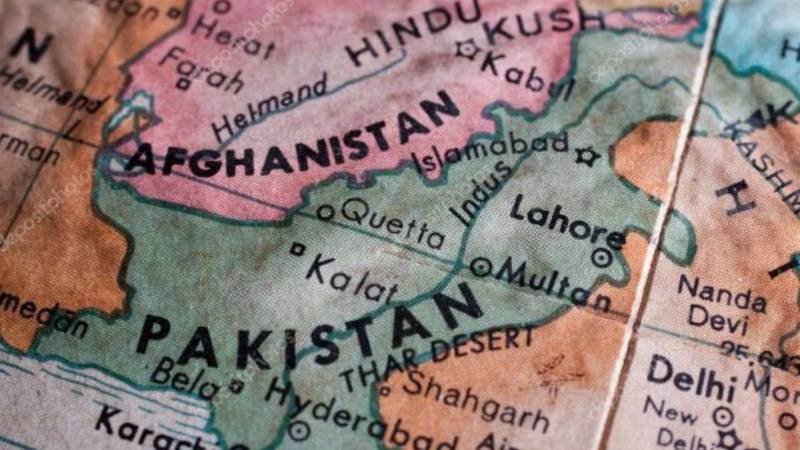
After a month of stalled negotiations between the Afghan Taliban and Pakistan, tensions have reached a breaking point. Islamabad has warned the Afghan Taliban that if they continue supporting and sheltering Fitna al-Khawarij (Tehrik-i-Taliban Pakistan, TTP) and Fitna al-Hindustan (Balochistan Liberation Army, BLA), they will be treated as enemies of the state. The Foreign Office of Pakistan issued a statement stating: “TTP/FaK [Fitna al-Khawarij] and BLA/FaH [Fitna al-Hindustan] are declared enemies of the State of Pakistan and its people. Anyone harbouring, abetting, or financing them is not considered a friend or well-wisher of Pakistan and its people.”
Despite escalating tensions, the Afghan Taliban appear unwilling to refrain from supporting the TTP, BLA, and other such militant or terrorist elements. Such unwavering support exposes the duplicity of the Afghan Taliban, whose behaviour stands in stark contrast to international norms and their own stated commitments. Under the February 2020 Doha Agreement with the United States, the Taliban pledged that Afghan soil would not be used as a base by terrorists and militants disrupting regional and global peace. Despite these assurances, they have repeatedly failed to honour this promise since their return to power in August 2021.
There are confirmed reports that groups such as the TTP and al-Qaeda have not only maintained their networks but, in some regions, expanded their operational capabilities and influence under the permissive environment provided by the Afghan Taliban. A particularly telling moment came in July 2022, when al-Qaeda’s leader, Ayman al-Zawahiri, was killed in a drone strike in central Kabul. His presence in the Afghan capital was a stark contradiction of the Taliban’s assurances under the Doha Agreement. The international community was not only shocked but also condemned the incident as a violation of the peace deal and a betrayal of international trust by the Taliban.
In July 2024, the UN sanctions monitoring team released a report categorically stating that the TTP continued to enjoy support from the Afghan Taliban and was conducting terrorist operations into Pakistan, which were primarily planned and executed from Afghan territory. The report claimed that the Afghan Taliban had proved either unable or unwilling to manage the threat posed by the TTP, whose terrorist activities had increased inside Pakistan. This fact was reiterated in February 2025 by the United Nations Analytical Support and Sanctions Monitoring Team, which noted the presence of training camps of Jamaat Ansarullah (JA) alongside those of the TTP.
The Afghan Taliban stand at a crossroads. They can either evolve into a responsible governing authority that honours international commitments and fosters regional stability, or remain mired in the ideological rigidity and militant patronage that define pariah regimes
It is not only Pakistan, but also other regional states, that have warned the Taliban about the presence of terrorist elements inside Afghanistan. For instance, China has repeatedly urged the Afghan Taliban to crack down on the East Turkistan Islamic Movement (ETIM). In May 2023, Chinese Foreign Minister Qin Gang met with Taliban Acting Foreign Minister Amir Khan Muttaqi, emphasising the need for Afghanistan to fulfil its commitment to combating terrorism and ensuring the safety of Chinese personnel and institutions.
The Afghan Taliban's credibility in offering counterterrorism assurances to other states, particularly Pakistan, has been severely undermined by their failure to prevent the TTP from using Afghan soil to launch attacks. Despite repeated promises to curb militant activities within their borders, the Taliban regime has either been unwilling or unable to restrain the TTP, whose operations continue to destabilise Pakistan’s western regions and strain bilateral relations. This ongoing failure highlights the widening gap between the Taliban’s diplomatic rhetoric and their actions on the ground.
The situation has further eroded confidence in the Taliban’s counterterrorism measures. Afghanistan, under their control, reportedly hosts around 20 transnational terrorist organisations. These groups not only threaten regional stability but also cast serious doubt on the Taliban’s willingness to fulfil international obligations regarding global security.
Pakistan’s patience is wearing thin, and rightly so. The Afghan Taliban’s duplicity – professing commitments to peace while supporting cross-border militancy – has reached a point of strategic reckoning. The cost of their inaction is too high: every attack orchestrated from Afghan soil deepens regional instability and undermines the fragile trust necessary for coexistence with Islamabad. Pakistan’s latest warning to treat the Taliban as enemies if they persist in harbouring the TTP and BLA marks a decisive policy shift – from cautious engagement to conditional deterrence. It signals that Pakistan’s national security imperatives cannot be held hostage to the Taliban’s ambiguous allegiances or internal power calculations.
The Afghan Taliban stand at a crossroads. They can either evolve into a responsible governing authority that honours international commitments and fosters regional stability, or remain mired in the ideological rigidity and militant patronage that define pariah regimes. The world has grown weary of their broken promises and selective compliance. For Pakistan and the international community, the time has come to judge the Taliban not by their words but by their deeds. If the Taliban continue to harbour terrorism, they risk global isolation and internal collapse. The choice for them is clear: partnership for peace or descent into perpetual conflict. Their actions in the coming months will determine not just Afghanistan’s fate, but the future of security across South and Central Asia.