

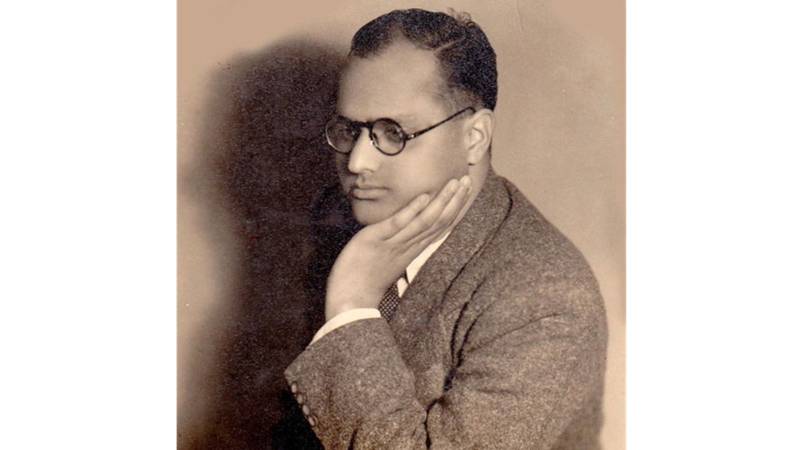
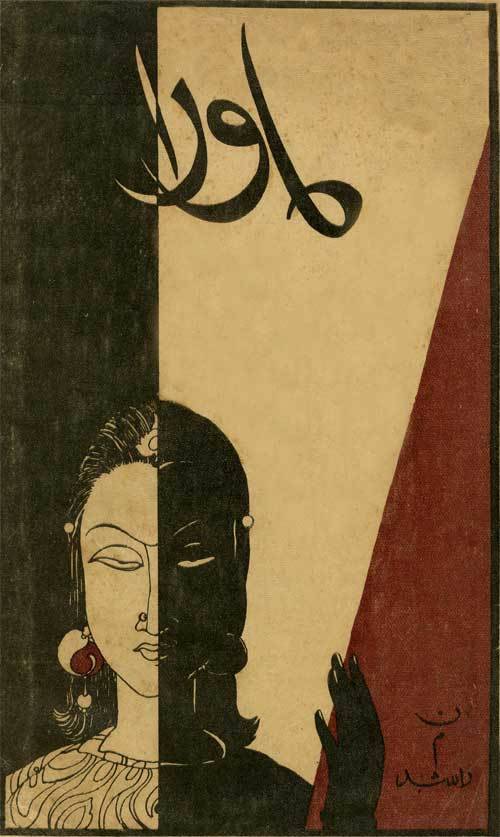
Raja Nazar Mohammed Janjua (1910–75) preferred to be known as Noon Meem Rashid. One of the founding-fathers of modern Urdu poetry, Rashid died in a London hospital on 9 October 1975, 50 years ago this week. He will also be known as a true exponent of the modernist craft and a master of Urdu free verse. He published four volumes of poetry, each with a wonderful title. They were Maavra (Beyond), Iran mein Ajnabi (A Stranger in Iran), La Musawi Insan (Nothingness = Human) and Guman ka Mumkin (The Possibility of Doubt).
Rashid had clarified a few years before his death in a letter addressed to Dr Syed Abdullah that my “nearly all poetry has the same objectives which remained worthy to you in Iqbal’s poetry and which are in no way detached from Islam.” This description of Rashid is very significant.
His poetry is not imitation of Iqbal, but reaching Iqbal and assuming a new colour and manner. It is characterised by the creative continuity of our poetic and cultural tradition. This reality had continued to be hidden from not only Dr Syed Abdullah but most of the critics of the arts of our time. Therefore, Noon Meem Rashid thought it proper to raise a voice against this critical inability. Appreciation and refutation of Rashid’s poetry has to a great extent remained a captive of the magic of style, sound and technique. Apparently this seems to be natural.
The publication of Rashid’s first volume of poetry Maavra was termed a revolt against the old moulds of Urdu poetry from the angle of style and technique and for a long time Rashid’s big achievement was considered to be merely the search and discovery of new forms. Noon Meem Rashid is rightly deserving of this praise and appreciation, and this achievement will always remain memorable in the history of our poetry. But along with fresher form and diction, a unique and distinguished thought and imagination is the extraordinary quality of Rashid’s poetry – which is extinct in his contemporaries to a great extent.

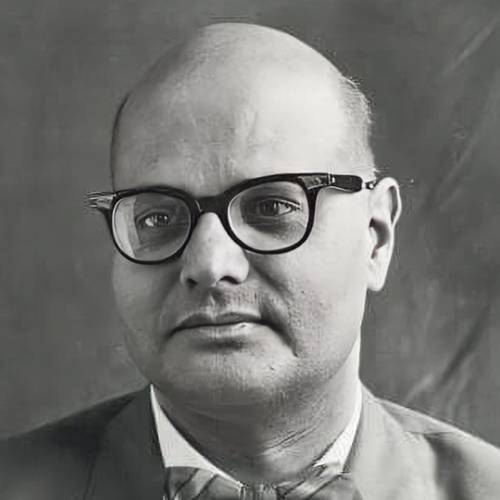
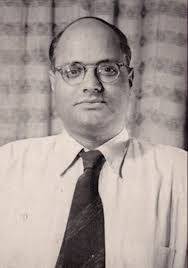
NM Rashid was born on 9 November 1910 in a religious household of Gujranwala. His father was attached to the Chishti sufi order. After completing his MA in Economics from the Government College Lahore, he was wholeheartedly attached to the Khaksar Movement for some time. After working in the broadcasting institutions of British India, he served as the Public Relations Officer of the British Indian armed forces in Iraq and Iran. Afterwards, passing through Radio Pakistan, he continued serving the Information Department of the United Nations. Even during attachment to the United Nations, he served in various countries of the East and West and after retirement he resided in England for the sake of his wife and son.
Just a cursory glance upon these particulars of Rashid’s life leads one to well estimate the fact that along with unbreakable love for the living elements of his ancient civilisation, he also continued acquiring favour from the living and dynamic elements of the Western and Afro-Asian cultures of his time to a great deal. This observation and study gave him a universal manner of vision with which he was able to look at the contemporary manifestations of life in the light of eternal facts.
Rashid worked for the United Nations, lived in England, and willed that his body be cremated. These disparate demographic details offer glimpses of the life of a modernist. In his poetry, he was especially contemptuous of the ghazal, choosing to free his words from rhyme, metre, linearity and social commentary. His poems dredge up from the subconscious a vibrant spectrum of individual ideas—quite unique in their time, but often imitated later by a growing army of acolytes.
The universality of NM Rashid is not illusory - rather its roots are spread very deep and very far in its history and its earth. This universality takes its colour and harmony from localisation
Rashid’s poems do not lend themselves to easy interpretation, and I would not recommend them to the neophyte reader without some serious hand-holding. The poem that I have translated below is the first part of an extended poem (Rashid wrote it in four discrete parts; each can be read on its own, or as part of a series). The story in brief involves an Iraqi potter named Hasan, who falls madly in love with a mysterious beauty called Jahanzad. Hasan’s passion induces in him a nine-year period of insanity that causes him to become distant from his craft. In a moment of relative lucidity, he encounters Jahanzad again, and unapologetic about his affliction, suggests that he may become the potter of old again, but only if his love is requited. It is a strange story of desire and creativity, of sanity and madness, and also represents the best traditions of the Urdu aazad nazm (free verse poem), where relaxing the strictures of rhyme and metre do not absolve the poet of the imperatives of rhythm.
Hasan Koozagar
Jahanzad, neeche gali mein tere dar ke aage
Ye main sokhta sar, Hasan Koozagar hoon!
Tujhe subha bazaar mein boodhe attar Yusuf
Ki dukkan par main ne dekha
To teri nigaahon mein vo taabnaaki
Thhi main jin ki hasrat mein nau saal deevana phirta
raha hoon
Jahanzad, nau saal deevana phirta raha hoon!
Ye woh daur tha jis me main ne
Kabhi apne ranjoor koozon ki jaanib
Palat kar na dekha . . .
Woh kooze, mere dast-e chabuk ke putle
Gil-o-rang-o-raughan ki makhlooq-e bejaan
Woh sargoshion mein ye kehte:
‘Hasan Koozagar ab kahan hai?
Woh hum se, khud apne amal se
Khudawand ban kar khudaaon ki manind hai rooy-e
gardaan!’
Jahanzad, nau saal ka daur yoon mujh pe guzra
Ke jaise kisi shehr-e madfoon par waqt guzre.
Taghaaron mein mitti
Kabhi jis ki khushboo se waarafta hota tha main
Sang-basta padi thi
Suraahi-o-meena-o-jam-o-suboo aur faanoos-o-guldaan
Meri hech-maya ma’eeshat ke, izhaar-e fan ke sahaare
Shikasta pade the.
Main khud, main Hasan Koozagar, pa-ba gil, khaak
bar-sar, barahna
Sar-e chaak zhooleeda-moonh, sar ba-zaanu
Kisi gham-zada devta ki tarah waaheme ke
Gil-o-la se khaabon ke sayyal kooze banata raha tha
Jahanzad, nau saal pehle
Tu naadan thi lekin tujhe ye khabar thi
Ke main ne, Hasan Koozagar ne
Teri qaaf ki si ufaq taab aankhon mein dekhi hai vo
taabnaaki
Ke jis se mere jism-o-jaan, abr-o-mahtaab ka
Rahguzar ban gaye the
Jahanzad, Baghad ki khaab goon raat
Vo rood-e Dajla ka saahil
Vo kashti, vo mallah ki band aankhen
Kisi khasta-jaan, ranj-bar koozagar ke liye
Ek hi raat vo kahrbaa thi
Ke jis se abhi tak hai paiwast us ka wajood,
Us ki jaan, us ka paikar
Magar ek hi raat ka zauq darya ki vo lehr nikla
Hasan Koozagar jis mein dooba to ubhra nahin hai!
Jahanzad, is daur mein roz, har roz
Vo sokhta bakht aa kar
Mujhe dekhti chaak par paa-ba-gil, sar-ba-zaanu
To shaanon se mujh ko hilaati . . .
(wahi chaak jo saal-haa saal jeene ka tanhaa sahaara
raha tha!)
Vo shaanon se mujh ko hilaati:
‘Hasan Koozagar, hosh mein aa
Hasan apne veeran ghar par nazar kar
Ye bachchon ke tannoor kyon-kar bharenge?
Hasan, ai mohabbat ke mare,
Mohabbat ameeron ki baazi
Hasan apne deevar-o-dar par nazar kar’
Mere kaan mein ye nawa-e hazeen yoon thi jaise
Kisi doobte shakhs ko zer-e gardaab koi pukaare!
Vo askhon ke ambaar phoolon ke ambaar thhe, haan
Magar main, Hasan Koozagar, shehr-e auhaam ke un
Kharaabon ka mahjoor tha jis
Mein koi sadaa, koi jumbish
Kisi murgh-e parran ka saaya
Kisi zindagi ka nishaan tak nahin tha!
Jahanzad, main aaj teri gali mein
Yahaan, raat ki sard-goon teergi mein
Tere dar ke aage khada hoon
Sar-o-mu pareshaan
Dareeche se vo qaaf ki si tilismi nigaahen
Mujhe aaj phir jhaankti hain
Zamaana, Jahanzad, vo chaak hai jis pe meena-ojam-o-subu
Aur faanoos-o-guldaan
Ke maanind bante bigadte hain insaan
Main insaan hoon lekin
Ye nau saal jo gham ke qaalib mein guzre!
Hasan Koozagar aaj ek tauda-e khaak hai jis
Mein nam ka asar tak nahin hai
Jahanzad, bazaar mein subha attar Yusuf
Ki dukkan par teri aankhen
Phir ek baar kuchh keh gayi hain
Un aankhon ki taabinda shokhi
Se uthi hai phir tauda-e khaak mein nam ki halki si
larzish
Yahi shaayad is khaak ko gil bana de!
Tamanna ki wus’at ki kis ko khabar hai, Jahanzad, lekin
Tu chaahe to ban jaoon main phir
Wahi koozagar jis ke kooze
Thhe har kaakh-o-ku aur har shehr-o-qariya ki naazish
Thhe jin se ameer-o-gada ke masaakin darakhshaan
Tamanna ki wus’at ki kis ko khabar hai, Jahanzad, lekin
Tu chahe to main phir palat jaoon un apne mehjoor
koozon ki jaanib
Gil-o-la ke sookhe taghaaron ki jaanib
Ma’eeshat ke, izhaar-e fan ke sahaaron ki jaanib
Ke main us gil-o-la se, us rang-o-raughan
Se phir vo sharaare nikaaloon
Ke jin se dilon ke kharaabe hon roshan!
Hasan The Potter
Jahanzad, in the street below, just ahead of your
house
I stand with heart aflame, Hasan the potter.
In the morning I saw you in the shop of that old
perfumer, Yousuf
And your eyes had the same passion
The desire for which committed me to nine years of
madness.
Jahanzad, nine years of insanity!
That was the time when I
Cast not another look at my spurned pots
Those pots, statues enslaved by my creative whip
Lifeless creations of clay, colour and grease
They would speak in whispers
‘Where is Hasan the potter?
He has distanced himself from us, from his labour, and
Like gods, he has become invisible.’
Jahanzad, those nine years happened to me
Like time happens to ruins, to buried cities
The dust in the flowerpots
Whose fragrance once enamoured me
Lay under stones
Goblet and cup and chandelier and lantern and vase
The artefacts through which I expressed my existence,
my art
Lay broken
Me, myself, Hasan the potter, immobile as a tree
A dusty face in front of the wheel, head bowed
Lay there like a sad deity
And with the clay and the nothingness of doubts, I
made pots of empty dreams.
Jahanzad, nine years ago,
You were innocent, but I’m sure you knew
That I, Hasan the potter, had seen
In your bright eyes, like the mystical mountain of
Caucasus
Such heat, such passion
That my body and soul had become
The wayfarers of clouds and the moon.
Remember Jahanzad, that dreamy Baghdad night
The banks of the Tigris
The boat, the closed eyes of the boatman
I tell you that for a tired, disheartened potter
That one night was such a maelstrom
That even now, his being, his life, his body
Remain associated with them
But the passion of one night of turned into such a
tidal wave
That Hasan the potter, once he went under, has not
surfaced yet.
Jahanzad, in those days, every day
That unlucky wife of mine would come
Find me on the wheel immobile, bowed of head
(The same wheel that had been our sole means of
support for years)
And she would shake me by the shoulder
Gently she would shake me
‘Hasan the potter, regain your senses
Hasan, cast a glance at your ruined house
How will the ovens of the children be filled?
O love-struck Hasan
Love is for the rich
Hasan, look around at your own hovel!’
To my ears, that sorrowful voice was akin
To someone calling a drowning man in a whirlpool
Those tears were light like flowers but
I, Hasan the potter, had been banished to that city of
illusions
Where no sound, no movement
No shadow of a bird overhead
No sign of life remained!
Jahanzad, I am now in your street
In this cold darkness of the night
I stand again before your house
Hair tousled, mouth agape
From the window, those Caucasus-like magical eyes
Once again gaze at me
The world, Jahanzad, is a wheel where
Like goblets and glasses and vases, humans are built
and broken
I am a human too
But these nine years I have spent in a funk of grief
Have turned Hasan the potter into a clod of earth
That does not harbour even a sign of moisture.
Jahanzad, in the market, at the shop of the old
perfumer Yousuf
Your eyes have spoken to me again
And out of their beauty has emerged
A hint of moisture that may turn this clod of earth
into clay again.
Who is aware of the limits of passion, Jahanzad, but
If you wish, I can again become that potter
Whose creations were the pride of palace and hovel
Of city and village
Which adorned the houses of rich and poor alike.
Who is aware of the limits of passion, Jahanzad, but
If you wish, I will return to my deserted pots
Those flowerpots filled with clay and nothingness
Toward the joy of creation and its display
That from that clay and nothingness, that colour and
grease,
I produce again such sparks
That would light up the ruins of many a heart!
The universality of NM Rashid is not illusory - rather its roots are spread very deep and very far in its history and its earth. This universality takes its colour and harmony from localisation. The poem selected for translation above in this brief introductory essay is clear proof of this reality.
Human perception and political consciousness are associated mutually together in Rashid’s poetry. He is the greatest anti-imperialist poet from the angle of political consciousness. The political consciousness with which he identified Western imperialism along with introducing the features of the Brahmanical imperialism emerging behind the scenes of the defeat of British imperialism, is extinct even in his most famous contemporaries.