


There was a time when mornings in the forested valleys of Chitral echoed with the calls of hundreds of Sohna Murgh, while ancient deodar trees stood across the mountain slopes as silent witnesses to centuries of natural history. Today, both are under severe threat. As winter approaches, reports of illegal logging, forest fires, and covert timber transportation from Arandu Gol, Poret Gol, Shishikuh Valley, and adjoining areas point to a disturbing pattern of deliberate forest destruction.
What is unfolding in these valleys is not simply a dispute over timber; it raises fundamental questions about the control of natural resources, the exploitation of local communities, and the systemic failure of institutions entrusted with protecting a precious ecological heritage.
Fires, Cover-Ups, and Illicit Transport
The latest incident occurred on the evening of the 8th of November 2026, when a fire broke out in Compartment No 6 of Poret Gol. According to local accounts, timber was hurriedly transported out of the area under cover of darkness and heavy smoke before officials could properly assess the damage. Whether the fire was accidental or deliberate remains to be established. However, its timing and the reported movement of timber make an independent investigation essential. Authorities must urgently establish the extent of the damage, the quantity of timber removed, and whether the fire was set to cover up illegal logging.
Similar concerns have emerged from Chatarbat in Arandu Gol. Local sources report that felled timber was concealed at multiple locations before being moved along covert mountain routes towards Zarkhana in Upper Dir. Although forest officials in Dir reportedly intercepted part of a consignment, serious questions remain: how much timber had already crossed the district boundary, and where was it ultimately taken? Barawal, Shahi, and adjoining areas have all been identified as key transit hubs in this illicit network. The unchecked movement of timber across district boundaries exposes a critical flaw in monitoring systems—where paper permits and disconnected checkpoints fail to trace consignments from source to destination.
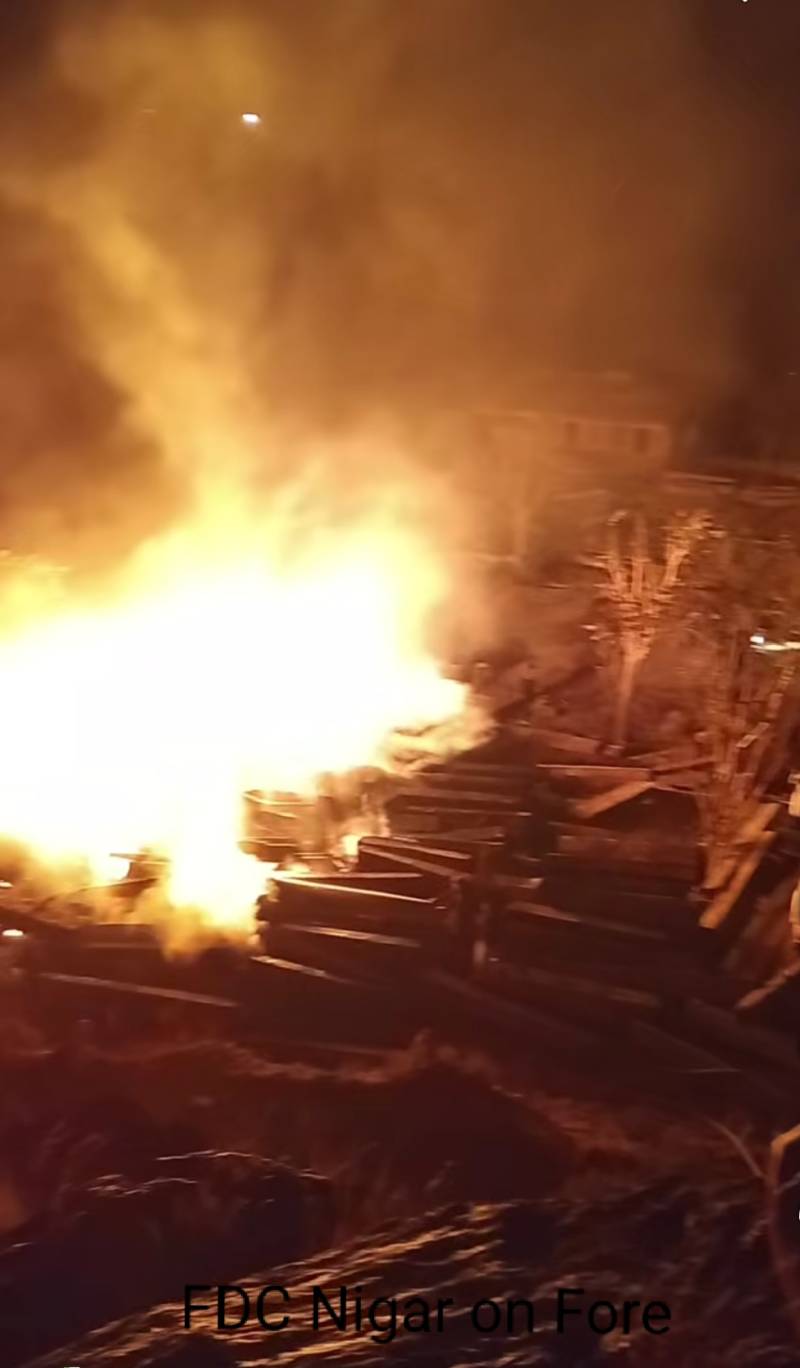
Behind this transportation network lies an even more troubling question: who benefits financially from the extraction of these forests, and who bears the cost? Information gathered from local sources indicates that as much as 1.5 million cubic feet of timber had accumulated in Arandu Gol prior to the imposition of Governor’s Rule, carrying an estimated market value of Rs 12 billion. Equally alarming are the discrepancies reported at the Nagar Forest Development Corporation depot, where physical stock was measured at 26,000 cubic feet against official records of significantly less, leaving an unaccounted gap of 14,000 cubic feet.
Failure to act within a strict timeframe guarantees that another season will pass while Chitral’s remaining heritage vanishes
The fire at the Nagar depot during the first week of November has further heightened suspicions. Local residents suspect the blaze was engineered to destroy evidence ahead of a public audit. While this allegation requires rigorous forensic examination, authorities must not allow the incident to be buried in routine departmental paperwork. A credible inquiry must reconstruct the depot's inventory prior to the fire, identify all timber destroyed or removed, examine access logs to the premises, and reconcile physical stocks against official ledgers.
The Royalty Dispute and Community Exploitation
The controversy surrounding the Birga area of Shishikuh Valley highlights another dimension of the crisis. A carriage contract reportedly covers approximately 170,000 cubic feet of timber. Local complainants question the legitimacy of this contract, alleging that the beneficiary and associated parties owe Rs 135 million in unpaid forest royalties to the community. They further claim that community elders seeking recovery of these dues have faced retaliatory legal harassment. This contract, the royalty accounts, and all associated legal proceedings demand independent scrutiny. Public natural resources cannot be managed through arrangements that leave community entitlements ignored and institutional accountability absent.
Addressing these issues directly, local elders from Arandu and Damel, including Malik Muhammad Ishaq Wardag, Hazrat Uddin, Ibad Khan, Roz Muhammad Khan, Siddiqullah, Zahir Khan, Aman Khan, and Javed Khan, convened an emergency press conference at the Chitral Press Club. They revealed that despite timber worth over Rs 12 billion being harvested over the last five to six years, 98 per cent of the region’s 11,000 residents have been systematically deprived of their rightful forest royalties, which are instead channelled to a favoured 2 per cent elite.
The elders urged the provincial government, the Pakistan Army, and law enforcement to adopt the equitable 100-per cent distribution formula previously implemented by former Lower Chitral Deputy Commissioner Rao Hashim Azim in Kalkatak and Beori villages. Highlighting severe security risks, they warned that a powerful timber mafia is actively threatening and harassing those who speak out, demanding immediate state protection alongside long-overdue infrastructure development, specifically the repair and construction of the main Mirkhani to Arandu-Damel road and connecting valley routes.
Residents have also challenged the misuse of domestic construction permits and signed affidavits to justify timber extraction on a commercial scale. Using the consent of a small fraction of the population to validate decisions affecting the environment and livelihoods of an entire community undermines the democratic legitimacy of the process. The core issue is not merely how many signatures appear on a document, but whether customary rights, local livelihoods, and statutory legal requirements have been respected. True community participation requires transparent governance and genuine representation, not arbitrary signatures collected to rubber-stamp decisions already made.
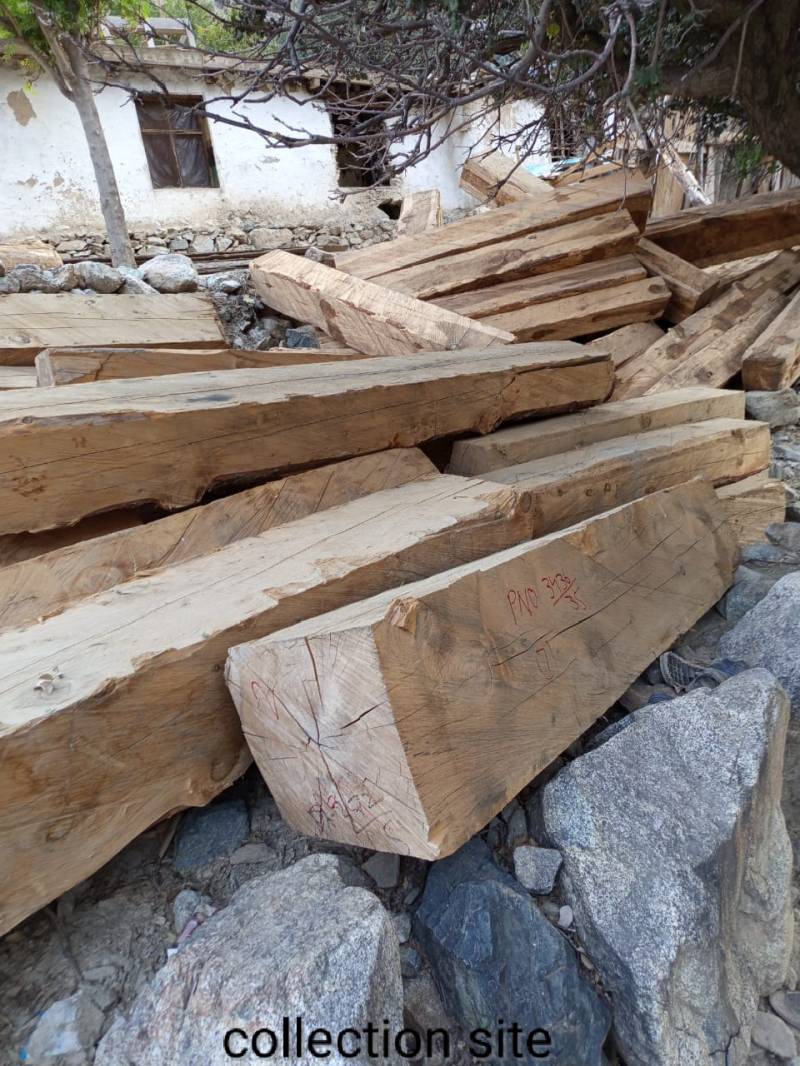
Meanwhile, official responses to reports of fresh logging are frequently contested by residents, who state that evidence is routinely dismissed as outdated or rationalised through domestic permits. Yet, the absence of fresh cutting on any given day does not prove that illegal extraction has ceased; timber is routinely felled in advance and cached in covert stockpiles for staggered transport. Reports of ongoing logging in Lachigram, Damel, Serigal, Gat Kandaw, Poret Gol, and Birga require immediate on-the-ground verification. Departmental reviews based solely on office paperwork are no substitute for transparent, physical field inspections.
The Ecological Toll and the Need for Absolute Protection
The ecological toll of this destruction far exceeds the commercial value of the timber. Ali Gauhar Khan, former Chief Conservator of Forests in Khyber Pakhtunkhwa, recalls exploring these valleys in 1992, when European visitors marvelled at the sheer scale of the ancient deodars, comparing them to Germany’s Black Forest. He recalls mornings filled with the vibrant calls of hundreds of Sohna Murgh—a vivid reminder of the rich natural heritage that once defined the region. Restoring and protecting what remains now requires rigorous scientific assessment alongside strict enforcement.
These high-altitude coniferous forests, comprising deodar, kail, spruce, and fir, are far more than standing timber. They stabilise fragile mountain slopes, regulate hydrological flows, prevent soil erosion, and shelter endangered wildlife. Their destruction drastically increases slope instability, escalating the risk of devastating landslides and flash floods during heavy rainfall. Downstream communities, agricultural lands, and vital water springs all bear the brunt of this degradation. In a high mountain region already vulnerable to climate unpredictability, stripping natural forest cover destroys the primary ecological defence sustaining local life.
As Adil Zareef, founding member of the Sarhad Conservation Network (SCN), has repeatedly emphasised, aggressive tree planting campaigns while mature natural forests are dismantled amounts to little more than cosmetic greenwashing. A newly planted sapling cannot replace an ancient forest, its complex biodiversity, or the ecological functions built over centuries. The immediate priority must be absolute protection: stopping illegal logging before another hectare is lost.
Actionable Solutions and the Test of Governance
Echoing these concerns, Chitrali political and social activist Iftikharuddin has urged the provincial government to immediately commission an independent, ground-verified inventory of all felled and stockpiled timber in Arandu Gol, Poret Gol, Damel Nisar, Nagar, and adjacent sites. Modern geospatial tools, including high-resolution satellite imagery, drone surveys, and physical ground measurements, should be deployed jointly, with all findings published in an unedited public report. Furthermore, the Nagar depot fire must undergo an immediate forensic and financial audit to account for all pre- and post-incident inventory.
Concurrently, a centralised, digital transit permit system must be established to link checkpoints across Chitral, Upper Dir, and Bajaur. Every timber consignment must be digitally traceable—verifying its precise point of origin, allocated quota, destination, and transport details to prevent permit recycling and unauthorised rerouting. Independent inspection teams comprising forestry experts, local community representatives, and civil society members must be dispatched to conduct physical sweeps of Lachigram, Damel, Serigal, Gat Kandaw, Arandu Gol, Poret Gol, Pursat, and Birga. Additionally, the operational status and licensing of all sawmills operating in these catchments must undergo urgent regulatory review.
Physical verification must be coupled with strict financial accountability. The National Accountability Bureau (NAB) and relevant investigative agencies should launch formal inquiries into disputed contracts, unpaid royalties, depot inventory discrepancies, and potential financial misconduct. Any timber lawfully confiscated should be liquidated through transparent public auctions, with proceeds audited and shared equitably with local communities. Most importantly, local inhabitants must be granted a binding, institutionalised role in forest protection, monitoring, and benefit-sharing.
The Governor of Khyber Pakhtunkhwa should immediately convene an emergency summit with key stakeholders, including forest department officials, conservationists, independent forestry experts, civil society organisations, and local community leaders. Crucially, this meeting must go beyond symbolic declarations to produce a time-bound, actionable roadmap with clear institutional accountability, strict deadlines for field audits, and mandatory public disclosure of all findings.
The true test of governance will not be measured by committee meetings or ceremonial tree-planting drives. It will be judged by whether illegal logging is halted, missing timber is fully accounted for, stolen revenues are recovered, and perpetrators face prosecution. Before winter snows seal the mountain passes, the government must act swiftly to secure disputed timber sites, preserve forensic evidence, and initiate independent inquiries. Failure to act within a strict timeframe guarantees that another season will pass while Chitral’s remaining heritage vanishes. If so, the silence of the Sohna Murgh will stand as a permanent indictment of the institutions that stood by and watched it disappear.