

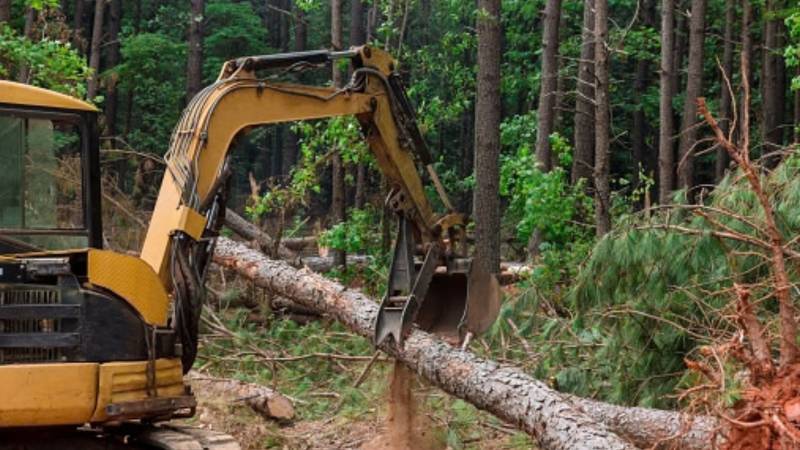
I still remember the sound of the chainsaws on Patriata. At 7,800 feet, the mountain carried one of the last intact stands of ancient conifer forest in the Murree hills — trees that had stood since 1872, when the British reserved that catchment for one purpose: to protect the water supply of the Northern Command of the British Indian Army, the garrison we today call GHQ Rawalpindi. That forest was never ornamental. It was infrastructure — the quiet, living kind that holds a slope together and keeps a watershed clean. I watched it fall for the New Murree Project, and I have never been able to shake the bitterness of that memory. What made it worse was that the destruction was avoidable. Before the bulldozers moved in, the design was still meant to pass through the filter of sustainability, geological stability, and environmental review.
The Government of Punjab, to its credit, invited a team of urban planning experts from New Zealand to examine the master plan. I was in the room when they did. I will never forget what happened next. After going through the plan for Patriatan; a plan for a new hill city on a fragile, landslide-prone mountain, in a reserved forest, above a watershed that fed the country's military headquarters — the head of the New Zealand team turned to the Pakistani side and asked, quite simply, whether Pakistan had institutions that actually trained city planners. It was asked politely. It was still devastating. In that one question, delivered without malice, was their verdict on the entire master plan and they went on to reject it.
Then came the moment I still cannot forget. When pressed on the planning rationale, Tahir Shamshad — NESPAK's own Project Director for New Murree told the New Zealand experts, plainly, that he was not a town planner but an engineer. There was pin-drop silence in that room. I have sat through many uncomfortable meetings in this profession, but I have never felt embarrassment quite like that: a foreign panel of experts, in Pakistan at our own government's invitation, being told to their faces that the man designing a new city on a mountain reserved for water security had no training in city planning at all. I could have accepted that as an isolated failure — one bad appointment, one bad project. What I have not been able to accept is what came after.
Pakistan did not always lack planning intelligence. From Mughal cities and Sir Ganga Ram’s Model Town to Doxiadis’s Islamabad, the region has a long history of disciplined and visionary city-making.
That same Tahir Shamshad — the man whose master plan was rejected, and who by his own admission was not qualified to draw it was later made Member Planning at the Capital Development Authority. It is under that tenure that I believe Islamabad entered its darkest planning era, one whose consequences the capital is still living with: unchecked urban sprawl, sectors approved without coherent transport or green planning, and a slow erosion of the very order that Islamabad was built to embody. This is what stings the most, because Islamabad did not start out this way. It was master-planned by Constantinos Doxiadis on a clear, humane grid. Under early planners and consulting architects like Basil M. Sullivan, the city expanded with discipline. It echoed an older tradition in the region: Sir Ganga Ram's Model Town in Lahore, laid out in the 1920s as a garden suburb with radial zoning independent of the congested old city — proof that South Asia has produced genuine planning intelligence when it was allowed to lead. That intelligence has deeper roots still. Go back to the Mughal and Hindu-dynastic periods, and you find some of the most structured urban thinking in world history — Hindu town planning drawing on cosmological and mathematical geometry rooted in sacred texts, and the Mughals fusing Persian formalism with local tradition to build imperial cities organized around power and garden. Pakistan's soil has hosted brilliant city-making before.
Somewhere between then and Patriata, we lost it. It is true that the University of Engineering and Technology, Lahore, houses the oldest town-planning faculty in the country. It is also true that our academic pipeline has not produced planners of the calibre the world recognizes: Edwin Lutyens, who gave New Delhi its imperial axis; Daniel Burnham, architect of Chicago's great plan; Ebenezer Howard, father of the garden-city movement; Constantinos Doxiadis himself, who planned Islamabad; and — most vividly for me — Le Corbusier, the Swiss-French architect who designed Chandigarh. I have visited Chandigarh more than once, and each time I have come away impressed: a city planned with a philosophy, not just a survey team.
Among contemporary names, planners like Jan Gehl, who rebuilt Copenhagen around human scale, and Janette Sadik-Khan, who reshaped New York's streets, show that serious planning is still a living discipline elsewhere. It simply has not been allowed to become one here. So where does that leave us? I no longer believe the answer is to wait for our universities to produce the next Doxiadis or Le Corbusier, while engineers with no planning training keep being handed master plans for mountains and capitals alike. I believe the answer is to change who or what — holds the pen. A recent ArchDaily review of AI applications in city design pointed to a striking case: a team of urban planners and scientists at Tsinghua University built an AI system for the "15-minute city" concept that, once trained on prior human-designed projects and criteria such as parks, bike lanes, and entertainment spaces, produced plans on a 3x3 grid community that matched or exceeded expert human designs — in a fraction of a second.
That is not a novelty. It is a warning and an opportunity for a country like ours. An AI planning system cannot be told by a politically connected engineer that geology, forest cover, and watershed protection are someone else's problem. It does not need to be reminded that a reserved forest from 1872 was reserved for a reason. It optimizes against the constraints it is given consistently, and without personal or political interest in the outcome. I am not suggesting we remove human judgment from our cities. I am suggesting we stop entrusting that judgment to individuals who admit, to a room full of foreign experts, that they were never trained for the job and who go on to shape our capital regardless. Pakistan's next master plans, from hill towns to megacities, should be built on AI-assisted urban design as the technical backbone, with genuine planners not just engineers with a good relationship with the right ministry, providing the human oversight AI cannot. Patriata's forest is already gone. Islamabad does not have to keep paying for the same mistake.