

Bad Lands
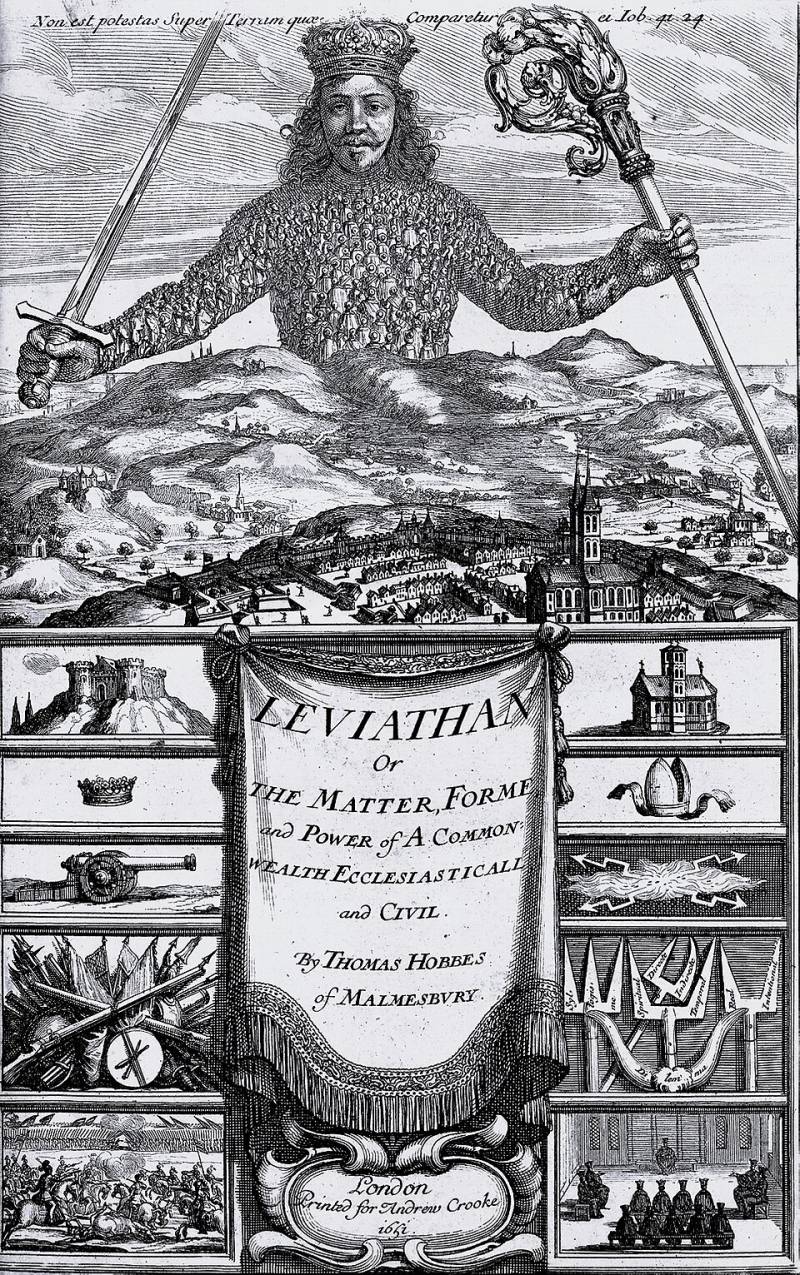
The British philosopher and political theorist Thomas Hobbes (1588-1679) never utilised the word ‘ideology’. The word did not enter the political lexicon until at least the 18th century. Yet, through the lens of Hobbesian political theory, one can readily deduce how he would have treated it. Hobbes would have perceived ideology through a strict realist framework and as a collective belief system that claims to seek noble pursuits and truths, but which operates as a highly mercurial, manufactured engine of social division posing a direct, existential threat to peace.
Hobbes identified human nature as a restless desire for power, security, and recognition. He posited that mankind with these traits inevitably descends into chaos if not properly governed. Hobbes called this descent into chaos the “state of nature.” When rigid ideological doctrines are activated within the ‘state of nature,’ they become sustainers and accelerators of this chaos, despite the fact that ideologies are activated as a way to tame the ‘state of nature.’
Adherence to an ideological dogma convinces its followers that they possess an absolute monopoly on justice or divine truth, a psychological position that renders compromise impossible. Political disagreements are consequently elevated into cosmic battles between good and evil, transforming ordinary self-interest into fanatical warfare.
The internet represents a contemporary manifestation of this unregulated competition, functioning as the digital world’s ‘state of nature.’ Social media platforms are engineered to exploit our restless desire for recognition, quantified via likes, shares, and clout, and our need for the psychological security of the tribe. Outrage drives the highest engagement, therefore platform algorithms act as digital accelerators for ideological conflict, curating echo chambers that reinforce pre-existing beliefs.
When a nuanced political policy debate is sucked into this digital public square, it instantly morphs into a battle between the morally pure "us" and the fundamentally evil "them". In this realm, compromise feels like a betrayal of ‘truth.’ This contemporary dynamic reflects the Hobbesian ‘state of nature’, where unregulated self-interest in a lawless space produces competitive virtue-signalling, rhetorical arrogance, and muscle-flexing.
When political disagreements are stripped of nuance and reframed as existential conflicts, the cost of compromise becomes prohibitively high. Pride transforms practical disagreements into zero-sum moral battles, effectively paralysing rational deliberation.
Within this modern ‘state of nature’, the fusion of political identity with rigid doctrines serves as a massive accelerator for violence. Whether observing the rise of white Christian nationalism in the West, Hindu and Islamic nationalism in South Asia, or the theocratic and semi-theocratic set-ups in Iran and Israel, the template remains identical.
When national belonging is tied strictly to a specific dogma, ordinary disputes over land, borders, or resources are suddenly sanctified. Political actors convince their followers that they are executing a sacred mandate and that one cannot negotiate on a sacred mandate without committing a ‘sin.’
Modern-day populism is rarely a struggle for resources by the poor – instead, it functions as a clash between rival elites, turning populist political parties into virtual fan clubs
To maintain a stable, peaceful society, a political order must treat competing doctrines with extreme suspicion. Ideologies and religious beliefs cannot be left to flourish unregulated in the public square, because words and ideas quickly weaponise them into civil strife.
Therefore, in the context of Pakistan, a sovereign group of experienced pragmatists must exercise overwhelming control over public speech, doctrine, and education. The primary function of a governing power is not to ensure that public beliefs are philosophically true, but rather to ensure that they are orderly and aligned with the pragmatic interests of the state. Any dogma/ideology that challenges the authority of a pragmatically unified ruling group is a recipe for political ruin.
The Third Elite Posit
In the last two decades, challenges to state sovereignty have largely emerged from alternative elites. This phenomenon has been particularly pronounced in Pakistan because, until the state’s recent, gradual shift toward a post-ideological stage, the state apparatus itself was actively producing alternative elites and pitching them against traditional elites.
Locked in an existential battle for power, a third set of elites has emerged. It is shaped by a mutating global order. This tier, comprising certain realist military and civilian actors, is likely to author what I call the "Hobbesian Correction." It is a bid to rescue the state from the anarchic paralysis of inter-elite warfare by enforcing institutional discipline and constitutional insulation against renegade forces. These include militant Islamists, Baloch separatists, populists and the recently proscribed AJK street militancy.
Modern-day populism is rarely a struggle for resources by the poor. Instead, it functions as a clash between rival elites, turning populist political parties into virtual fan clubs. Most modern uprisings represent a curious socio-political phenomenon: ‘the revolt of the elites.’
Whereas the 20th century was defined by the revolt of the masses through labour unions and peasant movements, the 21st century is characterised by a tussle between the mainstream establishment and an alternative elite. In the Global South, the alternative elite is a class mainly comprising urban middle-class professionals and entrepreneurs who have gained significant economic clout but find the path to traditional institutional power blocked by entrenched political forces.
Rather than seeking to dismantle the system, these "blocked elites" aim to force a readjustment so they can enter the corridors of power. To achieve their ends, they cloak their activism in the moralising language of a ‘people’s struggle,’ translating class-specific desires into a broader, universal mission.
A Third Elite Steps In
A new kind of force is emerging to look for ways out of the impasse created by the old elites and the challengers.
This third elite posits the following:
- Breaking the Inter-Elite Deadlock: The primary importance of the Third Elite is to rescue the state from the anarchic paralysis caused by the existential, zero-sum power struggle between traditional elites and alternative elites.
- Catalysing the 'Hobbesian Correction': Comprising realist/pragmatic military and civilian actors, this tier is uniquely positioned to enforce strict institutional discipline by seeking constitutional insulation through amendments to protect the state's sovereign hardware from populist disruptions.
- Responding to a Mutating Global Order: Unlike traditional or alternative political actors, this third set of elites is shaped by and adapted to contemporary global shifts, allowing them to approach statecraft with a realist perspective.
- De-escalating the 'Revolt of the Elites': By stepping in as an insulating force, the Third Elite counters the modern phenomenon where rival factions turn political parties into hyper-emotionalised virtual fan clubs and cloak middle-class-specific desires in the moralising language of a universal struggle
- Steering the Shift to Post-Ideology: The emergence of this tier aligns with the state's gradual transition away from ideological engineering, allowing the Third Elite to prioritise structural survival, order, and stability over manufactured populist narratives.
The Post-Ideological Turn
The concept of "post-ideology" often causes unease, as it suggests that sweeping political narratives are giving way to a pragmatic, technocratic approach to governance. Critics frequently argue that systems cannot function without a moral compass, noting that humans possess an innate desire for thymos or the recognition of their dignity. This is traditionally tied to grand ideological visions.
While realism and pragmatism are themselves forms of ideological thought, they differ fundamentally from "hard" ideologies such as socialism, fascism, liberalism, nationalism, etc. Realism offers a fluid, outcome-oriented approach that prioritises societal survival and prosperity over abstract theory.
A Hobbesian democracy leaves absolutely no room for hyper-emotionalised, expressive populism that relies on mobilising digital mobs or cultivating political cults
Critics lament that post-ideology treats every societal challenge as a technical issue, stripping the public of democratic agency. But in a globalised economy, the "will of the people" cannot override the laws of mathematics, and technical competence. Since the average citizen frequently lacks the specialised knowledge required to navigate complex macroeconomic policy, direct democracy is often ill-equipped to handle 21st century complexities. A data-driven approach is ultimately more responsive to real needs because it focuses on measurable outcomes rather than shallow slogans.
The transition towards a post-ideology world is best illustrated by a diverse array of global models:
- China: Offers a comprehensive example of a "political meritocracy". Leaders are elevated not through popular elections or ideological fervour, but through a rigorous administrative pipeline where promotion is earned through decades of demonstrated competence. State legitimacy is derived from tangible output rather than ideological purity.
- Singapore: Replaced ideological dogma with an intense pragmatic focus on what worked, establishing institutional meritocracy as the bedrock of its rapid economic rise.
- Saudi Arabia: Has explicitly called for an end to the destructive "era of ideology" in the Arab world, moving decisively toward a model that prioritises national economic transformation and social reforms over the pan-Arabist or Islamist slogans of the twentieth century.
In Pakistan, this pragmatic shift became evident under the current hybrid regime from 2022 onwards. The post-ideology age represents a period of political maturation. It acknowledges that while grand ideologies are emotionally satisfying, the survival of a modern society depends on a fluid, outcome-oriented realism.
Post-ideology states are actively shedding the dead weight of dogma to strengthen themselves, prioritising core national interests, economic pragmatism, and internal stability over destructive political cults and abstract doctrines.
The historical trajectory of political theory and statecraft demonstrates that when abstract ideologies are left to run rampant, they inevitably transform practical governance into existential warfare.
In response to the modern ‘state of nature,’ the global move toward a post-ideological framework represents a necessary act of systemic survival. States are actively shedding the dead weight of ideological purism. The survival and maturation of a modern society depend not on the emotional satisfaction of grand ideologies, but on a fluid, outcome-oriented realism. By prioritising institutional discipline, measurable delivery, and constitutional insulation, the post-ideological turn offers the definitive Hobbesian correction required to rescue contemporary statecraft from anarchic paralysis.
But What About Democracy?
Of course, there will be who will find the whole idea of the Hobbesian Correction/The Third Posit to be authoritarian, anti-democratic, etc. But on the flip side is the foundational duty and obligation of any political order to preserve internal peace and prevent a catastrophic slide into the chaos of the ‘state of nature.’
In a world routinely troubled by volatile ideological dogmas, algorithmic tribalism, and bitter inter-elite warfare, the enduring realism of Thomas Hobbes remains far more than a historical philosophy, functioning instead as an urgent blueprint for survival. Public stability is not an organic default setting of human society. Rather, it is an artificial, hard-won construct that requires unyielding institutional insulation and structural strength to survive the highly polarising dynamics of contemporary politics.
A central pillar of Hobbes core political theory is its deep skepticism toward collective belief systems. While rigid ideologies often masquerade as noble searches for cosmic justice or divine truth, they act in reality as engines of social division. When individuals buy into tight ideological scripts, ordinary self-interest and political policy disagreements are instantly elevated into zero-sum battles between good and evil.
There is now a clear desire in the post-2022 Pakistani state to transition away from highly emotionalised expressive politics and firmly anchor governance within functional politics, which is defined by the measurable delivery of results, data-driven competence, and macroeconomic realism. The transition toward a post-ideological turn is a sign of maturation, where legitimacy is derived from administrative efficiency rather than manufactured ideological purity.
The modern sovereign, and in the context of Pakistan, a sovereign group of civilian and military pragmatists know that the ‘will of the people’ cannot override the rigid laws of mathematics or competence. While grand ideologies are emotionally satisfying, the survival of a modern society depends on a fluid, outcome-oriented realism.
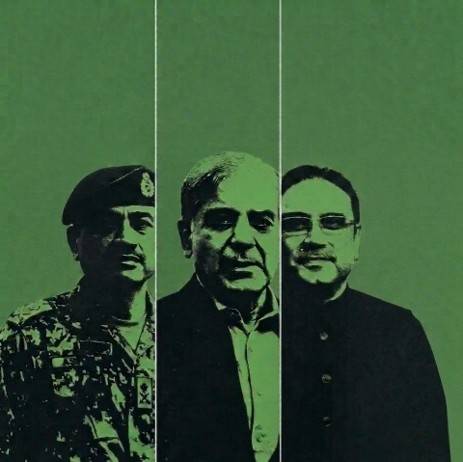
By shedding the dead weight of isolationist dogmas and artificial ideological scripts, the sovereign group of pragmatists must secure the ultimate national interest, treating competing factions with rational suspicion to ensure that the fragile framework of civil peace is fiercely protected from the destructive impulses of political groups and cults.
However, the question arises whether any room remains for democracy in such a tightly knit state. For Thomas Hobbes, the primary objective of the state was the absolute preservation of order and the prevention of a slide into anarchy. Hobbes’ foundational political theory explicitly allows for the sovereign power to be vested in either a single ruler or a democratic assembly. Therefore, a highly disciplined model of democracy can exist within a Hobbesian architecture, provided it operates under conditions of strict institutional constraints.
Within a Hobbesian democratic framework, the permanent institutions of the state must remain entirely supreme. Electoral processes and public participation should be permitted as mechanisms for political rotation and public feedback, but they should never be allowed to override macroeconomic realities, structural stability, or the security hardware of the country.
Under this lens, democracy can function as a channel for structured governance rather than a licence for institutional subversion. A Hobbesian democracy leaves absolutely no room for hyper-emotionalised, expressive populism that relies on mobilising digital mobs or cultivating political cults. When democratic engagement begins to threaten public order or seeks to bypass established legal and constitutional frameworks, the state retains the absolute right to enforce a swift correction to preserve peace.
The democratic mandate should not grant an elected government the right to violate the logic of data, mathematics, and operational efficiency. Instead, the administration should be judged strictly by its functional ability to deliver economic stability and internal security. There is enough room for democracy in a Hobbesian state, but it must be a strictly bounded, managed democracy that functions not as a chaotic arena for zero-sum ideological warfare, but as an orderly mechanism of governance that remains firmly subordinate to the overarching imperative of public peace and structural survival.
Indeed, there is an inherent skepticism towards democracy in Hobbesian political theory, because democracy itself can easily morph into an unruly ideology. Yet, the theory is not inherently aimed against any format of governance as such, as long as the state plays a major, stabilising role in it. However, in the last decade or so, democracy across the globe has come under serious scrutiny for producing problematic results that have directly threatened the stability of the state.
The global tide of democratic backsliding observed in recent years is forcing scholars and citizens alike to confront uncomfortable truths about a system once hailed as universally superior. As political scholar Joel Day observed, voters sense a deep need for systemic change but remain quite uncertain about what that change should look like.
This widespread skepticism is not only fuelling dissatisfaction with democratic outcomes but is also casting severe doubt on the numerous academic proposals aired to stall or reverse the decline of democracy. The core issue lies in a fundamental disconnect between the idealised, textbook version of democracy and its lived, practical reality.
For decades after the Second World War, the West thoroughly romanticised democracy as a largely flawless ideology, especially during the Cold War when it was deified as the ultimate champion fighting against Soviet communism and authoritarianism. This sacralisation meant that, while critiques of democracy were common in authoritarian states, established Western democracies rarely tolerated any serious internal critiques. The fall of the Soviet Union in 1991 was celebrated as democracy’s final, decisive victory.
However, disastrous economic and political outcomes in former dictatorships that quickly adopted democracy forced a major historical reassessment. Initially attributed merely to the sticky residues of past authoritarian rule, these systemic issues did not simply rot away. Instead, democracy collided violently with deep-seated political, economic, and social monoliths, leading to the widespread creation of "hybrid regimes."
Countries such as Turkey, Russia, Colombia, Egypt, Indonesia, and Mexico developed hybrid forms that sometimes produced better economic growth and political results than the idealised form of democracy. Across the world, romanticised expectations of democracy have collided with harsh social and economic realities, resulting in a pragmatic turn where stability outranks democratic ideals.
A convenient, yet increasingly rhetorical way to bemoan the stifling of democracy in hybrid systems is to blame an omnipresent ‘establishment’ or a shadowy cabal of ruling elites. While these factors certainly play a role, this simplistic explanation falls short when considering the paradox of strong public support for forces deemed ‘illiberal.’
Why are more and more people, even in established Western democracies, content with happenings that terrify true democrats? Consider the American context: a poll by Change Research, conducted before Donald Trump’s popularity ratings began to plunge from April 2026 onwards, found that a staggering 42 per cent of Americans supported an unconstitutional third term for Donald Trump. This reveals a fundamental failure of classical democracy to come to terms with a rapidly mutating global political, geopolitical, and economic terrain.
Dutch political scientist Cas Mudde wrote extensively about this paradox of democracy, highlighting the inherent tension between the democratic principle of popular sovereignty, or majority rule, and the liberal principle of protecting individual rights. This structural conflict raises awkward questions regarding whether illiberal forces that come to power through legitimate democratic means should be tolerated, and whether constitutional checks must exist to strictly limit the rise of such forces.
It raises the dilemma of what happens when a majority of voters actively blocks structural reforms necessary for a country’s basic economic health. The response lies not in policy design alone, but in psychology. As American political scientists Larry M. Bartels and Christopher H. Achen argue, most voters feel far more than they think.
If political decisions are based on raw emotions and cultural dispositions rather than logical institutional propositions, then citizen discontent will not automatically translate into the acceptance of proposed procedural fixes, proving that social conditions, not just institutional design, are blocking reform.
In Pakistan, for example, social media platforms and newspapers are replete with intense outcries against the hybrid government that has been in power since early 2022, and the military establishment for stifling democracy through highly contentious constitutional amendments. Yet, the alternatives being suggested by the critics remain largely rhetorical and detached from reality.
The critical question for champions of democracy resisting these reforms must be whether the institutions that these amendments are attempting to reshape were previously successful in evolving an orderly, stable democracy in the country? The answer is a resounding no. The post-2022 state institutions, especially the armed forces, and established mainstream political parties are proceeding with these amendments in the firm belief that they will provide political and economic stability by checking factors seen as a source of constant institutional tensions and chaos.
Unlike past governance experiments in Pakistan, this constitutional push is not founded upon a grand, sweeping ideology. If it has one guiding principle, that principle is pragmatism. Pragmatism is not an ideology. It is a method, and a rational way of thinking that is completely unburdened by ideological considerations.
Globally, the contemporary crisis in democracy is fundamentally a crisis of faith in its procedural fixes. When institutions fail to deliver tangible economic and political results for the majority, the stage is set for a pragmatic turn and a collective willingness to accept outcomes that prioritise structural stability and efficacy over the strict adherence to an idealised, yet increasingly ineffective, democratic procedure.