

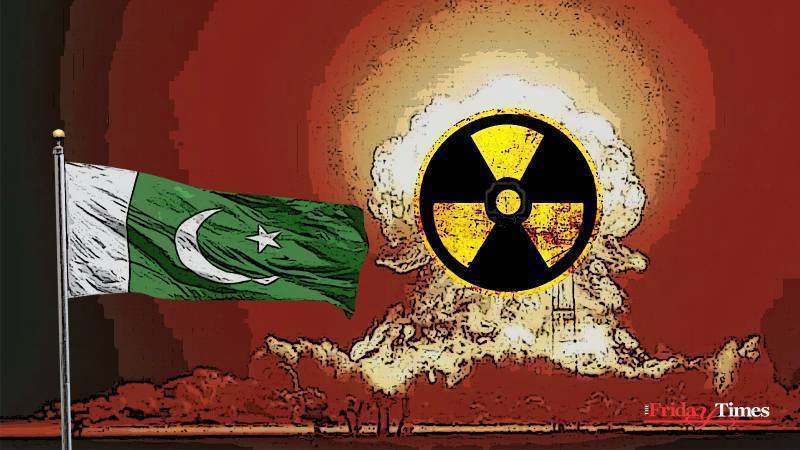
It is imperative to counter the ongoing propaganda in several regional and international non-peer-reviewed newspaper outlets and magazines—including Foreign Affairs—that claim Pakistan is developing an Intercontinental Ballistic Missile (ICBM). Ironically, none have produced credible evidence of any development, testing, or deployment of such a strategic asset.
In today’s globalised world of high-speed communication, high-resolution satellites, and remote sensing technologies, it is virtually impossible to conceal a credible missile test. No evidence has been presented to support these claims. Despite this, the saturation of baseless speculation in these so-called analytical pieces is both irrational and illogical, reflecting intellectual dishonesty and a lack of educated, integrated opinion-making on critical matters such as the alleged ICBM threat from Pakistan. This not only undermines the credibility of these outlets but also of the authors who perpetuate such fearmongering narratives.
Pakistan adheres to a policy of full-spectrum deterrence within the framework of credible minimum deterrence. India-specificity remains the linchpin of Pakistan’s nuclear strategy. Full-spectrum deterrence does not necessarily imply an increase in the number of warheads and delivery systems, as often misunderstood in the West. Rather, it refers to covering a broad range of targeting options—both countervalue and counterforce—against a potential adversary, namely India.
It is important to recognise that any posture of credible minimum deterrence is inherently dynamic and adjusts in accordance with changes in the strategic environment. To date, the longest-range missile that Pakistan has successfully and credibly tested is the Shaheen-III, with a range of 2,750 km. Its rationale is widely known: it is designed to reach the Andaman and Nicobar Islands, where India has stationed strategic assets that pose a threat to Pakistan and the broader region.
In the wake of India’s flawed military misadventures during both the 2019 and 2025 conflicts with Pakistan, it would be wise for New Delhi to reconsider its hubristic approach towards South Asia
The Shaheen-III is correctly classified as a Medium-Range Ballistic Missile (MRBM). Pakistan's nuclear posture is strictly India-specific and seeks to ensure that its deterrent remains credible. There has been no debate, no strategic signalling, and no doctrinal shift indicating a Pakistan-specific posture against any other state, including the United States. Therefore, the assertion that Pakistan poses a threat to the US and its allies is unfounded. On the contrary, it is notable that these commentaries often omit mention of India’s continued development, testing, and deployment of long-range ICBMs—with ranges up to 16,000 km—both land- and sea-based, thereby posing a genuine global security threat.
Moreover, India has already developed significant capabilities in fissile material production, enabling the expansion of its nuclear arsenal across sea-, land-, and air-based platforms. Whether this build-up is security-driven or prestige-oriented remains a pertinent question. It may be argued that India harbours aspirations of regional hegemony. This ambitious strategic force posture, coupled with its drive for great power status, reflects its intent to assert dominance and potentially push out external powers, including the United States and its allies, from the broader Indian Ocean Region. India’s strategic outlook, shaped by its “Act East” policy, increasingly seems to treat the Indian Ocean as its exclusive sphere of influence.
In international politics, capabilities are critical—but intentions can change overnight. Today’s ally can become tomorrow’s adversary. Within the realist paradigm, there remains the possibility that India could, in a future US–India conflict, threaten the United States and its allies using its ICBMs equipped with nuclear warheads and Multiple Independently Targetable Re-entry Vehicles (MIRVs). Nuclear and international politics are inherently unpredictable. States retain certain military capabilities to deter future threats. Those that relinquish such capacities, as Ukraine did, often find themselves vulnerable in the long term.
In the wake of India’s flawed military misadventures during both the 2019 and 2025 conflicts with Pakistan, it would be wise for New Delhi to reconsider its hubristic approach towards South Asia. There is little India can achieve through military aggression, apart from undermining regional stability. Instead, credible confidence-building measures through political and diplomatic channels, particularly on core issues such as Kashmir are the need of the hour. Pakistan has repeatedly expressed its willingness to engage on these matters. The question remains: is India ready to reciprocate? Perhaps it will take time for India to climb down from its ladder of hubris and work sincerely towards de-escalation. Pakistan remains prepared for dialogue across all spectrums. The world now watches when and how India will respond to this imperative.