

Dear President Donald J. Trump,
We, Dr Ikram Ul Haq, a lawyer specialising in environmental law, and Engineer Arshad H. Abbasi, a specialist in water and climate change, address you today not just in our professional roles, but as stewards of a planet facing an accelerating crisis. As longtime observers of global systems that sustain both economies and ecosystems, we write with a plea rooted in both scientific urgency and moral responsibility. With utmost admiration, we also take this opportunity to commend your remarkable contributions to global peace and diplomacy. Your efforts have not only shaped modern geopolitical history but also prevented numerous conflicts from spiralling into catastrophe. It is for these reasons that we wholeheartedly endorse your Nobel Peace Prize nomination.
Your unique ability to navigate sensitive geopolitical landscapes and de-escalate conflict has already changed the course of history. Your interventions in regions such as Cambodia, Ethiopia, and the Balkans were timely and effective. But most significantly, your unprecedented success in stabilising relations between India and Pakistan—two nuclear-armed neighbours with a combined population exceeding 1.5 billion—helped avert a disastrous confrontation and brought calm to a volatile region. That achievement alone stands as one of the boldest acts of twenty-first-century statesmanship.
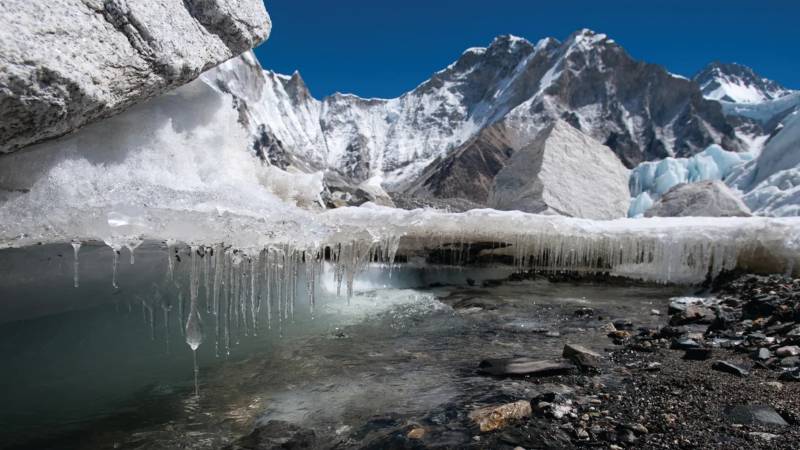
Today, however, a crisis of a different kind, though equally urgent, awaits your vision and leadership. It does not involve armies or treaties, but it has the power to reshape nations and destroy civilisations. We speak of the rapid and largely irreversible melting of the Himalayan glaciers due to direct human intervention — a global threat that endangers not just Asia, but the very climate stability of the world, including the United States. These glaciers, perched high across eight countries, are not simply regional ice masses; they are the water towers of the world and the climate regulators for the whole globe, too. Their collapse is contributing directly to sea-level rise, increased storm activity, tsunamis, cyclones, and anomalous weather phenomena, including the recent record-shattering rainfall in Los Angeles.
It is critical to understand that the melting of Himalayan glaciers is not a contained environmental issue—it is the epicentre of a planetary emergency. As these glaciers retreat, they release immense volumes of freshwater into the oceans, destabilising thermohaline circulation and intensifying the warming of ocean surfaces. This surplus heat injects energy into atmospheric systems, fuels stronger hurricanes, alters global jet streams, and elevates precipitation intensity. These dynamics are not theoretical—they are unfolding now, and their fingerprints are visible in American weather patterns. The flooding in Los Angeles, the intensification of storms on the Gulf and East Coasts, and inland flooding events are all part of a larger chain reaction rooted in distant ice loss.
The Hindu Kush-Himalayan (HKH) region, often referred to as the “Third Pole”, contains between 9,000 and 12,000 cubic kilometres of glacial ice—a mass that sustains some of the planet’s most important river systems of many Asian countries. These rivers irrigate fields, generate hydropower, and provide water security to over two billion people. But this lifeline is melting. The International Centre for Integrated Mountain Development (ICIMOD) warns that up to 75% of these glaciers could vanish by the end of the century if warming continues unabated. Such a dramatic loss would not only collapse river ecosystems and agriculture across Asia but would also unleash worldwide consequences.
Sea-level rise directly linked to Himalayan melt is projected to reach 1 to 2 feet globally if not checked. This increase in sea-level rise is more than sufficient to triple coastal flooding in many U.S. cities, compromise critical infrastructure, and contaminate drinking water supplies. According to the National Oceanic and Atmospheric Administration (NOAA), just a one-foot increase is enough to flood stormwater systems in cities like Miami, New York, Boston, New Orleans, Charleston, and Norfolk, pushing millions to relocate and leaving behind submerged economic assets. This is not science fiction—it is measurable, modelled, and imminent.
If you act to protect the Himalayas, you will not need to seek a Nobel Peace Prize, for the world will offer you many as symbols of sincere gratitude from every coastline spared, every farm saved, and every child born into a liveable future
Between 1980 and 2024, tropical cyclones cost the United States more than $1.5 trillion in damages, with individual events now averaging over $23 billion in losses. Meanwhile, glacial melt amplifies atmospheric moisture, increasing rainfall and flooding in inland areas. These events have added another $203 billion in economic toll. And the destruction is not confined to the United States. Cities like Jakarta, Dhaka, Mumbai, Lagos, and Alexandria are facing similar existential threats, with some, like Jakarta, already taking the drastic step of relocating national capitals. This pattern is not coincidental; it is a signal that our planet’s climate regime is tipping toward instability, and the Himalayas are one of the core drivers.
One of the most tragic and symbolic sites of this ecological breakdown is the Siachen Glacier, the highest and most militarised battlefield on Earth. Located at 18,875 feet above sea level, Siachen stretches 76 kilometres and ranks as the second-longest glacier outside the polar regions. For more than four decades, it has remained a theatre of conflict between India and Pakistan, consuming military resources and accelerating environmental collapse. Human activity—including troop movement, construction, and fuel burning—is melting this critical glacier faster than ever.
Instead of remaining a battleground, Siachen should be recognised for what it truly is: a natural sanctuary of vital importance to regional and global hydrology. Engineer Arshad H. Abbasi has long advocated for converting the Siachen Glacier into a Peace Park, modelled after the Waterton-Glacier International Peace Park on the U.S.-Canada border. Such a move would symbolise not only reconciliation between two historic adversaries but a shared commitment to protecting the planet’s environmental future. Unfortunately, this vision remains obstructed by political inertia, distrust, and outdated military thinking. The result is the unchecked deterioration of a glacier that feeds life-sustaining rivers across South Asia.
We now appeal to you, President Trump, because your unique legacy has already shown that you can defy convention and succeed where traditional diplomacy has failed. Your prior engagement with both India and Pakistan has granted you moral authority and the trust of key stakeholders.
With complete honesty, we submit to you a painful truth: the leadership of these two nations will not resolve the Siachen conflict on their own, not in this generation nor the next. The enmity between them is woven deeply into the fabric of their governance and identity.
That is why external leadership is not only desirable—it is essential. We believe you are singularly positioned to launch an international initiative, calling for the demilitarisation of Siachen and the creation of a UNEP-governed protected area, along with a broader Global Glacier Protection Agreement. The time has come for bold leadership to establish the Himalayan glaciers as an internationally protected climate reserve, recognising their role as natural climate moderators and their importance to planetary stability.
The scientific consensus is clear: continued glacial retreat will increase glacial lake outburst floods (GLOFs), destroy mountain ecosystems, dry out summer river flows, and flood plains during the monsoon. The cascading effects include falling agricultural productivity, collapsing hydropower systems, mass displacement of rural populations, and rising geopolitical instability. These threats are not limited to Asia. As glacial melt modifies jet stream behaviour and raises ocean temperatures, it also intensifies hurricanes and cyclones in the Atlantic and Pacific basins—with measurable consequences for American cities, agriculture, and coastal defence infrastructure.
Let us reiterate what is scientifically evident but politically under-acknowledged: what melts in the Himalayas does not stay in the Himalayas. It alters the course of weather systems, ocean currents, and even the reliability of seasonal rainfall across continents. The United States is not insulated from these effects. Its farms, cities, ports, and coastal economies are directly vulnerable to Himalayan-driven disruptions. The recent abnormal rainfall in Los Angeles, which crippled infrastructure and broke historical precipitation records, is an unmistakable symptom of global atmospheric volatility—shaped in part by accelerating cryosphere collapse.
Mr President, this is not merely an environmental appeal. It is a security concern. It is an economic imperative. It is a humanitarian obligation. But above all, it is an opportunity—an opportunity for you to lead the world towards a path of climate stability, peaceful cooperation, and planetary preservation. If you champion this cause, you will not only avert one of the greatest climate disasters of our time, but also inspire a new global movement of environmental diplomacy.
If you act to protect the Himalayas, you will not need to seek a Nobel Peace Prize, for the world will offer you many as symbols of sincere gratitude from every coastline spared, every farm saved, and every child born into a liveable future.
With deepest respect and enduring faith in your leadership,